Domestic Hot Water Heat Pump Testing: Accredited Tapping Profile and Efficiency Verification - Frequently asked questions
Select Page

Frequently Asked Questions About Heat Pump Testing
Find answers to some of the most common questions about accredited testing of domestic hot water (DHW) heat pumps, applicable EN standards, tapping profile selections, acoustic measurements, and European certification pathways at Danish Technological Institute.
For comprehensive details on overarching accreditation scopes, multi-standard test packages, or certification routing, please refer to our main pillar page: Accredited Heat Pump Testing for Certification and European Market Access. If you have specific inquiries regarding testing schedules, custom hydraulic draw-off cycles, or safety preparations for units using flammable or high-pressure natural refrigerants, please contact Preben Eskerod using the contact form on the right.
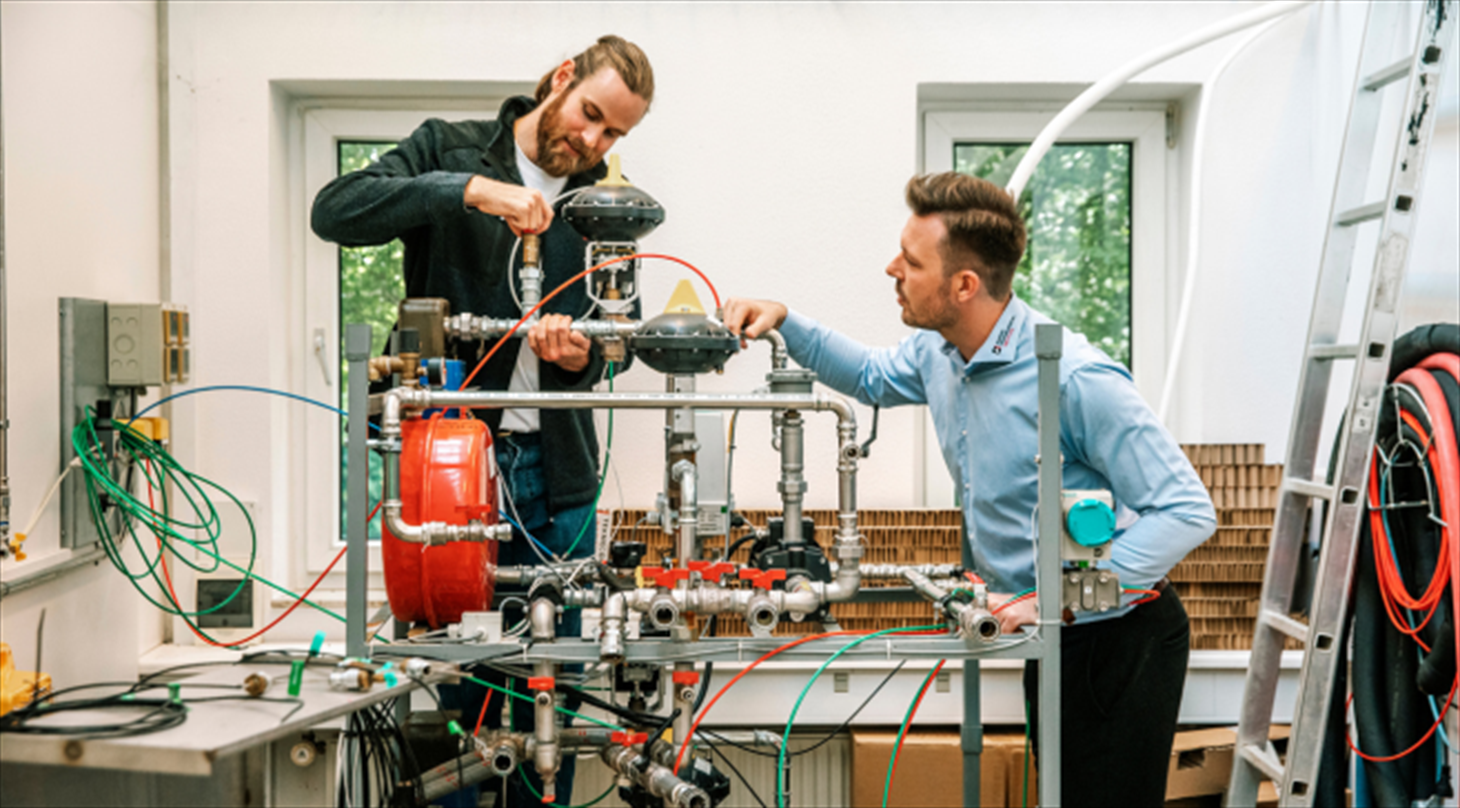
Performance and energy efficiency testing of electrically driven domestic hot water heat pumps is primarily governed by the EN 16147 standard, which specifies methods for testing, rating, and determining operational requirements across defined load tapping profiles. Airborne acoustic sound power levels radiated from the unit casing or transmitted through connected air ducts are measured in accordance with the EN 12102 series. These laboratory test procedures directly supply the empirical metrics needed to demonstrate compliance with Ecodesign Regulation (EU) No 814/2013 and Energy Labelling Regulation (EU) No 812/2013 for water heaters and hot water storage tanks. Under EN 16147, water heaters are classified and tested according to standardised daily tapping cycles ranging from small to extra-large domestic demand, typically designated as M, L, XL, or XXL. The manufacturer declares the intended tapping profile based on the storage tank volume and thermodynamic heating capacity. During the test, our automated hydronic test benches draw off precise quantities of water with exact useful energy content at scheduled intervals throughout a 24-hour cycle. The test validates whether the appliance can sustain the required delivery temperature thresholds throughout all draw-offs without relying prematurely on auxiliary electric booster heaters. The maximum volume of usable mixed water at forty degrees Celsius, designated as V40, indicates the total quantity of domestic hot water the heat pump can supply after a single complete heating cycle without continuous electrical recharging. This figure provides specifiers and consumers with an objective measure of hot water delivery capacity during peak household demand. In parallel, the standby power consumption measurement determines the continuous electrical input required to offset casing thermal losses and maintain tank temperature during idle periods, serving as a critical parameter in the calculation of seasonal water heating energy efficiency. Because domestic hot water heat pumps are frequently installed in internal living environments, basements, or utility rooms, acoustic verification is essential for market acceptance. Testing is conducted within specialised semi-anechoic or reverberant test chambers pursuant to EN 12102. For non-ducted ambient air units, casing-radiated sound power is determined under steady-state heating conditions. For units utilizing outdoor or exhaust air ducts, sound power radiated from the casing and sound power transmitted directly through the air duct connections are evaluated independently using calibrated duct terminations and microphone arrays. Yes. With the European market transitioning away from high-GWP hydrofluorocarbons under the EU F-gas Regulation, an increasing number of sanitary heat pumps incorporate natural refrigerants. Our test chambers are fully equipped with ATEX-certified safety architecture, continuous gas detection systems, and automated mechanical emergency ventilation to accommodate flammable A3 fluids such as propane (R290) and isobutane (R600a). Additionally, our test stations safely support high-pressure transcritical carbon dioxide (R744) systems, which are increasingly deployed in high-temperature sanitary water applications. The final accredited test report provides an exhaustive, legally traceable account of all measured thermodynamic, electrical, and hydraulic variables. It includes unit identification data, compressor serial numbers, tank geometry, insulation specifications, and rating plate photographs. The report contains dynamic 24-hour tapping profile graphs, cold water inlet and delivery temperature curves, standby thermal loss values, total heat-up durations, calculated seasonal water heating efficiency, third-octave acoustic sound power spectra, and detailed measurement uncertainty budgets. This documentation forms the foundation required for CE marking, European certification marks such as CEN Heat Pump KEYMARK, and verification ahead of national market surveillance audits.Which specific standards and regulations govern the testing of domestic hot water heat pumps?
How is the correct tapping profile selected and validated during laboratory testing?
What is the significance of the V40 metric and standby power consumption?
How are acoustic sound power levels verified for indoor and ducted DHW heat pumps?
Can the laboratory test domestic hot water heat pumps using natural refrigerants such as R290 or R744?
What technical documentation is delivered in the final ISO/IEC 17025 accredited test report?