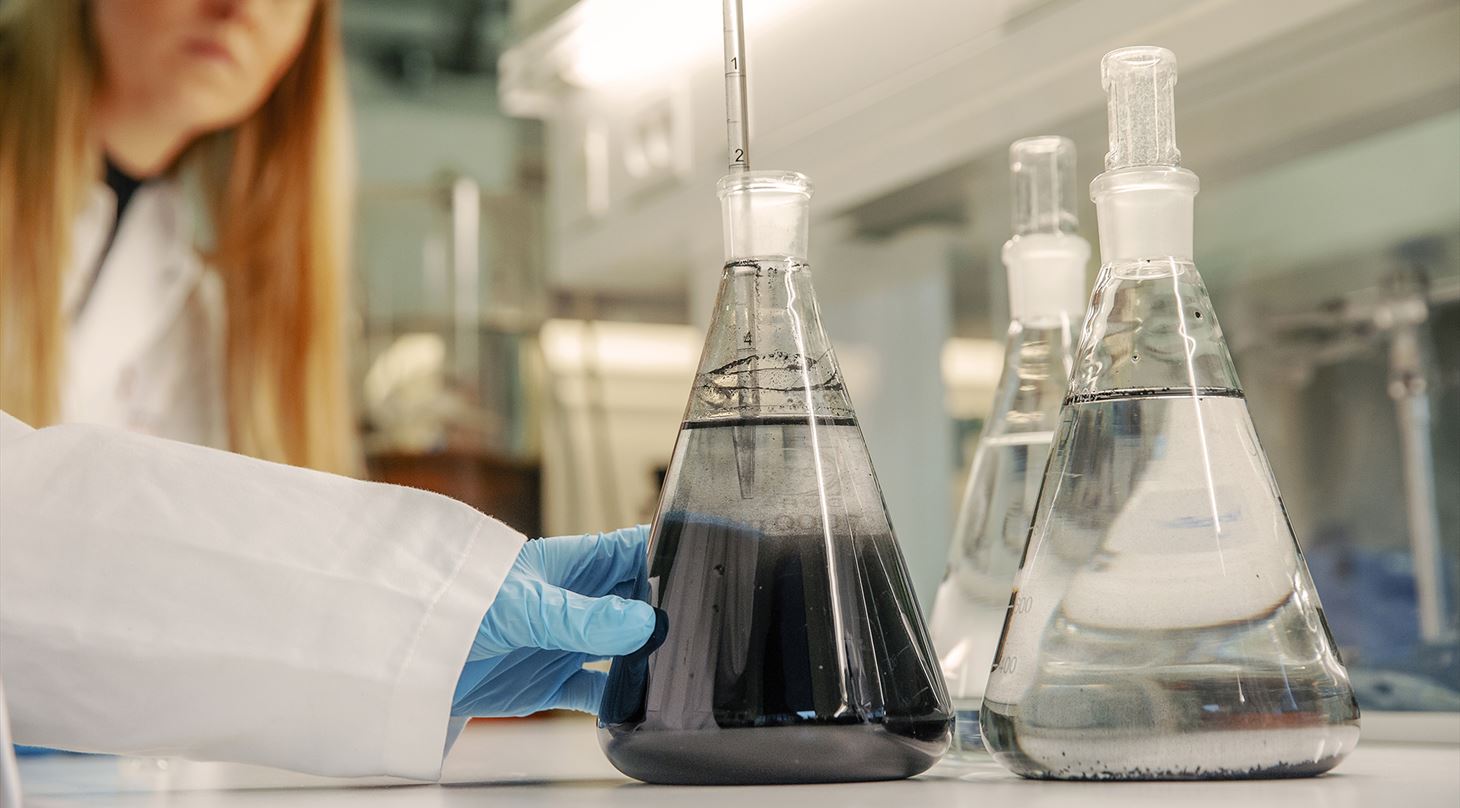
Drinking water
We assist waterworks of all sizes, utility companies, and technology providers in optimizing water treatment and purification processes, enabling them to supply clean drinking water to consumers - both now and in the future. Our experts offer consultancy and advanced testing facilities that provide a solid basis for decisions regarding investments in new technologies and the optimization of existing processes to ensure drinking water quality.
How can the Danish Technological Institute help you?
- Optimization of biological sand filters, achieving up to 25% increased capacity
- Independent testing and analysis of carbon filter types for the removal of micropollutants
- Targeted biological interventions against problematic substances in groundwater
- Consultancy on drinking water production and new purification technologies
- Participation in research and development projects concerning water treatment
- Testing of filter materials for the removal of pesticide residues and PFAS
- Collaboration on the development of innovative water treatment solutions
Improved purification processes and better decision-making
Danish groundwater - the source of our clean drinking water - is under pressure. Concerning findings of micropollutants, such as pesticide residues and PFAS, present utility companies with difficult dilemmas; traditional approaches are falling short, creating a need for innovation and fresh thinking.
At the Danish Technological Institute, we help utility companies and waterworks - large and small - improve current purification processes and establish a solid foundation for decision-making prior to major investments in measures that ensure confidence in drinking water quality. By collaborating with the Danish Technological Institute, utility companies and technology suppliers gain access to impartial advice and advanced testing facilities that can have a significant impact on daily waterworks operations - and on the competitiveness of new technologies.
"For several years, Kemic Vandrens A/S has collaborated closely with the Danish Technological Institute on numerous water treatment projects. The Institute is a strong partner that helps ensure we are moving in the right direction regarding the development of new methods and the optimization of existing ones for water purification. They excel at bringing various stakeholders together in robust collaborations, demonstrating great thoroughness and a passion for developing the future of water treatment." - Henrik Nybro Laugesen, CEO, Kemic Vandrens A/S
The Danish Technological Institute unites the water industry around essential innovation
Ensuring clean drinking water is a shared responsibility involving municipalities, authorities, utility companies, and technology suppliers.
We collaborate with waterworks, utility companies, and technology suppliers to develop, test, and implement resource-efficient solutions that ensure clean drinking water and support the water sector’s green transition. Read more about our services below.
 Optimization of biological sand filters
Just as regular maintenance and cleaning of sand filters can be a sound long-term investment by reducing the risk of operational downtime, it is equally important to fully utilize the water treatment capacity of biological sand filters.
By optimizing bacterial activity in the sand filter, we can usually achieve at least a 25% increase in capacity. This not only improves daily operations but also enhances the ability to handle environmental contaminants such as MCPP, BAM, and glyphosate. Ultimately, this can be the deciding factor in whether or not a borehole needs to be closed.
Targeted biological action against problematic groundwater contaminants
By analyzing the sand filter’s bacterial composition at our drinking water laboratory, your waterworks gains essential insights into the filter's effectiveness against specific contaminants - such as MCPP, BAM, or glyphosate.
Leveraging our extensive network within the drinking water industry, we can explore the possibility of supplying "donor sand" from another waterworks facing similar issues - or cultivate relevant bacterial strains to be added to the sand filter.
The analysis takes approximately one week and provides:
- Insight into the sand filter's biological composition
- Improved ability to combat specific contaminants
- Cleaner water for the waterworks' customers
- Increased water treatment capacity
- Reduced maintenance needs and operational risks
- Minimization of health risks
- Lower risk of borehole closures
 Choose the right type of activated carbon and avoid costly investment errors
Groundwater resources are under pressure due to the detection of environmental contaminants - such as PFAS, pesticides, and pesticide residues - in groundwater boreholes. In just six years (2016–22), the proportion of groundwater wells showing traces of pesticides has more than doubled, reaching 55.3%.
As the number of detections rises, it is becoming increasingly difficult to locate new well sites or to bring levels below the limit values by diluting the water with supplies from other wells.
Waterworks can therefore obtain permission to treat groundwater using activated carbon filters.
Independent carbon filter analysis
Establishing and maintaining carbon filtration solutions represents a multi-million investment for waterworks, and the price of activated carbon filters has doubled in just a few years. It is therefore essential to determine from the outset which type of activated carbon is most effective at removing specific environmental contaminants from the groundwater.
While there are countless types of carbon available globally, up to 20 different types are sold on the Danish market. A supplier will typically offer a specific product that may work optimally for another waterworks—but is it the right choice for you? The effectiveness of different carbon types depends on both the chemical composition of the groundwater and the specific substances requiring removal. In a worst-case scenario, a utility company could end up with an expensive activated carbon filter that has little to no effect, necessitating replacement several times a year.
At the Danish Technological Institute, we offer testing of various activated carbon types using your specific groundwater to ensure that:
- Environmental contaminants are identified
- Groundwater composition is analyzed
- Relevant carbon types are tested against your groundwater composition
- You invest in the right type of activated carbon
An independent carbon filter analysis is a minor investment that provides a highly valuable, data-driven basis for decision-making.
"When facing challenges that require expert consultation and effective solutions, the drinking water specialists at the Danish Technological Institute are ready with extensive knowledge—giving us the opportunity to delve deeply into issues that are difficult to address during a busy workday." - Didde Lindholm Jürgensen, Process Specialist, Hjørring Water Company.
 Advisory services for drinking water production and new technologies
Our experienced specialists help drinking water utilities of all sizes identify measures to ensure clean, safe drinking water and provide guidance on the various options available.
We collaborate with technology providers to develop the necessary technological solutions and support concept development through technology testing. Our extensive laboratory facilities are well-suited for proof-of-concept testing at various scales.
Participate in research and development projects
Do you face a challenge that requires technological development to solve—and where there is a lack of existing research in the field? By participating in a research and development (R&D) project, you can collaborate on creating new solutions that specifically benefit your drinking water production or your company.
The Danish Technological Institute is recognized as a frontrunner in this field; through numerous R&D projects, we have helped many waterworks optimize their drinking water production and assisted technology suppliers in improving and verifying their solutions.
We are always looking for new partners, so please feel free to contact us if you are interested.
Frequently Asked Questions
Why is an independent carbon filter analysis a sound investment for a water utility? The price of activated carbon has doubled in just a few years, and establishing and maintaining carbon filtration systems represents a multi-million-kroner investment. With up to 20 different types of carbon available on the Danish market, there is a risk that the standard carbon offered will have minimal effect on your specific water composition and the contaminants present (e.g., PFAS or DMS). An independent carbon filter analysis from the Danish Technological Institute costs a fraction of the price of a carbon media replacement. We test various carbon types directly using your own groundwater, providing you with a data-driven basis for decision-making and ensuring you get the most durable and cost-effective carbon type.
Can biological sand filters remove synthetic contaminants and PFAS? Traditional biological sand filters cannot remove PFAS; that requires specialized technologies such as activated carbon, resins, or membranes. However, sand filters possess overlooked potential regarding certain pesticides and degradation products (e.g., MCPP, BAM, and glyphosate). By analyzing and optimizing the bacterial composition within the sand filter—or by adding "donor sand" or specific bacterial cultures—we can often increase capacity by up to 25% and stimulate biological degradation. In some cases, this can boost purification efficiency enough to avoid closing a threatened well or investing in expensive polishing stages.
How do I know if our biological sand filter needs optimization? Typical signs include declining capacity, a frequent need for backwashing (resulting in significant water and energy waste), the onset of iron, manganese, or ammonium breakthrough, or the detection of trace amounts of degradable pesticides. If the filter is operated suboptimally, up to 25% of the beneficial microorganisms can be washed out during each backwash cycle. A microbiological and technical assessment by us will reveal whether you can gain up to 25% additional capacity and stabilize operations without the need for new construction.
What distinguishes the many types of activated carbon available on the market? Activated carbon is produced from various raw materials (e.g., coconut shells, coal, or wood) and activated using different temperatures and chemical processes. This results in widely varying pore structures, surface areas, and chemical affinities. A type of carbon that effectively removes PFAS4 is not necessarily the best choice for small-molecule pesticide residues such as DMS or NNH. Furthermore, the natural organic matter (NVOC) content in your groundwater affects how quickly the carbon becomes saturated. Therefore, the type of carbon must always be matched to the specific water composition.