AgNUE: Danish Technological Institute becomes part of an international research platform focused on improved nitrogen use efficiency in agriculture
 In Danish
Project period: 2026–2031
The international research platform AgNUE has a clear mission: To improve nitrogen use efficiency in agriculture.
Over the next five years, the platform will work to reduce nitrogen losses to the environment — without compromising crop productivity. This will be achieved by collecting extensive data from intensively monitored experimental sites in several countries, improving the precision of models that simulate nitrogen dynamics, and evaluating how different cultivation practices affect emissions, yields, and the environment.
A global challenge
Nitrogen loss from agriculture is not only a Danish issue — it is a global one. Today, models are used to simulate and estimate how nitrogen moves across agricultural land and what effect it has on crops and the environment. These models combine data on soil, climate, crops, and cultivation practices to calculate nitrogen balances and predict losses to air and water. Improving these models is crucial, as they help bridge the gap between the scientific understanding of the nitrogen cycle and the implementation of policy measures aimed at reducing nitrogen pollution.
From SmartField to AgNUE
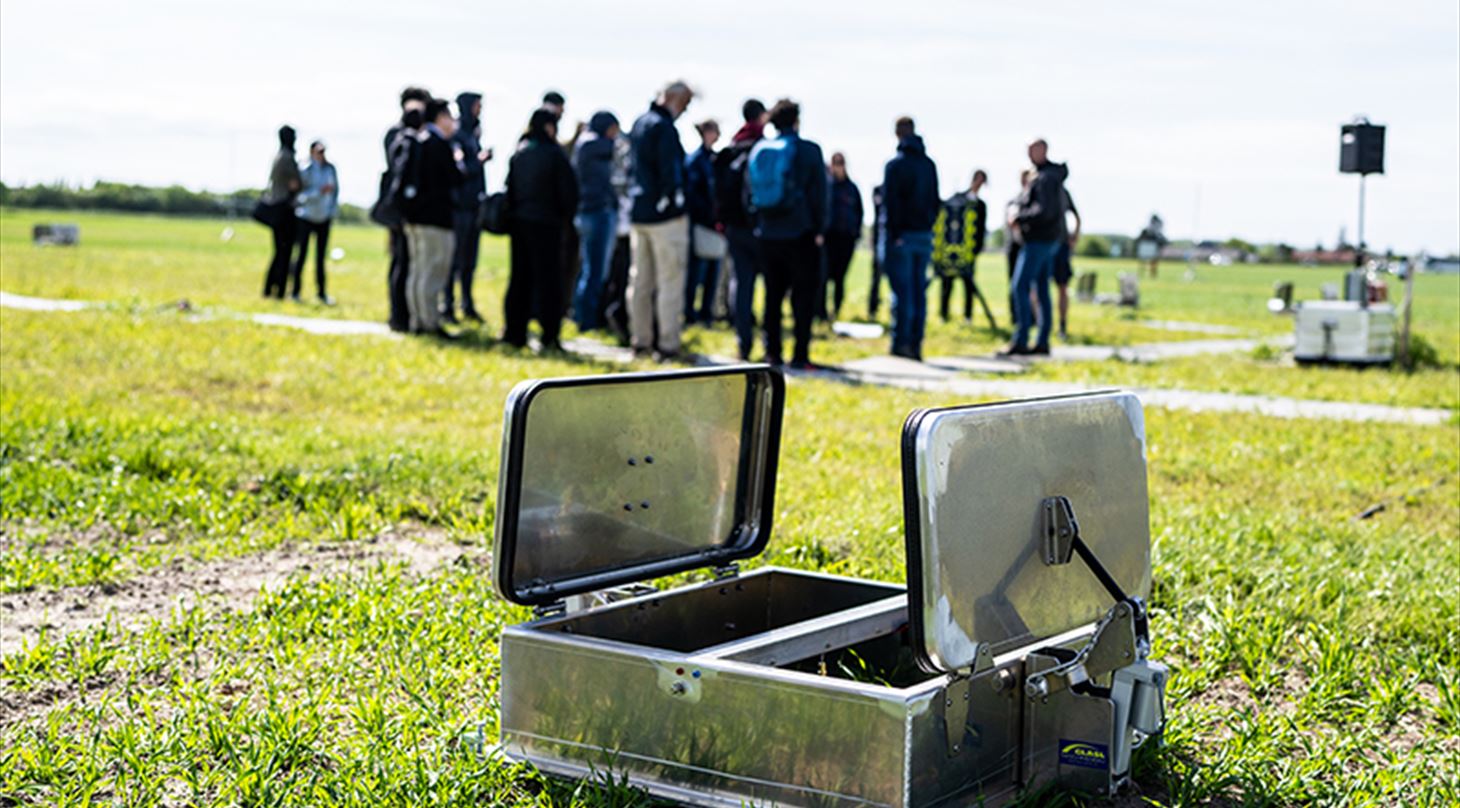
In the SmartField initiative, we are working to improve how we quantify and reduce nitrous oxide emissions ( ) from Danish agricultural land. Since its launch in 2024, SmartField has collaborated with leading international research groups in a mutual exchange of knowledge and experience.
With AgNUE — the Agricultural Nitrogen Use Efficiency Platform — we are now taking the next step and elevating the SmartField concept to the international level. AgNUE is an international research and innovation initiative that brings together data from twelve intensively monitored experimental sites across Europe and the United States. The goal is to create a stronger foundation for the development of models for decision-making and the documentation of mitigation measures — both nationally and globally. The models are built on the basis of high-resolution field data, isotope analyses, and microbial studies, which together provide a much more detailed picture of the drivers of nitrogen loss under different conditions.
We are bringing the experience gained from SmartField directly into AgNUE. SmartField’s data, measurement infrastructure, and methodological approach support the platform’s ambition to establish comparable and reliable measurements across countries, climates, and farming systems.
International collaboration
AgNUE, which is led by Aarhus University (Denmark), brings together universities and research organizations specializing in soil biogeochemistry, agroecosystem modeling, microbiology, meteorology, and sustainable agronomy.
The platform is funded with up to €24 million by the Novo Nordisk Foundation and is further supported by US-based funding.
The partners in AgNUE are:
- Aarhus University (Denmark)
- Danish Technological Institute (Denmark)
- North Carolina State University (USA)
- University of Illinois (USA)
- Wageningen University & Research (Netherlands)
- University of Basilicata (Italy)
- Karlsruhe Institute of Technology (Germany)
- Colorado State University (USA)
- Technical University of Madrid (Spain)
- Swedish University of Agricultural Sciences (Sweden)
- Norwegian University of Life Sciences (Norway)
- University of Helsinki (Finland)
- INRAE – the French National Institute for Agriculture, Food, and Environment (France)