Sustainable and Affordable Ploidy Analysis in Plant Cells Using Flow Cytometry for Agricultural Innovation
Project period: 01.08.2025- 30.04.2026
This project focuses on developing a sustainable and cost‑effective high‑throughput method for measuring ploidy in plant cells using flow cytometry. Ploidy, the number of chromosome sets in a plant cell plays a key role in traits such as growth rate, stress tolerance, robustness, and overall productivity. Polyploid plants often exhibit increased biomass and higher yields, making ploidy analysis an important tool for plant breeding, biotechnology, and addressing global challenges related to food security and climate resilience.
Traditional ploidy analysis relies on DNA stains such as propidium iodide and DAPI, which are expensive, toxic, and environmentally harmful. Their use requires strict safety procedures and specialized chemical waste handling, increasing both environmental footprint and operational costs. To overcome these challenges, the project evaluates a range of more sustainable commercial DNA stains to identify efficient, selective, and environmentally friendly alternatives for plant ploidy assessment.
The evaluation covers DNA specificity, fluorescence strength, signal‑to‑noise ratio, cost, and compatibility with different plant species.
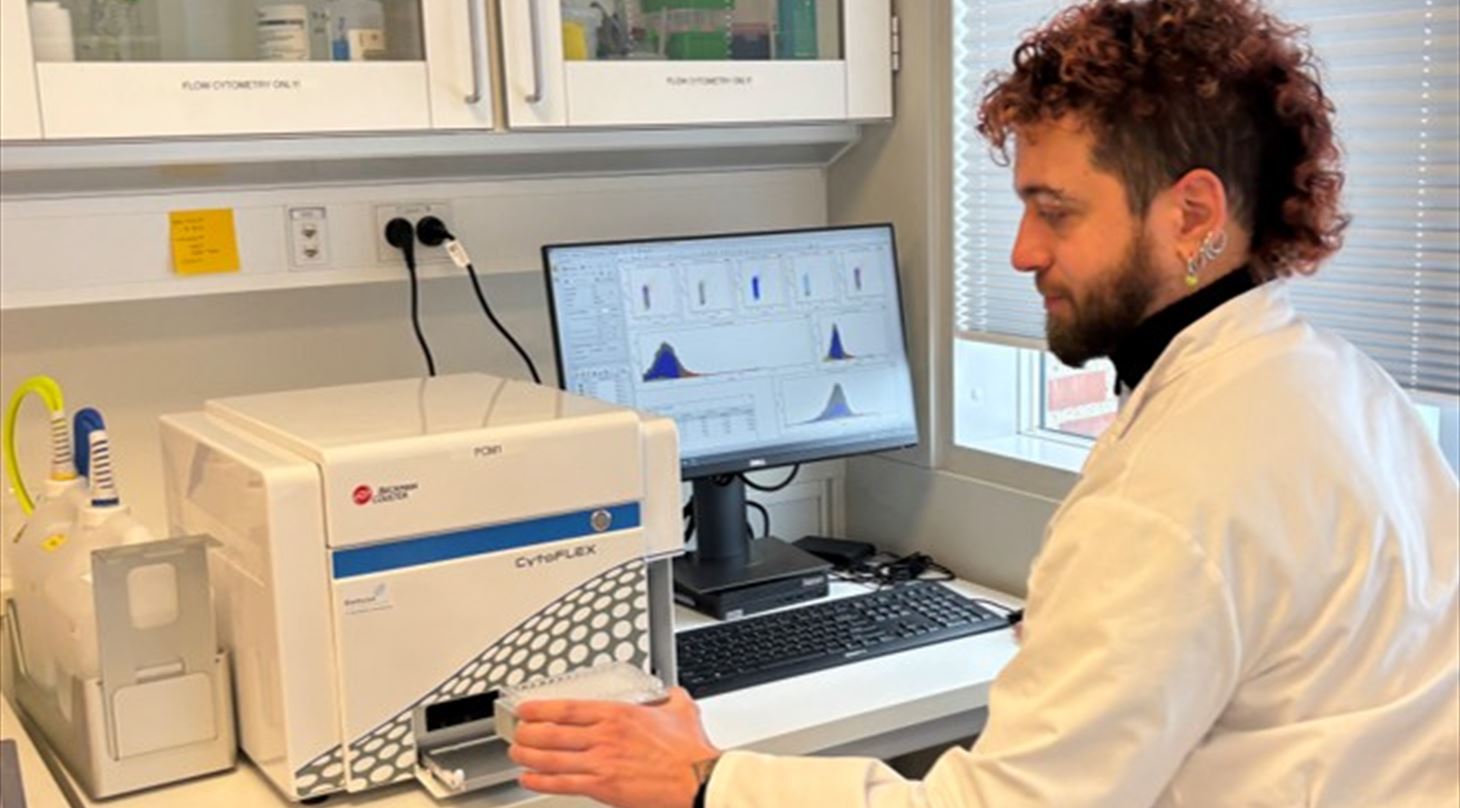
At the Danish Technological Institute, all analyses are performed on our CytoFLEX flow cytometer, which provides high sensitivity and flexible fluorescence channel configurations. This platform enables optimization of stain concentration, incubation time, buffer composition, and selection of the appropriate fluorescence channels (e.g., FITC, PE, or APC) to ensure accurate and reproducible ploidy measurements. The project also includes the development of a standardized acquisition template to streamline data collection and ensure consistency across experiments.
The outcome will be an optimized and environmentally responsible protocol that makes ploidy measurement more accessible, affordable, and sustainable. This will support plant breeding programs, strengthen genetic screening processes, and contribute to agricultural and industrial innovation aimed at meeting future climate and food production challenges.