TRACES: Working towards safe and sustainable use of biochar in agriculture

Project period: 2026–2029
Supported by: LBST – Climate Research in Agriculture
In TRACES we are building a robust knowledge base for risk assessment of the environmental effects of biochar, so that biochar can be used safely and in a targeted way in Danish agriculture and the green transition.
The Green Tripartite Agreement highlights the storage of biochar produced by pyrolysis as a potentially key tool for reducing greenhouse gas emissions from agriculture. Biochar is a carbon-rich material that can be produced using pyrolysis technology, in which residual materials such as straw, digestate and wood residues are heated in the absence of oxygen.
However, if biochar is to be widely used in Danish agriculture and the green transition, without end users having to worry about possible adverse effects from applying it to the soil, a solid knowledge base is needed. The Green Tripartite Agreement also emphasises the importance of thoroughly clarifying the environmental consequences of applying biochar in the field.
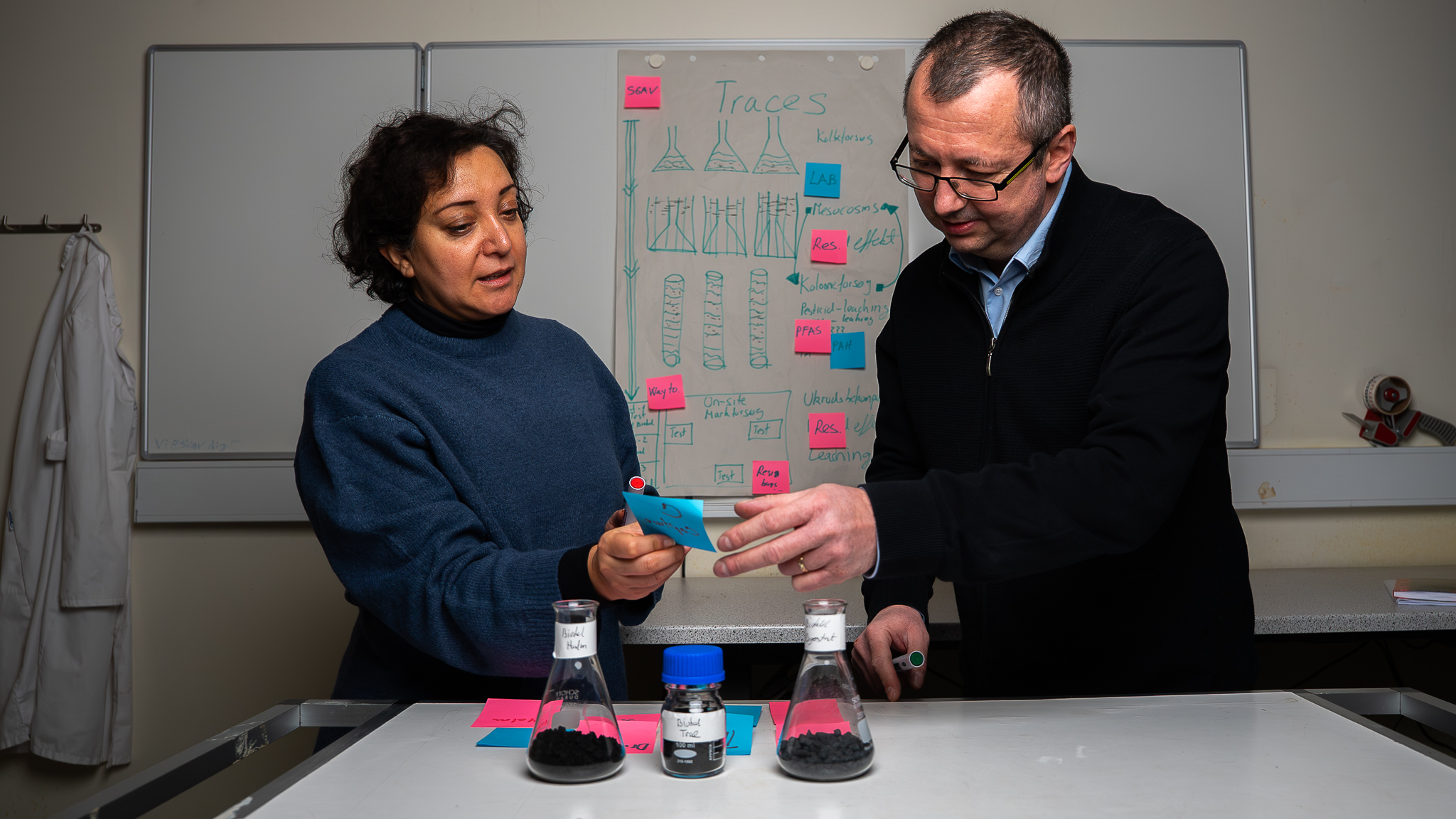 Photo: From the first brainstorm sessions we are working to combine our broad range of expertise and advanced test facilities.
Key knowledge for stakeholders
The project provides knowledge that is essential for agriculture, public authorities and the water supply sector alike. It is intended to improve understanding of how biochar can be used to store carbon and reduce greenhouse gas emissions without increasing the risk of soil and water pollution. TRACES will also provide documentation on how residual biomasses can be converted into safe products for agricultural use. At the same time, public authorities will gain a research-based basis for decision-making on legislation concerning biochar and its possible applications.
TRACES investigates which feedstocks provide the best quality in the final biochar product. The project focuses on the content, release and leaching potential of heavy metals, PFAS, nitrate and other harmful compounds from the biochar types studied in different soils. In addition, the project examines whether the biochar particles themselves are transported to deeper soil layers and drainage water.
We are responsible for:
Sorption experiments: In the laboratory, we investigate both how well biochar can bind other impurities in the surrounding soil and whether biochar may release environmentally polluting substances into the soil.
Mesocosm experiments: Here, soil from selected agricultural fields is used in controlled column experiments to investigate whether the addition of different types of biochar to the soil affects the overall leaching of environmental pollutants in the columns. At the same time we assess whether biochar binds active herbicides and may therefore have a negative effect on weed control and crop growth.
The combination of these experiments provides a strong basis for assessing safety, risks and potential benefits. This basis is then used later in the project, when the application of biochar to soil is subsequently tested in full-scale trials.
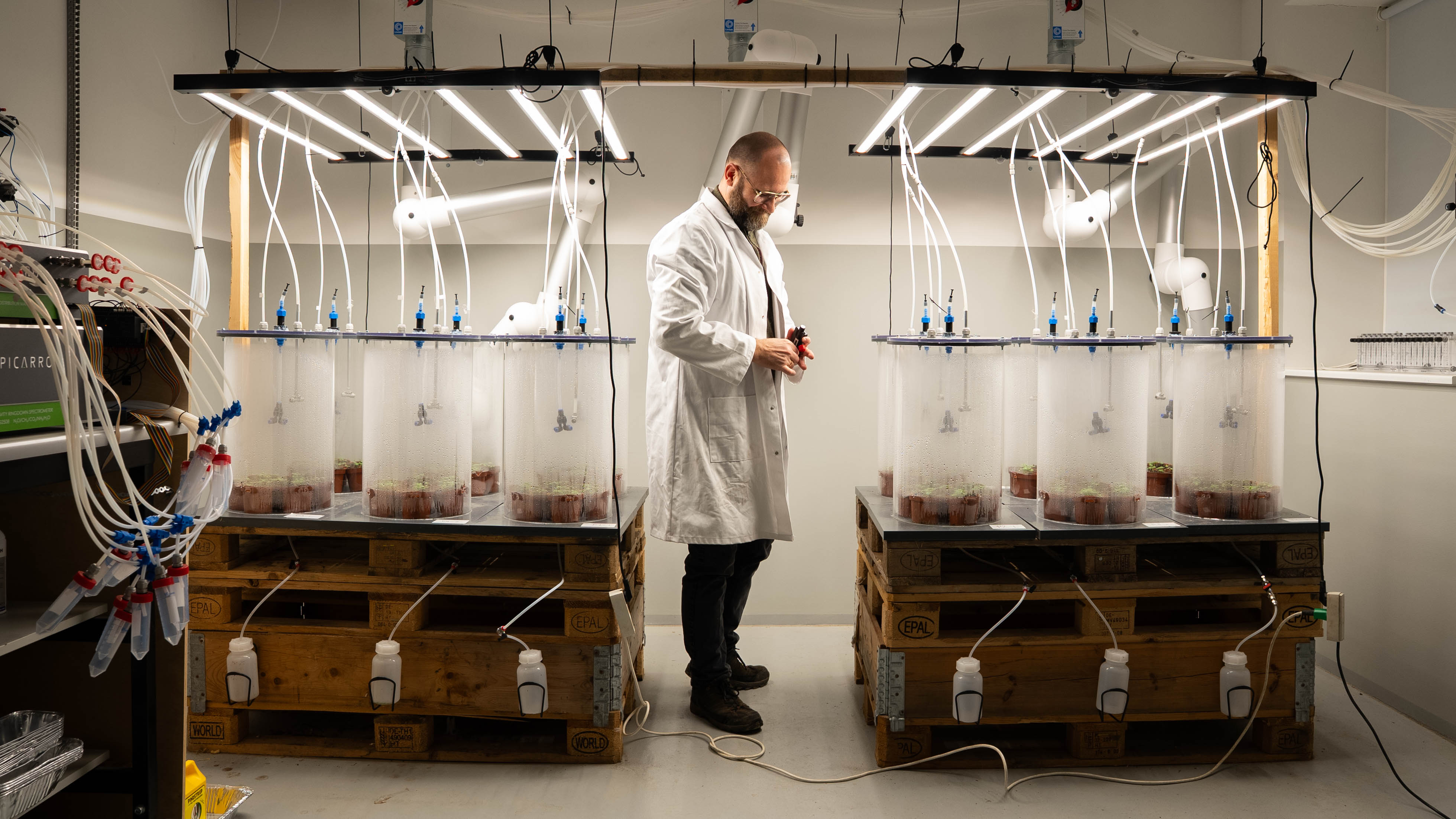 Photo: This is the mesocosm laboratory where we will be conducting the mesocosm experiments.
Project partners
University of Copenhagen (project lead)
DTU
SEGES