1 in 4 companies lack PFAS insight, but three actions can accelerate phase-out
Press release - july 2026
Stricter PFAS regulations place new demands on European companies. Knowledge platforms, targeted support for SMEs and increased transparency in value chains can help the industry phase out forever chemicals.
PFAS is a go-to solution for making materials resistant to water, grease and dirt. However, they accumulate in the environment and in humans, driving regulatory pressure and increasing demands from insurers and customers. But only one in four companies know if they use PFAS, a new report concludes.
The EU is moving toward a broad PFAS ban with few exemptions. At the same time, the PFAS market is under pressure from continued industrial demand as well as growing regulatory and insurance-related requirements. This means that European companies need to quickly gain an overview, identify alternatives, and be able to document that they work in practice.
“Many companies are under pressure to act but lack the tools to do so. PFAS often enter through complex supply chains, making them difficult to identify and replace. In our work with companies, we see that access to testing, documentation and validated alternatives is often the decisive factor. The focus now should be on enabling action, quickly and at scale,” says Sune Dowler Nygaard, Director at Danish Technological Institute.
Three actions to phase-out PFAS
The report is based on a survey with 198 Danish industrial companies, and hands-on work with PFAS substitution in the industry. The report provides a status overview of PFAS use in the industry and outlines practical steps to accelerate the transition to safer alternatives.
“Although the report is based on Danish industry, the challenge is clearly European. PFAS are used across many industrial sectors, and companies face many of the same barriers: limited supply-chain transparency, uncertainty about where PFAS occur, and a need to identify and document viable alternatives. If Europe wants to accelerate PFAS phase-out, companies need practical support, shared knowledge and stronger transparency across value chains,” says Sune Nygaard.
The report identifies three priority actions:
A knowledge platform to give companies access to validated information on where PFAS are used, which alternatives are viable, and how to test and document them
Targeted support for SMEs, including access to funding, independent advice, testing and certification
Greater transparency in supply chains, supported by common standards, partnerships and the use of data and AI
From risk to competitive advantage
The report also shows that phasing out PFAS is not only a compliance issue, but a strategic opportunity. Companies featured in the case studies, several of which have worked directly with Danish Technological Institute, report improved performance, access to new markets and stronger market positioning after identifying alternatives.
“Companies that move early and document their solutions can turn regulatory pressure into a competitive advantage. This is where we see the biggest potential for innovation and growth,” says Sune Dowler Nygaard.
About the report
The road to a PFAS-free future for Danish companies is part of the Technological Outlook, a series of reports from Danish Technological Institute, each providing an overview of the latest developments within a specific technological field of importance to industry and society. The reports offer insights into stakeholder landscapes and emerging global trends, as well as recommendations for societal implementation.
About Danish Technological Institute
Danish Technological Institute (DTI) is a self-governing not-for-profit institution that develops, applies, and disseminates research- and technology-based knowledge to industries in both Denmark and abroard. DTI ranks in top-10 among 350 RTO’er in Europe and is a leading knowledge partnerwithin PFAS substitution and remediation, and is a preferred partner for companies and public authorities addressing PFAS-related challenges.
Danish Technological Institute leads the Danish Environmental Protection Agency’s PFAS partnership with industry, which currently brings together more than 80 companies with a shared goal of accelerating the phase-out and minimization of PFAS in products and industrial production. The partnership website already offers a range of tools and guidance, with more resources to follow. https://pfas-partner.dk.
Read and download Technological Outlook · 2026 - The road to a PFAS-free future for Danish companies at dti.dk: https://www.dti.dk/services/the-road-to-a-pfas-free-future-for-danish-companies/48202
Press Contact: Communication Manager Liza Lindbjerg Andersen, Danish Technological Institute: mail: llia@dti.dk cell phone: +45 72 20 29 19
Subject Matter Expert (SME): Senior Consultant Emil Damgaard-Møller, Circular Resources, Danish Technological Institute: mail: edmo@teknologisk.dk, cell phone: +45 72 20 16 26
Photo:
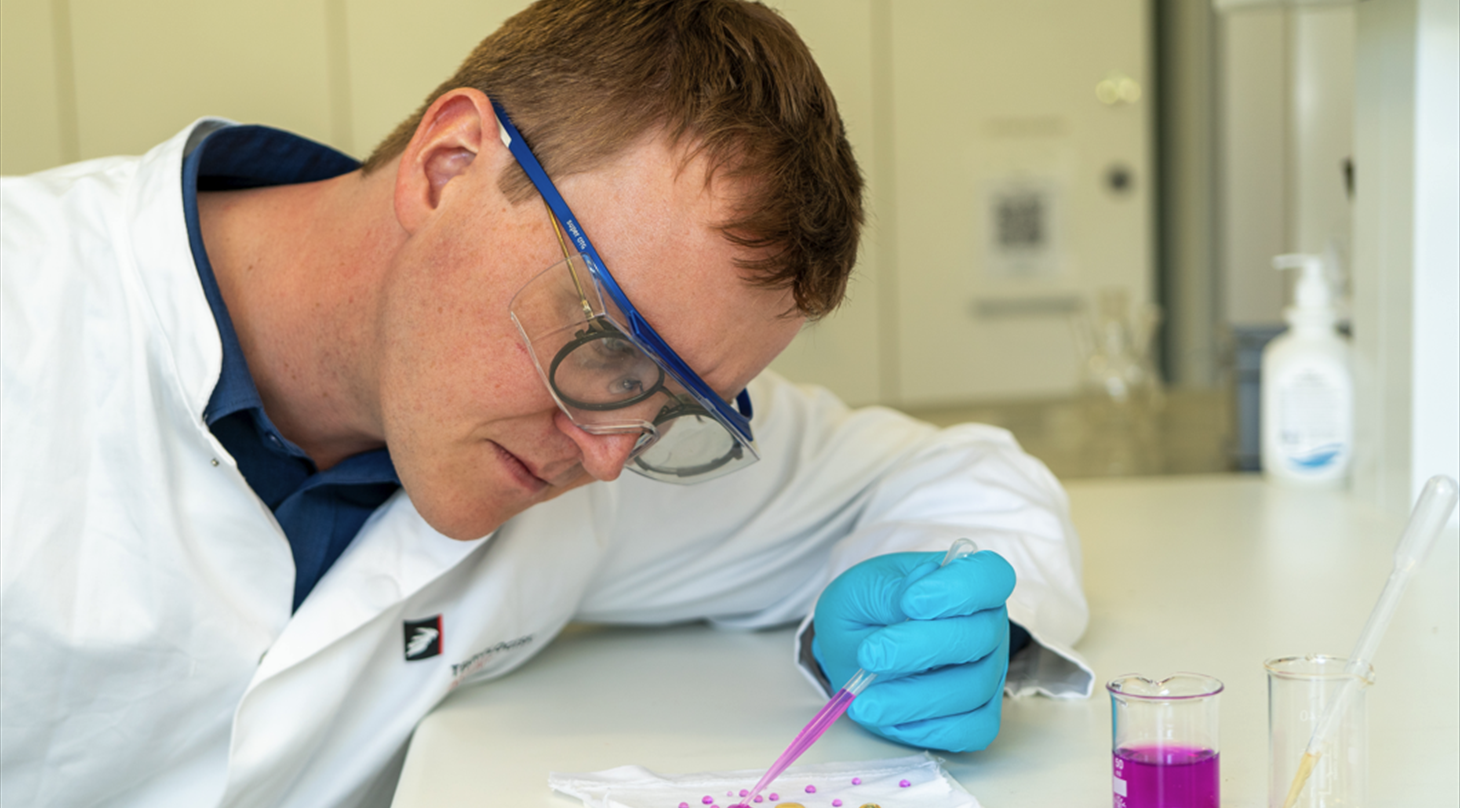
Regarding PFAS, European companies need to quickly gain an overview, identify alternatives, and be able to document that they work in practice.