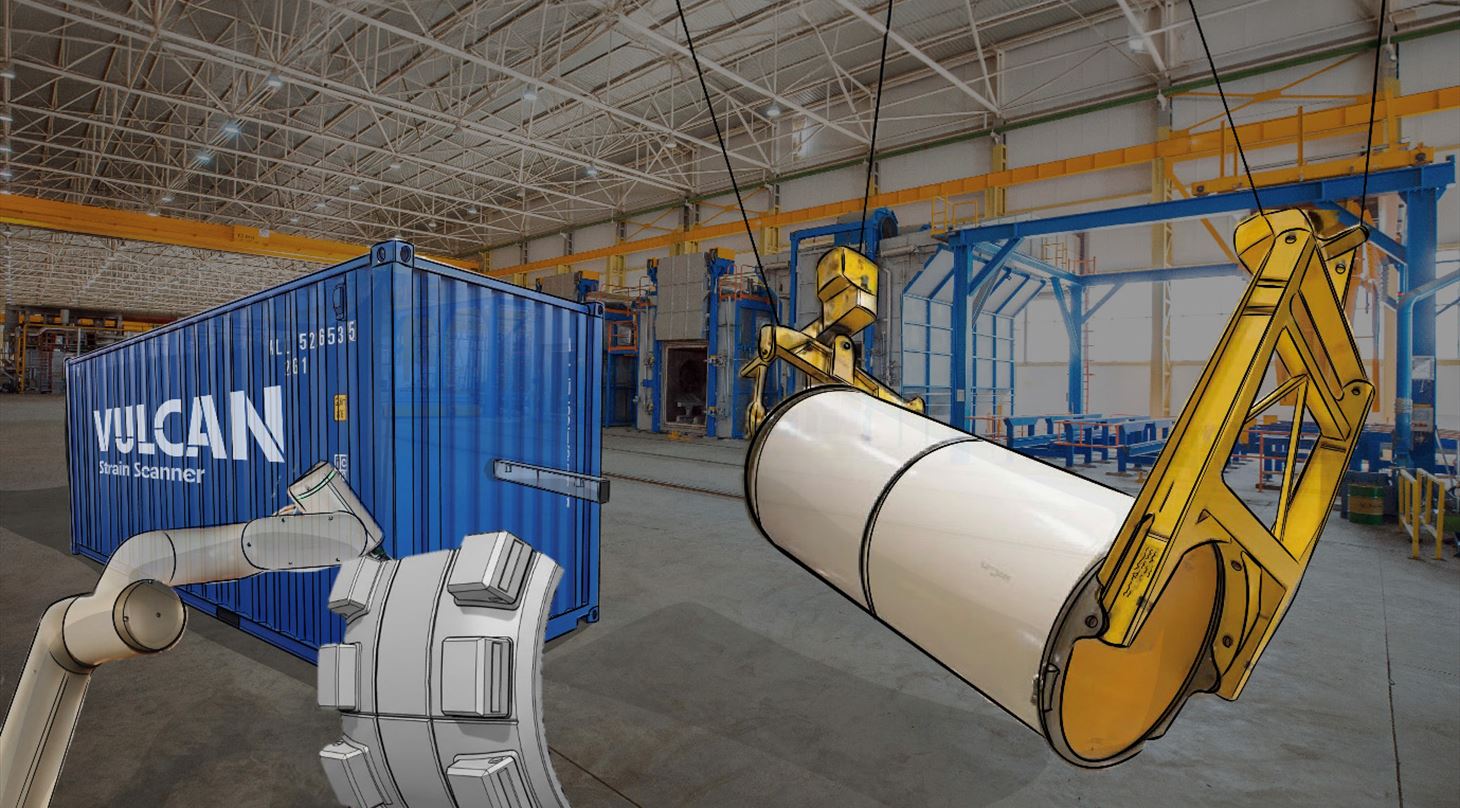
Compact measuring system for safe reuse of rocket parts
Residual stress in metal can be decisive for whether critical components can be produced using advanced techniques, such as 3D printing, or reused safely.
Together with the Swiss company DAES, the Danish Technological Institute is developing a concept for a compact neutron-based measuring system that will make advanced quality control of large aerospace components more accessible.
More accessible and flexible measurements
Large metal parts in launch vehicles are subjected to extreme loads during space travel. If the components are to be reused, or if new technologies—such as 3D printing—are to be used to produce them, it is necessary to be able to determine their internal stress state—without damaging them. Existing solutions make it necessary to transport the components to one of the few large international neutron facilities, where there are also limitations on the size and weight of the parts that can be examined. The project is developing a conceptual design and a digital twin for an ultra-compact neutron-based scanner system that can measure residual stresses deep inside large metal workpieces where they are located, and with fewer limitations on the size and weight of the components.
The goal: safe reuse and use of new technologies
The technology is intended to contribute to the safe reuse of launch vehicle components, better utilization of new production technologies, more precise lifetime assessments, and more sustainable European space travel. In the long term, the solution can also be applied in other sectors with large metal structures where safety is critical.
Facts about the project
The project is supported by ESA's OSIP program through the open channel. It runs for 12 months and was initiated in February 2026. The budget is 100,000 euros.