New test can assess corrosion properties much faster
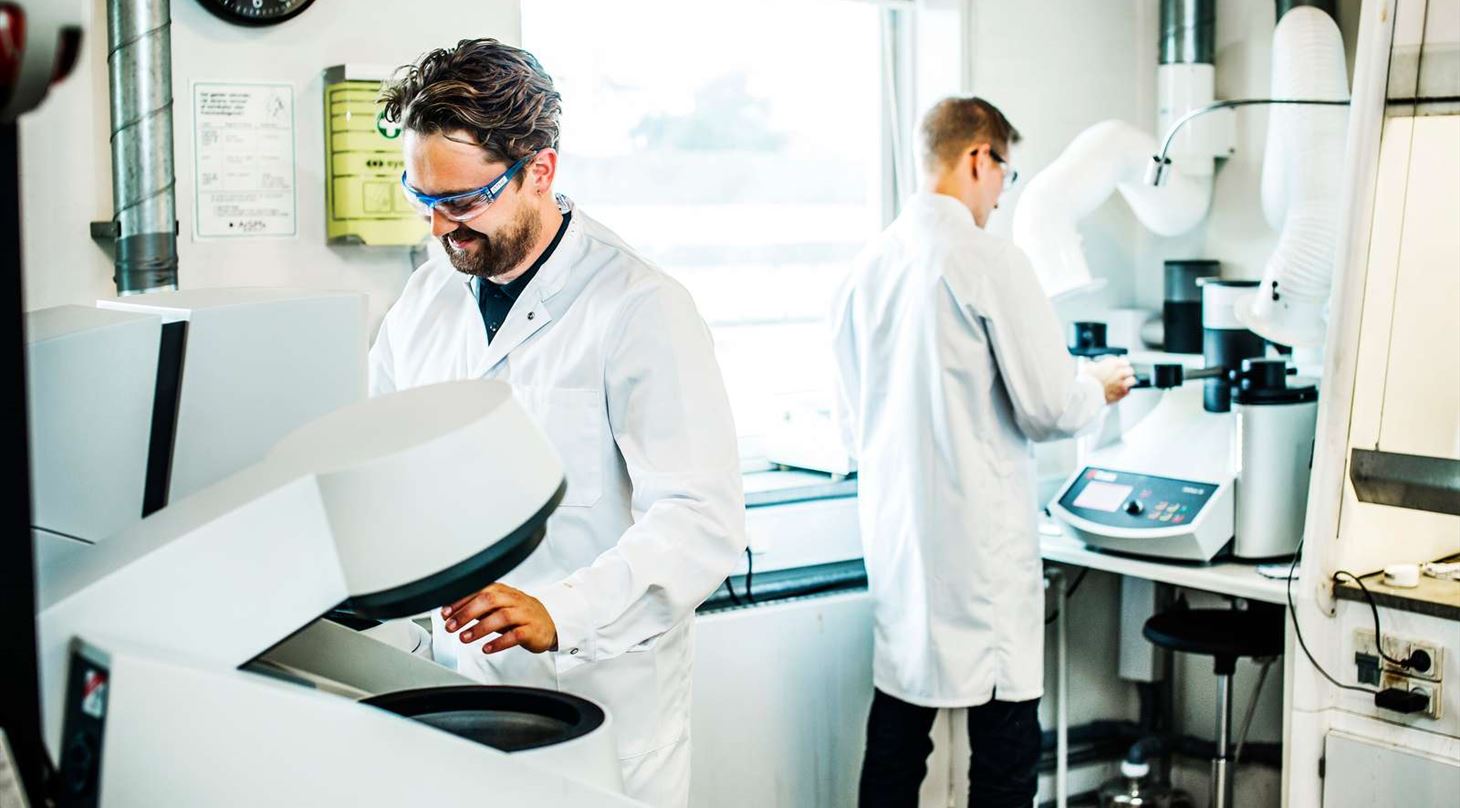
With anodic polarization and cyclic polarization, it is possible to perform accelerated corrosion testing that can quickly assess the corrosion properties of materials in a given environment – and this is a major advantage. This is a service now offered by the Danish Technological Institute, and it means that early in the process it will be possible to determine which corrosion mechanism is dominant.
Corrosion can be difficult to measure, as it typically occurs over years – even decades. For the same reason, it can be challenging to test corrosion on a given material, as this fits poorly with the duration of a design phase. Localized corrosion is particularly difficult to test, but this is precisely the issue addressed by the new test type, which, as an accelerated corrosion test, is also suitable for assessing passive alloys.
See a video about the test here.
Accelerated corrosion test provides rapid data
- An accelerated corrosion test means that you make corrosion occur faster. Based on the data obtained, you assess what you need to be aware of in the long term. You therefore get some data quickly that you can use to optimize your design over the long term, because you are effectively forcing the process, says Thomas Larsen, specialist at the Danish Technological Institute, adding that the service is particularly well suited for testing localized corrosion.
See our different services
- Localized corrosion occurs suddenly, but often after prolonged exposure to the environment. Therefore, it is difficult to test using the more commonly used and simple immersion tests, which is why the method is ideal for localized corrosion, says Thomas Larsen.
 High value in faster screening
The rapid screening of different materials or surface treatments can provide great value and can be used to compare how different materials perform in a specific environment.
In a corrosion test, the parameter measured is the current from the corrosion process, which relates directly to the corrosion rate. The way this is measured is by immersing the sample in a liquid. From there, the potential of the sample is scanned over a relatively wide interval by means of a potentiostat, while simultaneously measuring the current of the electrochemical reactions. With this method, the material is forced away from its steady‑state condition, and the corrosion process is accelerated.
- If you are unsure which alloy you should use – or if you have different surface treatments but are unsure which treatment is best suited – then you can advantageously use this corrosion test. With the test, you can perform the initial screening if corrosion resistance is an important parameter. On the basis of the results, some materials or surface treatments can be discarded and you can subsequently focus on the best ones further in the process, says Thomas Larsen.
To support the increased use of 3D printing
With anodic polarization and cyclic polarization, the Danish Technological Institute will also carry out quality control of 3D‑printed components, where materials and surface treatments are tested with a view to promoting 3D printing technology among SMEs in Danish industry.
The work to get Danish companies started with additive manufacturing technologies is part of the results contract Additive manufacturing technologies – Innovative value creation in Danish manufacturing industry, which is supported by the Danish Agency for Higher Education and Science and runs from 2021–2025.
The ultimate goal for the Danish Technological Institute over the four years is to build a technically strong and equipment‑intensive test, demonstration, and development facility for industrially applied additive manufacturing technologies. At the same time, this facility will close an identified gap in the market by building on more than 10 years of development activities, more than 30 research and development projects, solid market insight and, not least, more than DKK 100 million that the Danish Technological Institute has invested in strategically selected state‑of‑the‑art additive technologies.