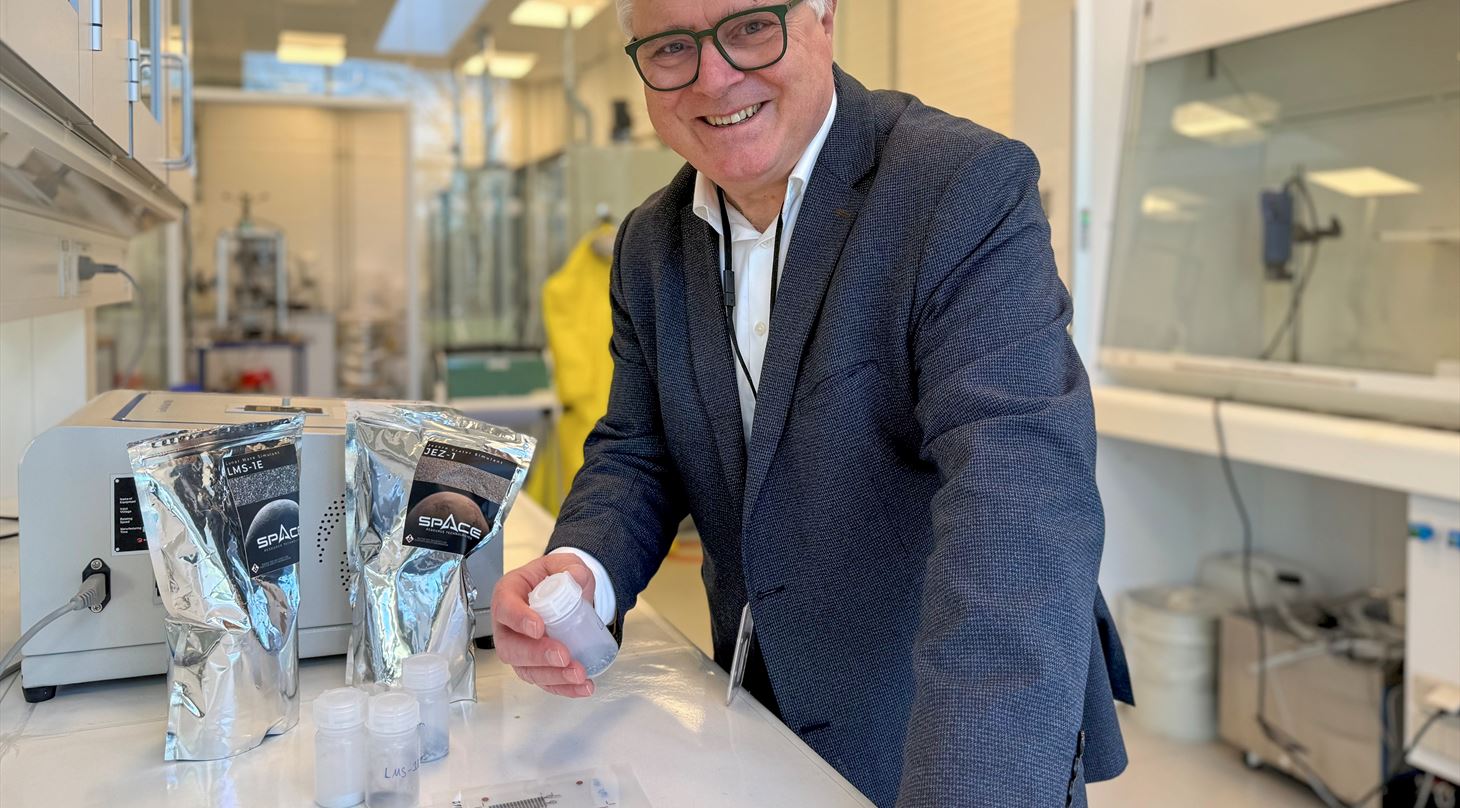
Researchers turn lunar soil into moon-made electronics
Press Release - januar 2026
A Danish-led ESA project will pave the way for the manufacture of electronics directly on the Moon. The goal is to reduce future lunar missions’ dependence on supplies from Earth.
Future lunar missions face a fundamental challenge: the high cost and difficult transport of materials from Earth. Now, a new project supported by the European Space Agency (ESA) will demonstrate how lunar soil - after releasing its oxygen for rocket propulsion and potentially air for astronauts - can also be converted into metal-rich compounds which can conduct electricity. This compound can either be transformed to inks for printing electronic circuits or powder for 3D printing of larger components.
Danish Technological Institute is leading the project, drawing on its specialized expertise in synthesizing conductive materials and formulating printable inks and metal powders – and is working with UK-based Metalysis, a global leader in the reduction of lunar regolith into oxygen and its component elements, which is supplying simulated and de-oxygenated lunar soil for the experiments.
“The primary innovation of the project is converting the conductive part of lunar soil, also called regolith, into a digitally printable material. This opens completely new opportunities for off-earth manufacturing of electronics for future space missions,” says Christian Dalsgaard, Senior Consultant at Danish Technological Institute.
The project has backing from major producers of aerospace and defense technology, who see great potential in the technology. The ability to produce functional electronic systems directly on the Moon or Mars through in-situ resource utilization (ISRU) represents a significant and transformative step towards truly sustainable and resilient space exploration.
Building on proven oxygen extraction
Regolith, contains 40-45 percent oxygen – which is chemically bound within the regolith, Using Metalysis’ patented process – molten salt electrolysis, the calcium chloride electrolyte is heated to 800-1000°C, with a voltage applied between the electrodes triggering oxygen liberation.
This oxygen can be captured for use in rocket propulsion and accordingly since 2019 Metalysis has been working with the UK space agency and the European Space Agency on a range of initiatives focusing on oxygen extraction from lunar regolith.
“Our process was originally designed as an alternative method for titanium production. The technology is applicable to nearly 50 elements in the periodic table, and it is feedstock agnostic – so it can process lunar regolith. Our immediate focus terrestrially is upon high charge tantalum powders and aluminium scandium alloys for the electronics sector,” explains Dr. Ian Mellor, MD and chief scientist at Metalysis.
Once the oxygen is extracted from the regolith, a mixture of metal alloys remains, which could be utilized for repairs and construction. However, this metal-rich residue is also conductive, so the project aims to transform it into ink for printed electronics and powder for conductive 3D printing - both of which can be utilised in off-earth environments.
Strategic importance for spaceflight
The project addresses a key issue in modern space exploration: the high cost and logistical complexity of transporting materials from Earth.
“Every time you want to send a kilo into space, you need 15 kilos of fuel to move it. So, there is an enormous advantage in being able to utilize local materials available on the Moon, for example to repair critical parts,” explains Christian Dalsgaard.
Being able to manufacture electronic components locally on the Moon or Mars allows future missions to achieve greater autonomy and reduce dependence on supplies from Earth.
Concept must work for additive manufacturing on the Moon
To prove that the concept works, Danish Technological Institute and Metalysis will produce conductive raw material from de-oxygenated simulated regolith and demonstrate its use for printed electronics - in a way that can be replicated on the Moon.
“In this way, we produce conductive inks and powder and test that it can be used to additively manufacture a piece of conductive wire. By doing this, we demonstrate that the conductive powder can e.g. be used to manufacture antennas directly on the Moon,” says Andreas Weje Larsen, 3D printing specialist at Danish Technological Institute.
The materials developed in the project have broad applications - from the maintenance of planetary robots and electrical installations in habitats to building communications networks on the Moon and Mars. In addition, the technology can support scientific research by ensuring that instruments and systems can be repaired or adapted locally.
First step toward larger projects
The €155,000 project is a so-called proof-of-concept and is expected to be the beginning of several new projects and initiatives from Danish Technological Institute where specialists will help unlock the enormous potential of regolith as a raw material for electrical components.
This project is carried out under a programme of - and (co) funded by - the European Space Agency. The views expressed in this press release are those of the participating companies and can in no way be taken to reflect the official opinion of the European Space Agency.
Further Information:
Senior Consultant Christian Dalsgaard, Danish Technological Institute, mobile: +45 7220 2095, email: chda@teknologisk.dk
MD and chief scientist Ian Mellor, Metalysis, emal: ian.mellor@metalysis.com
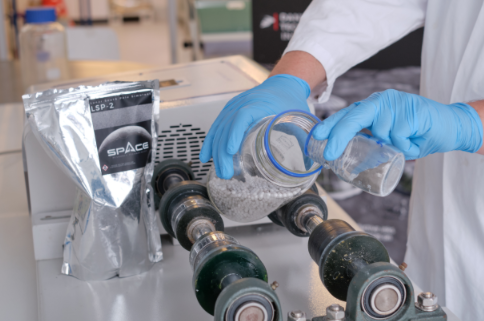
Foto 1: Regolith simulant must be finely pulverized using hard milling balls before it can be used for printing metal and electronics.
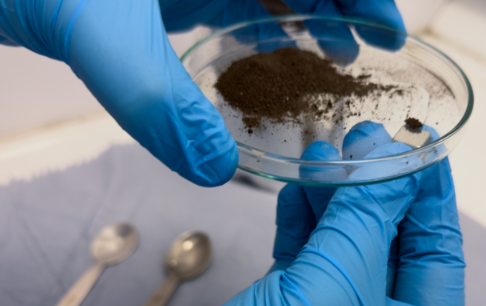
Foto 2: It is the magnetic properties of the regolith that are to be exploited.
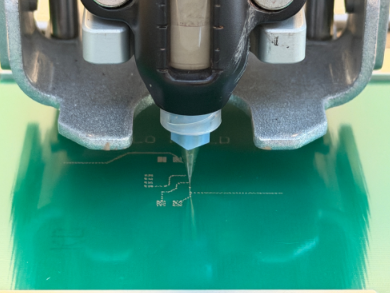
Foto 3: In the project, Danish Technological Institute must demonstrate that it is possible to print electronics from lunar soil.