Structural characterization of biomolecules with SAXS
 In Danish
Gain direct structural insight into your biomolecules in solution - and make better decisions from lead screening to regulatory documentation.
Small-Angle X-ray Scattering (SAXS) is an experimental measurement technique used to determine the size, structure, folding, and interactions of biomolecules in their native solution state. Danish Technological Institute offers SAXS-based characterization at synchrotron facilities with a sample consumption down to 20 µL per measurement. This service provides you with structural data to support decisions regarding candidate selection, formulation optimization, stability screening, and regulatory documentation – from early development to commercial manufacturing.
How can Danish Technological Institute help you?
Danish Technological Institute delivers comprehensive SAXS analyses that provide you with structural insight into your biomolecules in their native solution state. We cover the entire development pipeline:
- Drug design and lead screening
Understand molecular size, oligomeric state, folding, and stability early - and eliminate problematic candidates early on. SAXS provides a direct structural foundation that supports the prioritization of lead candidates for proteins, mAbs, ADCs, and nucleic acids (DNA/RNA). - Higher-Order Structure (HOS) characterization
Document the tertiary and quaternary structure of your molecules in solution to meet regulatory requirements for biologics. SAXS delivers direct empirical documentation of correct folding and structural integrity for use in regulatory submissions and biosimilarity assessments. - Formulation development and optimization
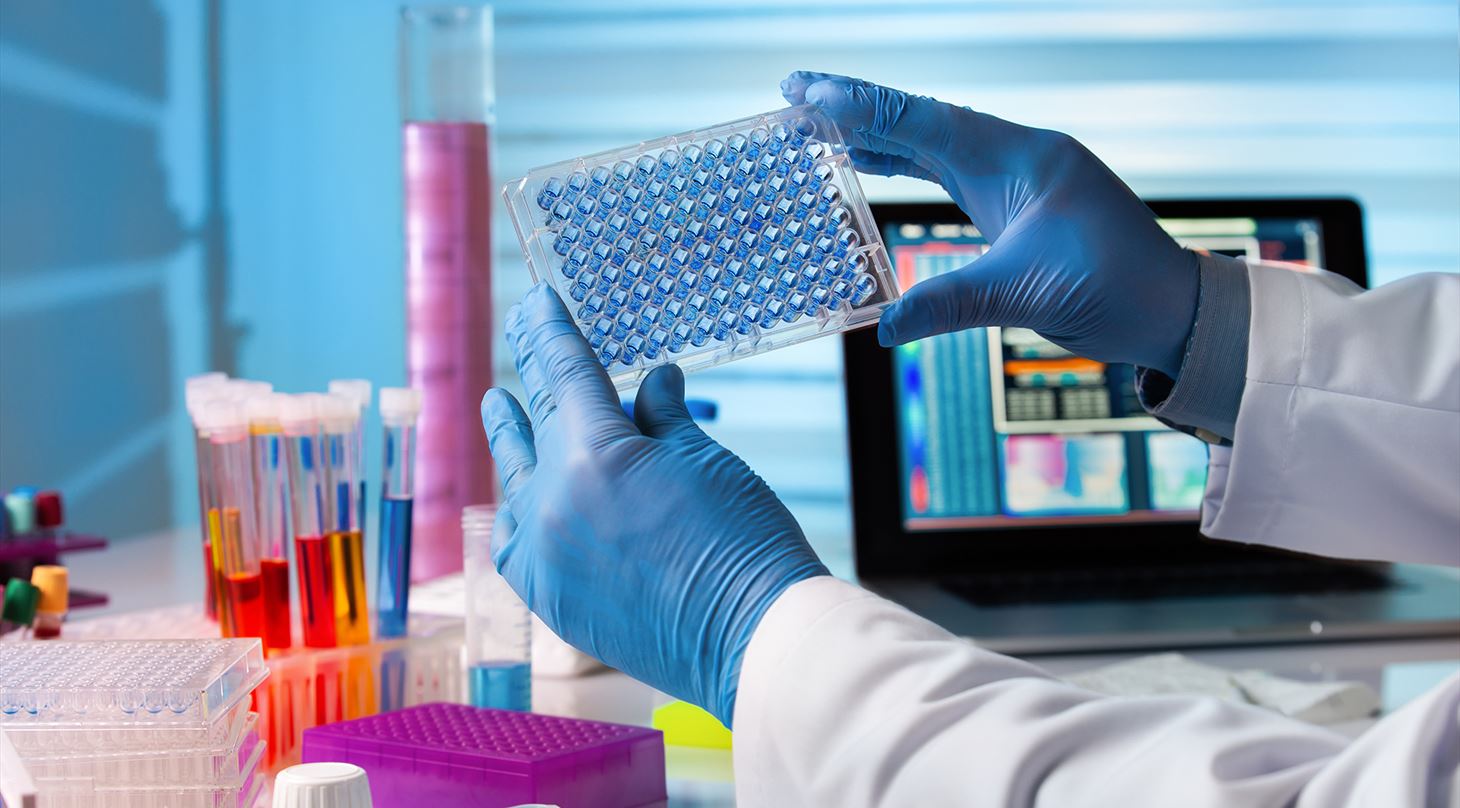
Screen concentration, pH, buffers, and excipients to identify stable formulations. We support a high-throughput workflow compatible with 96-well plates, enabling data-driven formulation decisions. - Stability assessment
Detect aggregation, unfolding, and phase transitions under controlled conditions. Characterize the effect of temperature, ionic strength, and pH on structural integrity to predict shelf life and quality issues. - Batch-to-batch quality control
Verify reproducibility across production batches using structural fingerprints - a fast and sensitive QC method from early development to commercial manufacturing.
Why SAXS for drug development?
Nearly 90 percent of all drug candidates fail during the clinical development phase. A significant cause is an insufficient understanding of the structural behavior of biomolecules in solution. Aggregation, unfolding, and unwanted molecular interactions can compromise the stability, shelf life, and clinical efficacy of a formulation.
SAXS provides a direct, empirical picture of the biomolecule's structure under conditions relevant to the final drug product. Unlike crystallographic methods, SAXS requires no crystallization, and measurements are performed directly on the molecule in solution at realistic concentrations, temperatures, and pH values. This makes the method exceptionally well-suited for catching structural issues early - before they become costly to resolve.
What makes Danish Technological Institute’s SAXS service unique?
Danish Technological Institute combines access to synchrotron facilities with specialized expertise in SAXS data collection, processing, and interpretation. This means you get more than raw data:
- Extremely low sample consumption - down to 20 µL per measurement, which is ideal in early development phases where sample material is limited and valuable.
- High-throughput workflow - analyses in a 96-well plate format make it possible to screen numerous formulation conditions systematically and in a data-driven manner within a single experiment.
- Analysis under native conditions - your samples are measured in solution at relevant concentrations, temperatures, and buffer conditions, ensuring results reflect actual behavior.
- Expert analysis and actionable reporting - PhD-level scientists analyze your data and deliver reports with concrete recommendations that can be directly applied to decision-making.
- Rapid access to synchrotron beamtime - Danish Technological Institute has established partnerships that shorten the turnaround time from sample receipt to results.
Regulatory documentation and biosimilarity
For biologics and biosimilars, regulatory authorities require documentation of Higher-Order Structure (HOS). SAXS provides direct empirical documentation of correct folding and structural integrity in solution – data that can be integrated into regulatory filings and complement other analytical methods such as circular dichroism (CD), differential scanning calorimetry (DSC), and mass spectrometry.
Danish Technological Institute advises on how to best integrate SAXS data into your overall analytical strategy and documentation package.
Contact us about SAXS characterization
Would you like to know how structural characterization with SAXS can strengthen your drug development? Contact our specialist Mathias Huss-Hansen, PhD, for a technical discussion about your specific challenge - whether it involves lead screening, formulation optimization, stability assessment, or regulatory documentation.
Frequently asked questions about SAXS characterization