Smart skin technology to protect robots in space
Press Release - maj 2026
An ESA-funded project will develop a new protective covering, intended to pave the way for more affordable robots in space, while also holding potential for terrestrial applications.
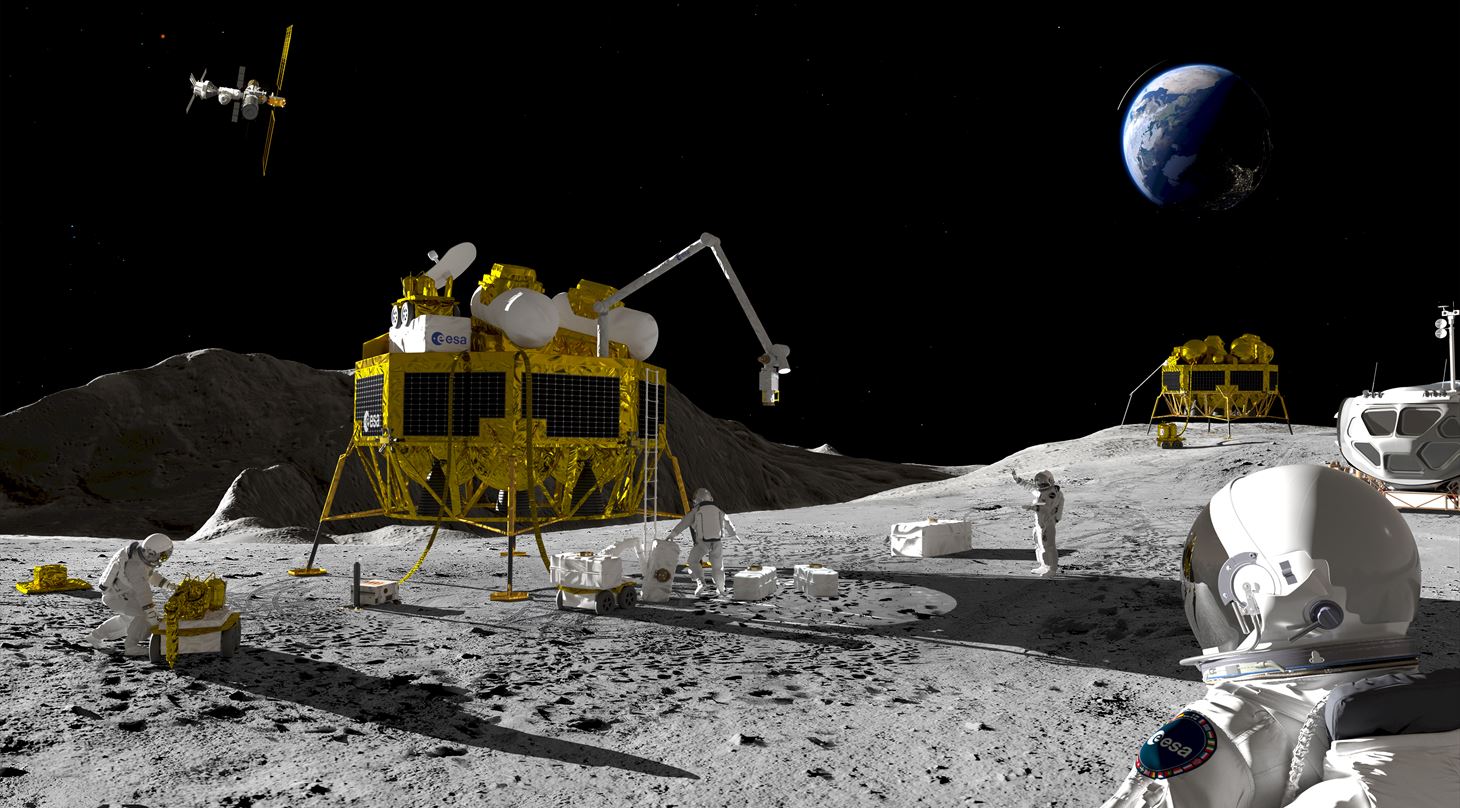
Future space exploration will increasingly rely on robots as the primary workforce. However, this requires them to become better equipped to operate in the extreme environments of the Moon, Mars, and in orbit – with abrasive dust, intense solar radiation and temperatures ranging from minus 150°C to plus 120°C.
The European Space Agency (ESA) has now appointed a pan-European consortium led by Danish Technological Institute (DTI) to develop the next generation of a protective cover for robotic arms. The project is called Smart Skin for Exploration Cobots and aims to advance the technology to a level where it can be demonstrated under space-like conditions.
– The potential for robots in space exploration is extensive. They can help with everything from resource extraction on the Moon to on-orbit satellite servicing and active debris removal. But this requires the robots to be extremely robust and capable of operating autonomously - or safely in collaboration with humans, says Christian Dalsgaard, Senior Consultant at DTI.
Advanced multilayer protection
The smart skin technology is being designed to be adaptable to different robotid arms - both for upcoming lunar missions, future Martian missions, and for in-orbit operations.
At its core is a 3D-printed scaffold that can be mounted on the robotic arm. It serves as a platform for four integrated functions: a thermal and dust-protective layer that shields against extreme temperature fluctuations and abrasive dust penetration; flexible power and data cabling; sensors capable of detecting and preventing collisions; and features that enhance human-machine interaction.
3D printing has been chosen because it offers the necessary design freedom, but the technology will be pushed beyond its comfort zone - with entirely new approaches to design and material selection.
Traditionally, Multi-Layer Insulation (MLI) materials have been used on all spacecrafts, providing high-efficiency thermal protection for the whole structure - or just for smaller instruments. However, these applications are static without any motion. Developing a similar type of thermal insulation for moving parts is significantly more challenging, but it allows for a wide range of future applications for robotic systems.
- Applying an advanced protection system could lead to building robotic arms from commercially available components. This can create a cost-effective way of providing new solutions for customers in many space domains - from deep space missions, through in-orbit servicing to Moon colonisation. At Admatis, we are committed to any development that gives Europe a competitive advantage, and this project is fully in line with our strategy, says Tamás Bárczy, CEO at Admatis.
From space to practical benefits on Earth
Although the smart skin technology is being developed specifically for the unique challenges of space, parts of the technology may in time have wider application potential.
– We see strong potential for the technology eventually to find applications in companies where robots are exposed to extreme conditions. Think of metal foundries, where dirt and extreme heat challenge equipment performance. The technology we are developing could potentially extend the service life of critical equipment and reduce maintenance costs, explains Christian Dalsgaard.
International collaboration with specialist expertise
The project builds on a previously successful pilot phase and brings together leading European space companies and specialists within adjacent fields.
DTI is coordinating the activities and contributing specialists in robotics, functional materials science and industrial 3D printing.
Admatis (Hungary) is developing the thermal protection, while PIAP Space (Poland) and Redwire Space Europe (Luxembourg) are making their expertise and robotic arms available – the same arms currently being developed for ESA's upcoming lunar missions. This ensures that the smart skin technology is designed from the outset for the specific systems it is intended to protect.
Project facts
Budget: EUR 1,65 million
Duration: 24 months (2026–2028)
Partners: Danish Technological Institute (Denmark), Admatis (Hungary), PIAP Space (Poland), Redwire Space Europe (Luxembourg)
Objective: Two functional solutions tested under space-like conditions
This project is carried out under a programme of - and (co) funded by - the European Space Agency. The views expressed in this press release are those of the participating companies and can in no way be taken to reflect the official opinion of the European Space Agency.
More information
Senior Consultant, Christian Dalsgaard, DTI, email: chda@dti.dk, phone: +45 72 20 20 95
CEO, Tamás Bárczy, Admatis, email: barczy.tamas@admatis.hu, phone: +36 46 89 81 54
Business Development Director, Anna Nikodym-Bilska, PIAP Space, email: anna.nikodym-bilska@piap-space.com, phone: +48 885 404 409 / +48 228 740 395
Project manager, Francois Leproux, Redwire Space Europe, email: francois.leproux@redwirespace.eu, phone: +35 26 91 54 41 06
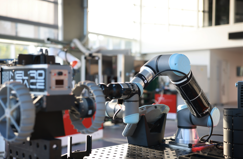
Future space exploration will increasingly be carried out with robots – but it requires them to better handle the extreme environments on the Moon, on Mars, and in orbit. The image shows the smart skin from the pilot phase of the project. Image: Danish Technological Institute
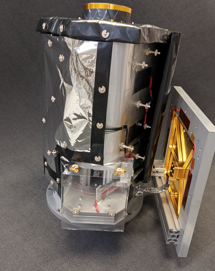
MLI (Multi-Layer Insulation on the Comet Camera instrument flight hardware from the Comet Interceptor ESA mission to be launched in 2029. Image: Admatis