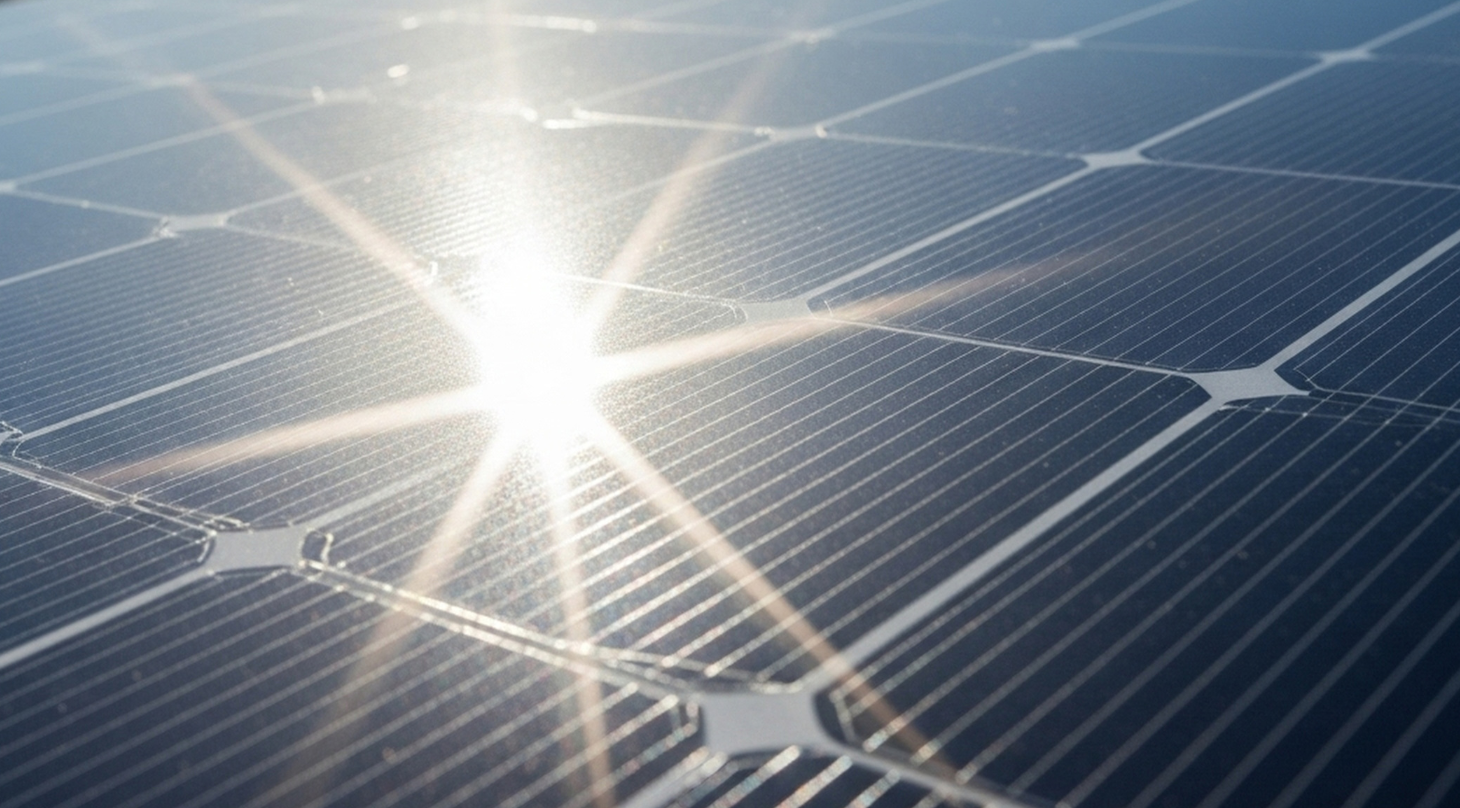
Solar Glare
How Danish Technological Institute helps map nuisances from reflected sunlight
Why focus on solar glare?
When solar energy is exploited on a large scale via photovoltaic (PV) plants – or through large glass- or metal-clad buildings – the reflection of sunlight (solar glare) can cause nuisances or potential safety issues for neighbours, road users, businesses, and airports. Solar glare ranges from minor comfort issues to serious risks in road traffic and aviation.
For a solid project basis and to ensure good dialogue with both authorities and local stakeholders, it is necessary to carry out an independent and thorough glare analysis.
Typical analysis include solar PV installations on ground, roof, or façade; large glass- or metal-clad building facades; industrial areas or infrastructure close to neighbours, roads, and airports; as well as urban development projects with a risk of glare. The documentation is typically used in Environmental Impact Assessments (EIA), local development plans, regulatory work, neighbour communication, and project optimisation.
The typical process – step by step
1. Initial contact and dialogue
You contact us by phone or e-mail. Briefly describe your project and what you want assessed for glare (e.g. solar park, new building, airport).
2. We send you a checklist
You receive a checklist so we can quickly gather the key project data: site/area layout, panel or façade type, desired observation points (neighbours, roads, etc.), special requirements, schedule, etc.
3. Optional kick-off meeting
If needed, we offer a brief online or phone meeting to clarify expectations and ensure that all relevant details are in place.
4. Quotation
Once we have the necessary information, we will send you a non-binding quotation.
5. Data processing, simulation & analysis
We set up the calculation model and carry out the simulations.
6. Reporting – flexible delivery
We deliver the report in the agreed format – consolidated or split – with clear, neutral presentation of results and assumptions.
7. Follow-up and any supplementary analyses
If the project changes or questions arise, we can quickly adapt the simulation and provide supplementary analyses.
Why choose glare calculations from Danish Technological Institute?
CROSS-SECTOR EXPERIENCE
We have analysed everything from small solar installations and facades to large energy parks, for private clients, developers, and consultants.
CLOSE DIALOGUE
You will have a dedicated contact person and prompt follow-up throughout the entire process.
OBJECTIVITY AND INDEPENDENCE
Our analyses are independent, documented, and follow internationally recognised methods.
FLEXIBILITY
We adapt the process and reporting to the project’s complexity and the recipient’s needs.
Even though solar panel manufacturers do everything they can to allow sunlight to pass through the glass without obstruction, there will still be some reflected light, especially at shallow incidence angles, that can be disturbing to neighbours and road users. We can calculate where this reflected light will end up and thereby quantify how often, and to what extent, glare may occur.Ivan Katic, Senior Specialist, Danish Technological Institute
Meet our expert
Read more about our expert here:
Ivan Katic
Senior Specialist
Ivan has several years of theoretical and practical experience in solar energy, especially photovoltaic systems. He is a pioneer in testing and evaluating different system configurations and control strategies for both grid-connected and stand-alone PV systems. He is involved in a number of research and development projects concerning building-integrated PV systems, smart energy management, battery/thermal storage systems, and optimised self-consumption.