Unlocking Circularity for Flexible Plastics: 16 Partners Launch InFACT Project
Press Release - june 2026
Nestlé, Arcus, Interzero, and thirteen other leading companies are joining forces in a landmark project to turn household plastic waste into new packaging - including food packaging - as Europe tightens requirements for recyclability and recycled content.
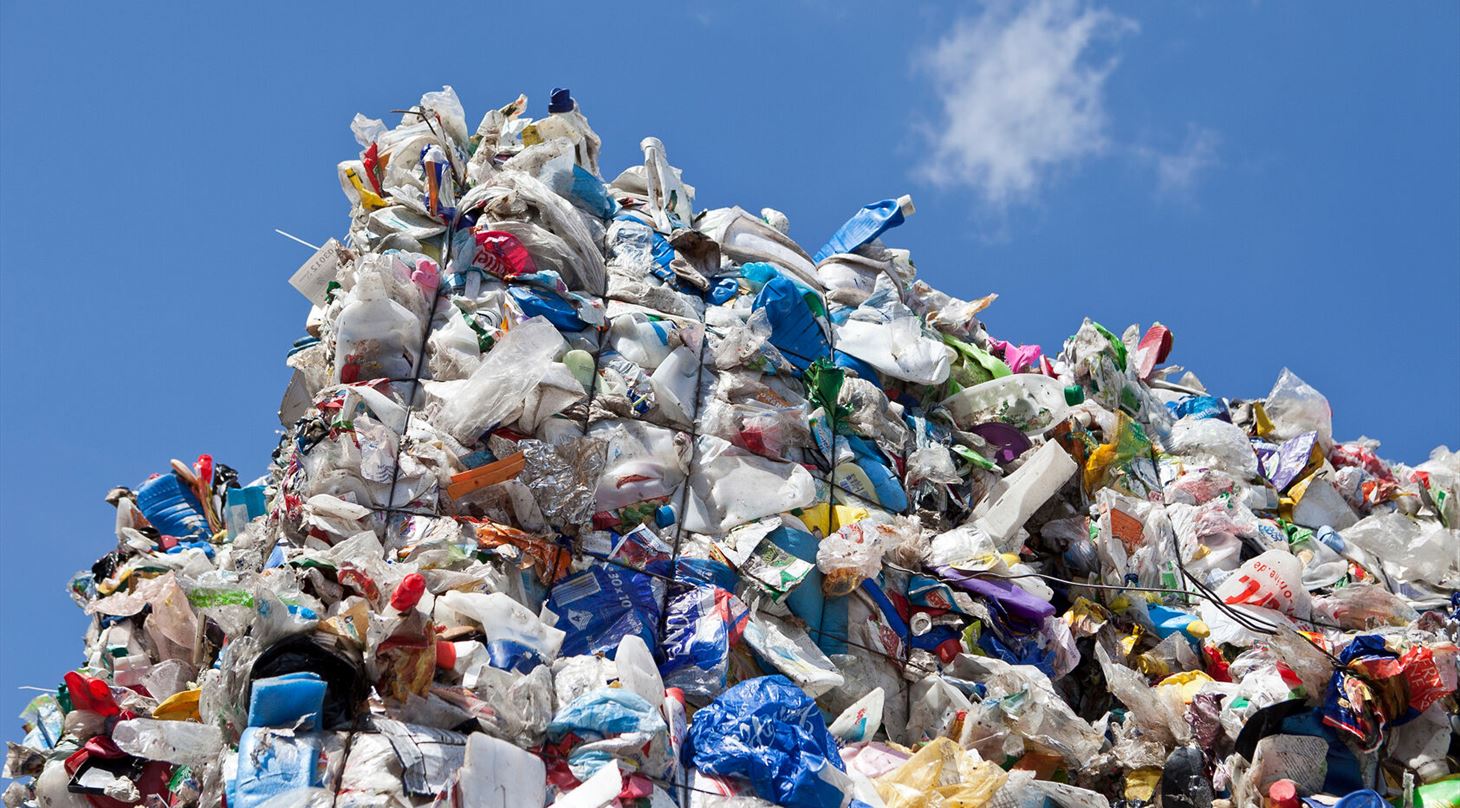
Every year, vast quantities of flexible plastic packaging — coffee bags, meat packaging films, crisp packets and confectionery wrappers — are incinerated or downcycled into lower-value products rather than recycled into new packaging. Today, less than 15 percent of this packaging type is recycled, despite accounting for nearly half of all plastic packaging placed on the European market. InFACT aims to change that.
A complete value chain from bin to shelf
InFACT brings together 16 international partners covering the entire value chain: collection, sorting, recycling, packaging production, and food companies. The project is led by Danish Technological Institute and runs from 2026 to 2028, and is funded by Innovation Fund Denmark through the TRACE programme.
"We have brought together partners covering the entire chain from household waste bins to supermarket shelves. That is essential if we are to build a circular infrastructure that works technologically, environmentally and economically," says Per Sigaard Christensen, Business Manager at Danish Technological Institute.
A technical challenge meets political reality
Modern flexible food packaging is technically advanced - typically built from multiple polymer layers, barrier films, printing inks, adhesives and, in some cases, metallised surfaces. This makes the material almost impossible to recycle through conventional mechanical remelting. InFACT combines several complementary recycling technologies to crack that challenge.
In addition, key barriers have been a fragmented value chain and the lack of viable business models. InFACT is designed to address this by connecting technologies, documentation and market demand across the full packaging chain.
The project launches at a pivotal moment. The EU Packaging and Packaging Waste Regulation (PPWR), which entered into force in February 2025, tightens requirements for recyclable packaging and documented recycled content by 2030. InFACT is designed to help industry translate these requirements into practical circular infrastructure.
"If we can establish a commercially viable infrastructure for flexible plastic packaging, we can both support the implementation of EU requirements and strengthen the resilience of European industry. InFACT can help reduce Europe's dependence on imported fossil oil and build a more self-sufficient circular plastics economy," adds Per Sigaard Christensen.
Business-critical for the food industry
"For a food company, packaging is business-critical. It must protect products, meet high food safety standards, and, at the same time, be documented as part of a more circular economy. No single company can create these solutions alone. That is why InFACT matters: the project brings the full value chain together to develop the infrastructure the food industry will need," says Birgitte Krenk, Nordic Head of Operations at Nestlé.
FACTS ABOUT InFACT
- InFACT stands for Infrastructure for the Flexible plastic pAckaging Circular Transition
- Project period: 2026–2028
- Total budget: EUR 3.2 million
- Funded by Innovation Fund Denmark via the TRACE program, a mission-driven research and innovation partnership focused on circular economy for plastics and textiles.
- Goal: Demonstrate circular infrastructure in which flexible plastic packaging is converted into new packaging
- Partners: Nestlé Danmark A/S, BKI foods A/S, Hilton Foods Denmark A/S, Cloetta AB, City of Copenhagen, Interzero GmbH, TotalEnergies, Fraunhofer IVV, ARCUS Greencycling Technologies, Re:Lab AB, Topsoe, Coveris GmbH, Dapofa A/S, University of Southern Denmark, VANA and Danish Technological Institute
- PPWR: Regulation (EU) 2025/40, entered into force 11 February 2025
Project inquiries:
Per Sigaard Christensen, Business Manager, PHD
Danish Technological Institute
Mail: pech@dti.dk
Mobile: +45 72 20 23 82
Media contact:
René Wad Andersen, Senior Communications Consultant
Danish Technological Institute
Mail: rea@dti.dk
Mobile: + 45 72 20 14 74
About Danish Technological Institute
Danish Technological Institute (DTI) is a leading knowledge partner and an independent, not-for-profit Research and Technology Organisation (RTO), ranking in top-10 among 350 RTO’er in Europe. Danish Technological Institute works strategically with circular value chains, bringing together industry, public authorities and research partners across sectors to accelerate the green transition. DTI helps develop and scale solutions that promote competitiveness, resilience, and circular economy – creating value for businesses, society and the environment. For more information, visit www.dti.dk.
About Interzero
Interzero is one of the leading service providers specialising in closing product loops, as well as material and logistics loops & is innovation leader in plastics recycling with the largest sorting capacity in Europe. Under the guiding principle of “zero waste solutions”, the company supports over 80,000 customers across Europe in the responsible management of valuable materials. With around 2,000 employees, the company generates a turnover of nearly one billion euros. Further information can be found at www.interzero.de.
About Nestlé
Nestlé is the world’s largest food and beverage company, with around 270,000 employees and operations in more than 185 countries worldwide. Its portfolio includes over 2,000 brands, ranging from global icons to local favourites, across categories such as coffee, pet care, nutrition and food. Guided by its purpose to unlock the power of food to enhance quality of life for everyone, today and for generations to come, Nestlé works to contribute to a healthier future for individuals, communities, and the planet.
In Denmark, Nestlé employs approximately 350 people and is responsible for the marketing and sales of a broad portfolio of products across categories including coffee, nutrition and food. Nestlé Denmark represents a number of Nestlé’s global and local brands, including NESCAFÉ, Zoégas, NAN, KitKat and Purina.
About BKI foods A/S
BKI Foods A/S is a Danish family-owned coffee company headquartered in Aarhus and founded in 1960. As Denmark’s largest coffee roaster, the company sources, roasts and packs coffee at its own facilities in Denmark, supplying retail, foodservice and export markets.
In addition to coffee, BKI foods offers a broad portfolio including tea, pasta, professional coffee solutions and selected specialty food products. The company is committed to responsible sourcing and continuously works to reduce its environmental impact and strengthen sustainability across the value chain.
For more information, visit www.bki.dk.
About Cloetta
Cloetta is Northern Europe’s leading confectionery company. Powered by Joy®, we bring together 2,800 colleagues with the ambition of being the winning confectionery company, inspiring a more joyful world. Our Superbrands Red Band, Malaco, Ahlgrens bilar, Gott & Blandat, Juleskum, Kexchoklad, Tupla, Läkerol, Mynthon and CandyKing have market-leading positions. Cloetta was founded in 1862 and has sales to more than 60 countries. In 2025, Cloetta generated annual net sales of SEK 8.5 billion. Our Class B share is listed on Nasdaq Stockholm (CLAB.ST). Learn more on cloetta.com.
About Hilton Foods Danmark A/S
Hilton Foods Danmark A/S is a part of UK-based Hilton Food Group plc – one of the largest food & logistics companies in the world. Since 2011 we have supplied Danish supermarkets with fresh meat from beef, veal, pork, lamb, and chicken. We produce and pack mince, slices, joints, burgers, sausages, and convenience products in a variety of different packaging formats. In 2024 we were the first to introduce mince in flowpack on the Danish market – one of many steps we have taken in our journey towards minimizing the amount of packaging we use. Our state-of-the-art facility runs 365 days of the year operated by 245 committed employees.
About ARCUS Greencycling Technologies GmbH
ARCUS Greencycling Technologies GmbH is a German greentech company advancing the circular economy through innovative chemical recycling. Its proprietary technology converts mixed and hard to recycle plastic waste into high quality pyrolysis oil, providing a sustainable alternative to fossil-based feedstocks for the petrochemical industry.
By linking waste management with raw material production, ARCUS helps close the plastics loop, recover valuable carbon resources, and reduce reliance on virgin fossil inputs.
Driven by a vision of true plastic circularity, ARCUS partners with industry and research institutions to scale sustainable recycling solutions and shape the future of plastics.
For more information, visit www.arcus-greencycling.com.
About Re:Lab AB
Re:Lab AB is a Swedish deeptech startup that has developed and validated a technology for low-temperature gasification of mixed, not clean, plastic waste. Re:Lab AB can produce syngas with chemical quality for downstream processing by the chemical industry replacing fossil raw material and significantly reducing the carbon footprint. The technology enables a circular plastic economy, from “hard-to-recycle plastics” to new plastics of virgin quality.
For more information www.relabware.com; bertil.davidsson@relabware.com
About Fraunhofer IVV
The Fraunhofer Institute for Process Engineering and Packaging IVV plays a leading role in applied research into securing supplies of high-quality food and sustainable packaging systems. Around 350 researchers work to develop pioneering products, processes and technologies in the fields of food, packaging, product performance, processing machinery and recycling. Fraunhofer IVV developed innovative technologies such as dissolution-based plastics recycling to recover high-quality recycled materials from complex plastic waste. Recent challenge tests confirmed the extraordinarily high purification efficiency of Fraunhofer IVV’s flexible polyolefin recycling process. With this expertise, Fraunhofer IVV is now advancing closed-loop recycling even for challenging food packaging.
About Topsoe
Topsoe is a leading global provider of advanced technology and solutions for the energy transition. Built on decades of scientific research and innovation, we are working with customers and partners to drive energy resiliency and to achieve their sustainability goals. We offer world-leading solutions for transforming renewable resources into fuels and chemicals, and we provide technologies needed to produce low-carbon and conventional fuels and chemicals as well as ensuring clean air. We were founded in 1940 and are headquartered in Denmark, with over 2,800 employees serving customers all around the globe. To learn more, visit www.topsoe.com.
About Coveris
Coveris is a leading European packaging company specialising in high-performance flexible plastic and paper packaging solutions. Serving some of the world’s most recognised brands, Coveris packaging protects a diverse range of products, including food, pet food, medical supplies, industrial, and agricultural goods. Committed to innovation and sustainability, Coveris continuously develops attractive and environmentally responsible packaging in line with its No Waste vision. Strengthening this commitment, Coveris established ReCover, a dedicated division focussed on waste procurement, processing, recycling technologies and supply chain partnerships to advance the circular economy for plastic. With a corporate office in Vienna, Coveris operates
About Dapofa
Dapofa was founded in 1980. Today we have developed and adapted to be a supplier to industry, packaging wholesalers, nurseries, supermarkets, food industry, pharmaceutical industry, housing companies, municipalities and a number of other industries. Since we, with over 40 years of experience, combine quality, service and professional expertise, we are a good partner for them. Dapofa currently employs around 15 skilled employees. Our greatest quality as a supplier is good service and fast delivery, where we accommodate the customer's wishes. Dapofa constantly tries to keep up with developments within new raw material types, the environment and food safety.
About TotalEnergies
TotalEnergies is a global multi-energy company that produces and markets energies on a global scale, including oil and biofuels, natural gas and green gases, renewables, and electricity. Active in around 120 countries, the company’s more than 100,000 employees are committed to providing energy that is increasingly reliable, affordable, and sustainable. By placing sustainable development at the heart of its strategy, projects, and operations, TotalEnergies is actively transforming its business to contribute to the energy transition. It also contributes to the development of a circular economy, notably through the advancement of recycling solutions and low‑carbon materials such as polymers. Through strategic partnerships, technological innovation, and a growing low-carbon portfolio, the company works to achieve its climate ambition of reaching net-zero emissions by 2050. For more information, visit www.totalenergies.com.
About the University of Southern Denmark
The University of Southern Denmark (SDU), founded in 1966, is an internationally recognized research and education institution. SDU is recognized for its interdisciplinary research, innovation, and commitment to sustainability. Through collaboration with industry, public authorities, and global research partners, SDU develops evidence-based solutions to address societal challenges and support the green transition. With expertise in sustainability, the circular economy, supply chain management, and the United Nations Sustainable Development Goals (SDGs), SDU helps create value for businesses, society, and the environment. For more information, visit www.sdu.dk.
About Copenhagen Municipality
Copenhagen Municipality is the largest municipality in Denmark, serving over 650,000 citizens and acting as a global frontrunner in sustainable urban development. Guided by ambitious climate strategies, the municipality is dedicated to accelerating the green transition, enhancing circular economy initiatives, and implementing advanced waste management and resource recovery systems. Copenhagen actively collaborates with businesses, research institutions, and citizens, serving as a dynamic living lab to test and scale innovative, climate-friendly solutions in real-world urban environments. Through these joint efforts, the municipality works to create a resilient, low-carbon, and highly liveable city. For more information, visit www.kk.dk.
About VANA
VANA is Denmark’s largest producer responsibility organisation (PRO) for packaging. VANA was established in 2021 by the Danish Chamber of Commerce, Agriculture & Food Council, DagSam and the Confederation of Danish Industry.
VANA helps companies meet their producer responsibility obligations in an environmentally sound, administratively simple and cost-effective way, thereby contributing to the circular economy.
This is necessary to build a circular infrastructure that everyone can see themselves in, and that is coherent technologically, environmentally, and economically," says Per Sigaard Christensen, Business Manager at the Danish Technological Institute.