
Webinar: From Turf to Atmosphere: Football Pitches and Greenhouse Gases
What is the climate impact of intensively managed football pitches, and what can we learn from measuring greenhouse gas emissions in urban green spaces?
Join us for a webinar on 28 April featuring Arezoo Taghizadeh Toosi, Scientific Leader at Danish Technological Institute, and Samantha Grover, soil scientist and Associate professor at RMIT University. They will each share perspectives on greenhouse gas emissions from managed urban landscapes and the role of research in supporting climate action.
This webinar offers an opportunity to gain perspectives on:
- Greenhouse gas emissions from football pitches and sportsgrounds
- How urban green spaces can be better understood in climate accounting
- The role of soil and landscape management in reducing emissions
- How research can support practical climate solutions
Practical information
- Date: 28 April
- 10:00-11:00 CEST
- Held online via Teams
- Sign up here
 Arezoo Taghizadeh Toosi is Scientific Leader at Danish Technological Institute, with a PhD in Soil and Physical Sciences. Her work focuses on soil biogeochemistry, greenhouse gas emissions from agricultural systems, and carbon modelling. She has extensive experience quantifying emissions from managed soils and has also contributed to research in urban environments, offering a broader perspective on land-based climate impacts.
Arezoo will present results and insights from a current project investigating greenhouse gas fluxes from football pitches, including N₂O and CO₂, alongside key environmental parameters such as soil composition, moisture, organic matter, pH, and nutrient levels. Her presentation will provide new knowledge on the climate footprint of urban green areas and their relevance in a climate mitigation context.
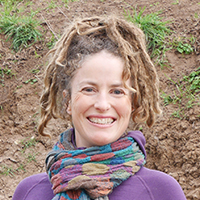 Samantha Grover is a soil scientist, connector and creator working at the intersection of food systems, climate change and people. She leads the Soil-Atmosphere-Anthroposphere Lab at RMIT University, where her team collaborates with farmers, NGOs, industry, government, and researchers to develop more sustainable landscape management practices. Recent research has focused on urban landscapes, including greenhouse gas emissions from sportsgrounds and domestic compost systems. Her work highlights the significant potential of these intensively managed urban systems for improved emissions accounting, emissions reduction through changed practices and stronger public engagement in positive climate action.