Danish Technological Institute leads new method to secure clean drinking water in Ukraine and strengthen Danish emergency preparedness
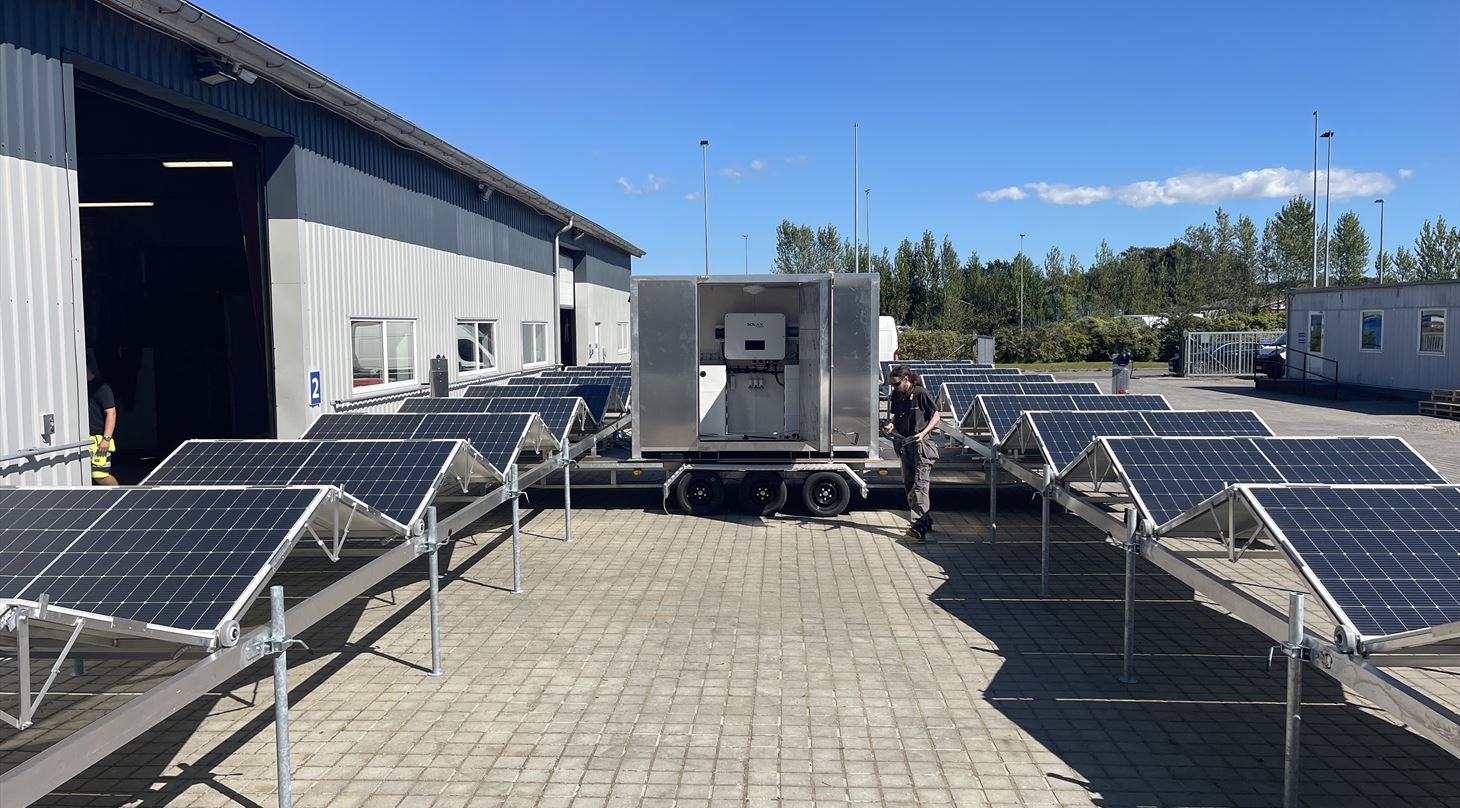
Photo: Danish Green Energy Consulting
Press release - 10th of october 2026
With DKK 5.5 million from the Grundfos Foundation, the Danish Technological Institute is heading an initiative to develop and deploy mobile water purification units in war-torn areas of Ukraine in collaboration with the International Red Cross and several partners. Field experiences will simultaneously prepare Danish and Nordic civil protection systems against cyberattacks, sabotage, and supply failures.
When bombs or cyberattacks hit waterworks and power grids, civilians lose access to clean drinking water within hours. This is the starting point for Ukraine Water Resilience, led by the Danish Technological Institute with support from the Grundfos Foundation. In collaboration with the International Red Cross and several partners, the project will develop and deploy at least three mobile, completely off-grid water purification units housed in robust containers. Together, the units will be able to supply 100,000 liters of drinking water per day, meeting the basic drinking water needs of up to 50,000 Ukrainian civilians according to UN standards.
– The primary objective is to help the civilian population in Ukraine gain access to clean water here and now, when infrastructure has been destroyed by the war. But the effort also reaches beyond Ukraine. When a technology proves its worth under the harshest imaginable wartime conditions, we know it can also stand the test in a Danish crisis. That level of resilience simply cannot be achieved by testing solely during peacetime at home, says Martin Svoldgård Vesterby, MD, PhD, and leader of the initiative at the Danish Technological Institute.
Challenges in war-torn areas
In the field, water purification under crisis conditions faces unique technical barriers that require novel engineering approaches.
– The challenge in a war-torn area is that source water can vary considerably from place to place. We are investigating this thoroughly in the initial phase before we and the consortia finalize the exact types of water the units must treat. We need to strike a balance between extreme robustness, low energy consumption, and absolute purity, and that must be tested under real-world conditions, says Lotte Bjerrum Friis-Holm, Director of Water Technology at the Danish Technological Institute.
The Jutlandia Method
The project operates under the so-called Jutlandia Method, inspired by the US Defense Advanced Research Projects Agency (DARPA). Instead of slow desktop studies and testing in peaceful environments, three selected consortia of companies and research institutions compete to further develop an existing prototype from Danish Green Energy Consulting. Based on their technology, the teams work in parallel tracks tailored to Ukrainian needs.
Handover to Ukraine
The Danish Technological Institute leads and oversees the development of the units in close cooperation with the International Federation of Red Cross and Red Crescent Societies (IFRC), which provides direct contact with local Ukrainian communities and helps identify where the need is greatest. Once ready, the containers will be transported to affected areas. Here, they will connect to available local water sources to secure supplies. Siting will take place flexibly in dialogue with Ukrainian authorities and the Red Cross—for instance, at reception centers for internally displaced persons or in areas with critically damaged infrastructure. Operation will be made simple enough for local volunteers to run the units after brief instructions, and the containers will be permanently handed over to Ukrainian partners after the project period ends.
From idea to field testing: A new path for emergency innovation
Beyond the physical water units, the project serves as the Danish Technological Institute’s new blueprint for accelerating crisis and emergency response innovation. Far too often, promising technologies get stalled in prolonged development phases without reaching the areas where the need arises.
By combining the fast development loops of the Jutlandia Method with direct field validation, technological risks are significantly reduced for participating partners. This establishes a strong foundation for future initiatives and opens new opportunities for Danish technology companies within international relief, dual-use applications, and civil resilience.
Building valuable knowledge
The Grundfos Foundation views the Danish Technological Institute's project as an important step toward bridging acute humanitarian aid with long-term preparedness solutions.
– Access to water is a fundamental prerequisite for life and health, and the need in Ukraine is acute. By supporting this project, we secure clean drinking water for thousands of people under extreme conditions, while simultaneously building valuable knowledge that can make both Danish and European societies far more resilient, says Kim Nøhr Skibsted, Executive Director of the Grundfos Foundation.
At the same time, Danish authorities and emergency stakeholders are following the work closely, including the Danish Emergency Management Agency (DEMA), Local Government Denmark (KL), and Danish Regions. The aim is to transfer these lessons to Danish civil defense, providing Denmark with a roadmap for mobile containerized waterworks that can be deployed in the event of sabotage against island sea pipelines, hospital power outages, or cyberattacks against the national utility supply.
Project Facts
- Project Lead: Danish Technological Institute
- Project Name: Ukraine Water Resilience
- Objective: Securing clean drinking water for civilians in crisis-affected areas of Ukraine via mobile containerized units, and strengthening Danish and Nordic civil preparedness (dual-use).
- Capacity: At least three mobile containers with a combined capacity of approximately 100,000 liters of drinking water per day, meeting the daily needs of up to 50,000 civilians under UN standards.
- Physical Location: Deployed to strategic locations in Ukraine identified in cooperation with the International Red Cross and local emergency services based on needs assessed in the first phase.
- Methodology: Jutlandia, a three-phase process (field need assessment, parallel competition among three consortia, field deployment) inspired by DARPA (Defense Advanced Research Projects Agency), known for breakthroughs such as ARPANET (the precursor to the internet) and GPS.
- Funding: DKK 5.5 million from the Grundfos Foundation. Total budget is DKK 6.25 million, including co-financing from the Danish Technological Institute.
- Project Period: October 2026 – August 2027. Containers will be permanently transferred to Ukrainian partners after the project concludes.
- Technological Baseline: Further development of an existing water purification unit originally developed by Danish Green Energy Consulting into a mobile, solar-powered water treatment system.
- Partners and Collaborators: Danish Technological Institute (Project Lead), Grundfos Foundation (Poul Due Jensen Foundation), International Federation of Red Cross and Red Crescent Societies (IFRC), Danish Green Energy Consulting, Local Government Denmark (KL), Danish Regions, Danish Emergency Management Agency (DEMA), Danish Water Forum (DWF), DANVA, Danish Waterworks, Confederation of Danish Industry (DI) and Virksomhedsberedskabet,
Contact: Martin Svoldgård Vesterby, Danish Technological Institute: Mobile +45 2513 7203