Environmentally hazardous pollutants

The Danish Technological Institute works purposefully on the development and implementation of technological solutions to combat environmentally hazardous pollutants in the aquatic environment. Through our expertise, laboratories, and collaboration with companies and authorities, we contribute to a cleaner aquatic environment in Denmark.
What can the Technological Institute help you with?
- Development and testing of tailored cleaning technologies for the removal of environmentally hazardous substances
- Cleaning of PFAS, heavy metals, PAHs, pharmaceuticals and microplastics from waste water
- Optimizing "Treatment Train" solutions for complex contaminants
- Decentralized cleaning solutions directly at the pollution source
- Documentation of the efficiency of cleaning technologies at laboratory and pilot scale
- Advice on cost-effective methods to comply with limit values
- Knowledge-based sparring about new and upcoming requirements for environmentally hazardous substances
The Danish Technological Institute assists companies, utility providers, and municipalities
We help companies, utility providers, and municipalities identify and remove environmentally hazardous substances from the aquatic environment. Our experts develop and implement tailored treatment technologies to combat hazardous substances such as PFAS, heavy metals, PAHs, pharmaceuticals, and microplastics. We offer consultancy, technology development, and the implementation of solutions that reduce environmental impact and minimize the risk of fines and reputational damage.
Companies
We assist in identifying and implementing cost-effective treatment solutions that reduce the discharge of environmentally hazardous substances and minimize the risk of fines and reputational damage.
Utility providers and municipalities
We help ensure clean water, minimize issues related to contaminated sludge, and ensure compliance with regulatory limits.
State-of-the-art laboratories and pilot plants
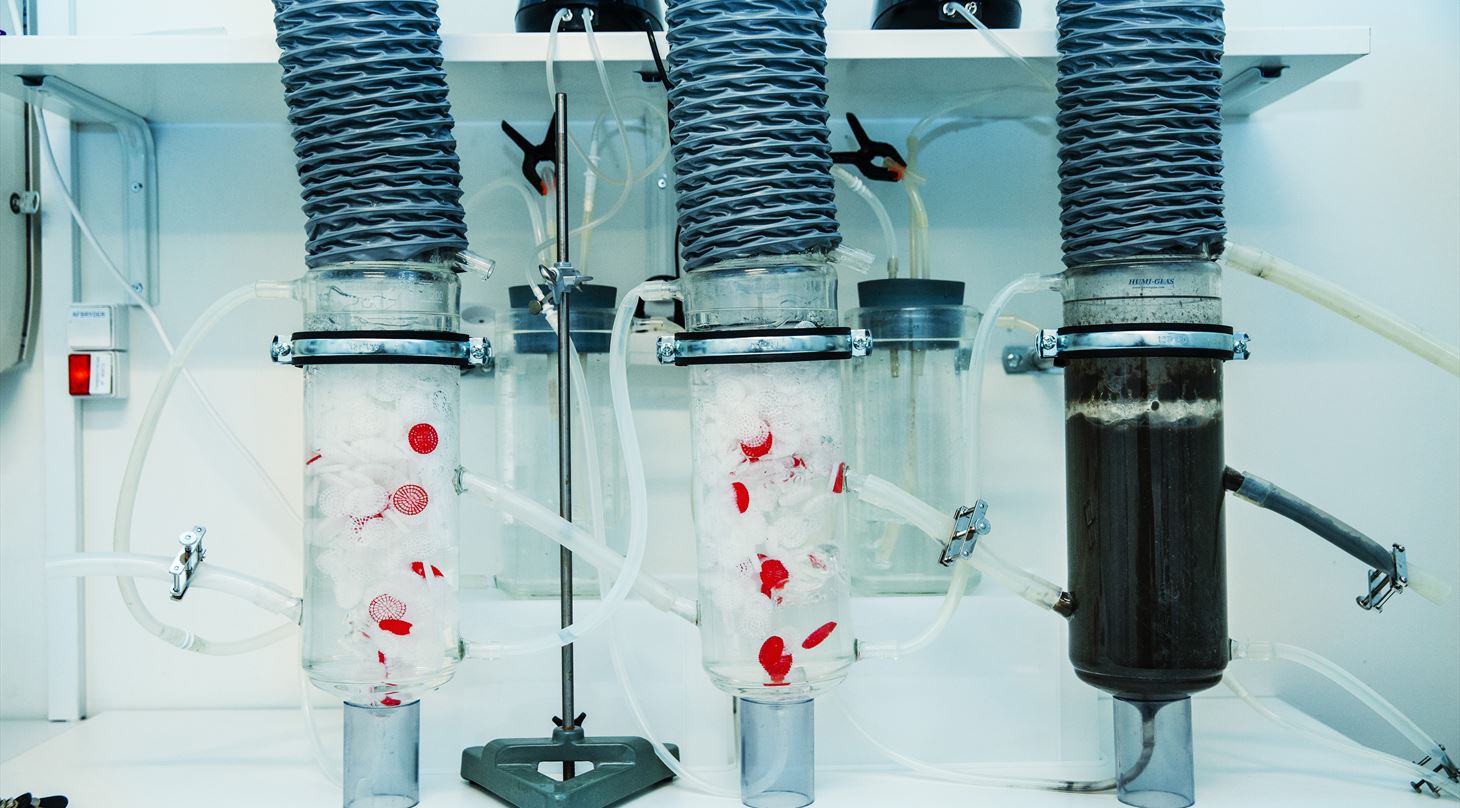
Our modern laboratories and pilot plants offer unique opportunities to test and optimize treatment technologies at various scales. We can simulate actual operating conditions and document the efficiency of different technologies before they are implemented on a full scale. This minimizes the risk associated with investing in new treatment solutions and ensures that the chosen technology is optimal for the specific contamination scenario.
FAQ
What types of environmentally hazardous substances can you help analyze and remove? We possess the expertise and laboratory facilities to handle a wide range of persistent and environmentally hazardous substances. This includes, among others, PFAS compounds, heavy metals (such as nickel, chromium, and lead), PAHs, microplastics, pharmaceutical residues, antibiotics, pesticides, and organic solvents. Whether the contamination originates from industrial wastewater, leachate, groundwater, or wastewater treatment plants, we can provide guidance on sampling and analysis, evaluate the results, and develop a targeted treatment strategy. When necessary, we collaborate with specialized laboratories to conduct relevant analyses.
What is a "Treatment Train," and when is it appropriate to use one? A "Treatment Train" is an integrated treatment solution in which multiple purification technologies are combined in series (e.g., precipitation → biological treatment → filtration → activated carbon or ozonation). This approach is highly valuable when wastewater contains complex mixtures of pollutants that cannot be removed by a single treatment step alone. By designing a customized Treatment Train, we can optimize the level of purification and reduce operating costs compared to relying on a single, expensive technology.
Why is decentralized treatment at the source often more cost-effective than centralized treatment? If contaminated wastewater is mixed with other wastewater streams, you end up having to treat massive volumes of water containing only low concentrations of pollutants—a process that is both costly and space-intensive. With decentralized treatment, we install the treatment technology directly at the source of contamination (e.g., a specific process effluent stream or a landfill site) before it becomes diluted. This significantly reduces the total volume of water requiring treatment. Consequently, the treatment process becomes much more efficient, the required plant size is reduced, and the overall operational costs are minimized.
How do you document the effectiveness of a treatment technology before we invest in a full-scale system? We utilize our laboratory facilities—and, where appropriate, pilot-scale equipment in collaboration with specialized suppliers—to simulate actual operating conditions for your specific wastewater. We conduct trials at both laboratory and pilot scales, taking accredited samples throughout the process to analyze the composition of the wastewater before and after treatment. This provides a robust, data-driven foundation that documents the precise level of treatment achieved and the associated energy consumption. This allows you to eliminate both financial and technical risks before committing to a final capital investment.
What does a typical collaboration with the Danish Technological Institute regarding environmentally hazardous substances look like? The process generally begins with an initial assessment, during which we analyze your wastewater and review current or upcoming discharge and connection requirements. We then propose a test phase—either in the laboratory or using a pilot plant located on your premises. Once the results are available, we provide a comprehensive report containing recommendations, suggested technology combinations, and an indicative business case for the most cost-effective solution.
Contact us to learn more about how we can help address your challenges regarding environmentally hazardous pollutants in the aquatic environment.