Biogas
A biogas plant can convert most forms of organic material into biogas – ranging from livestock manure and straw to residual products from the production of food, pharmaceuticals, and bioplastics.
The Danish Technological Institute offers consultancy and biomass testing under controlled conditions, providing you with a well-documented basis for making decisions regarding future investments in biomass, pre-treatment technology, and equipment for biogas production.
Gain access to advanced testing facilities and years of experience
At the Danish Technological Institute, we have well-equipped chemical and microbiological laboratories and a team of specialists with unique expertise in the chemical and microbiological aspects of biogas production. This means you can draw on more than 15 years of experience in optimizing biogas production processes – including hundreds of BMP analyses.
Testing of biomass for biogas
How much biogas can be produced from the biomass you use today—or plan to use tomorrow? A BMP analysis provides the answer.
BMP stands for Biomethane Potential and is a key tool for anyone buying or selling biomass for biogas production. The BMP analysis is used to estimate the amount of biogas that can be produced from a specific biomass under anaerobic conditions.
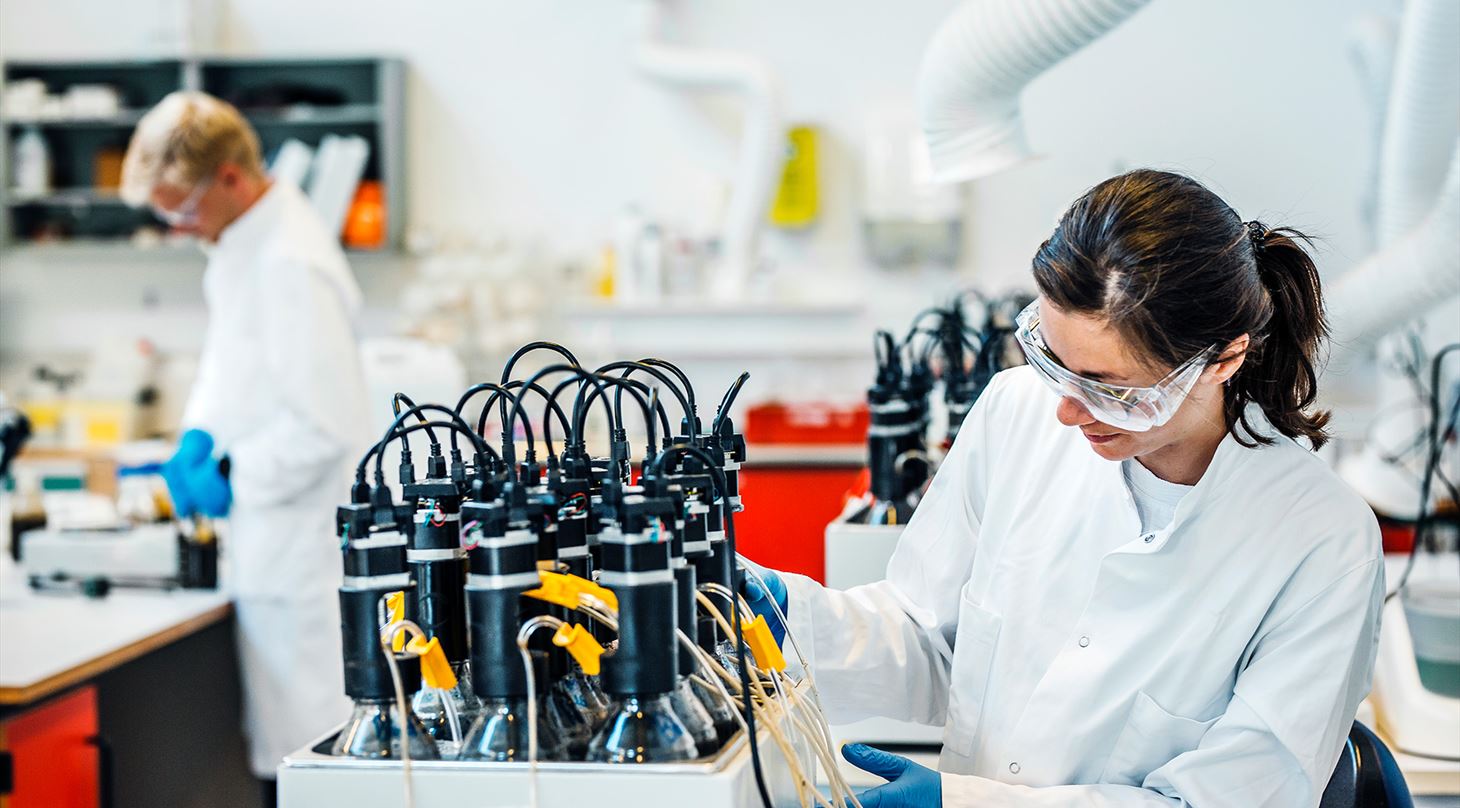
The analysis is performed at our state-of-the-art biogas laboratory. We take a sample of the biomass to be tested and place it in a sealed container together with a culture of anaerobic bacteria. The gas released—primarily methane and CO2—is measured over time; by calculating the accumulated gas volume over a specific period, we can determine the potential biogas yield for that particular biomass.
These controlled digestion tests are conducted independently and standardized according to international recommendations. This ensures you receive a precise, data-driven basis for decision-making, as well as results that are comparable when you later require BMP analyses for other types of biomass.
Who can benefit from a BMP analysis?
We can test any type of biomass for you. A BMP analysis is particularly relevant for:
- Biomass owners wishing to utilize and recycle residual products for biogas production but uncertain about the yield
- Biogas plants aiming to optimize energy production and test new biomasses while avoiding costly operational downtime
- Biomass purchasers seeking documentation on the value of a specific biomass
- Technology developers wanting to test the impact of their processing technology on the gas potential of a specific product
We follow up on the figures with advice
The findings of the BMP analysis are compiled into a report—but we offer you more than just numbers. We can assist you with further advice on biomass utilization, the preparation of biomass plans, and operational guidance.
If you would like to know more about how determining biogas potential can benefit you specifically, please feel free to contact us for a no-obligation quote.
Mechanical, thermal, or chemical pretreatment
Before feedstock materials can be converted in a biogas reactor, they often require pretreatment to enhance their biodegradability and improve the degradation process. Several types of pretreatment exist, including mechanical, thermal, and chemical methods.
Mechanical pretreatment often involves crushing or shredding the biomass to increase its surface area, thereby making it more accessible to the microorganisms within the biogas reactor. Thermal pretreatment entails heating the biomass to a specific temperature for a set period to boost biodegradability. Chemical pretreatment frequently involves the use of acids or bases to dissolve or etch the surface of the biomass, thereby increasing its susceptibility to microbial conversion.
Evaluation of pretreatment methods and technologies
However, the objective of pre-treatment remains the same regardless: to increase biogas yield while simultaneously reducing the process's overall costs.
We therefore offer testing of both specific pre-treated biomasses and pre-treatment technologies. This takes place under controlled laboratory conditions, providing you with valuable insight into how different pre-treatments affect biogas yield.
- Substrate optimization through mixing different biomasses, e.g. straw, grasses, food products, etc.
- Purity determination of source-sorted organic waste
- Effect of inhibiting or missing nutrients
- Optimum operating temperature, residence time, required adaptation period when changing substrate or changing process conditions
Contact us for an initial conversation about how we can help you with the most effective pretreatment.