High-speed defense technology – driven by broad expertise

How Danish Technological Institute’s broad expertise in materials has helped Copenhagen Global develop the Orca marine drone.
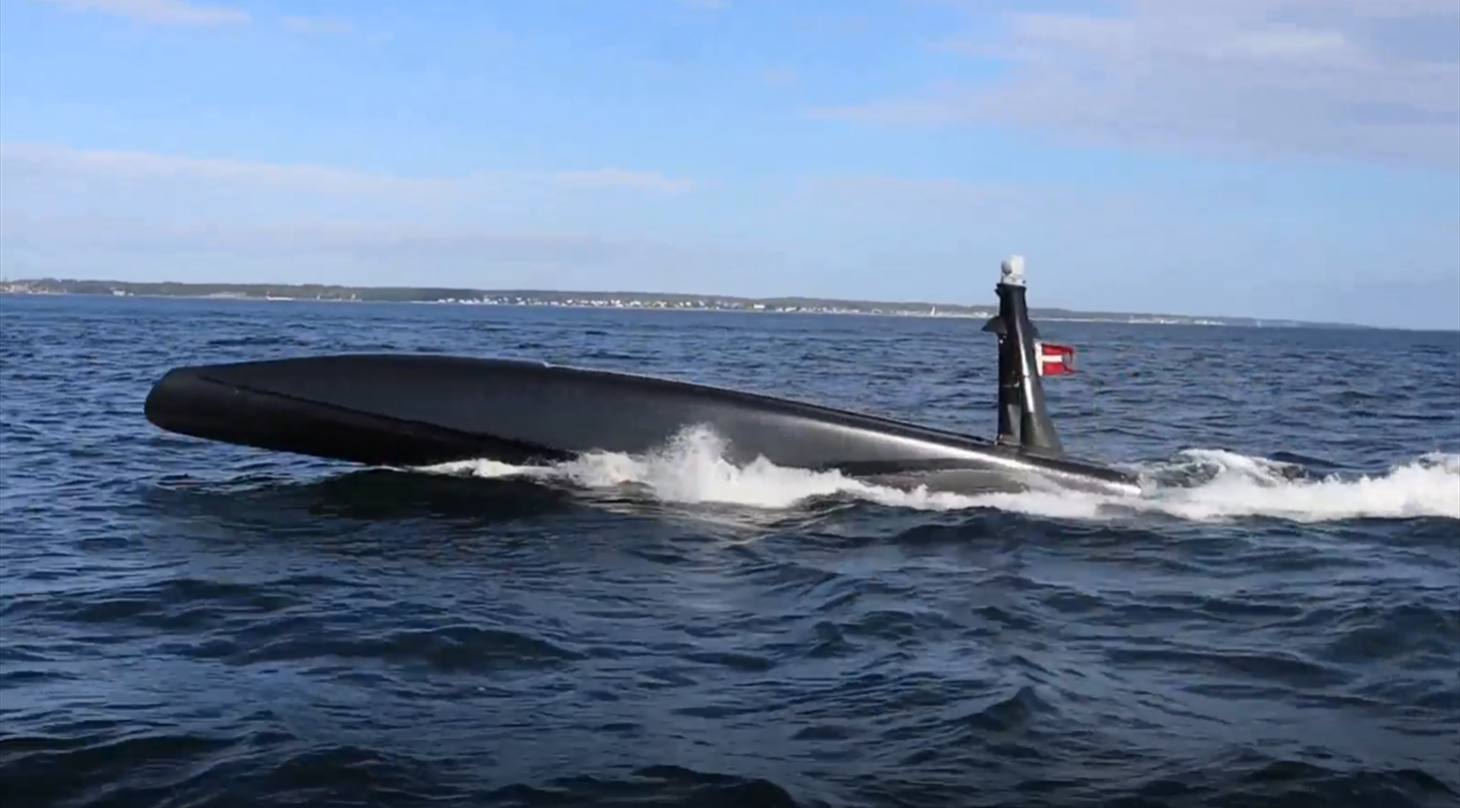
The company Copenhagen Global develops advanced defense and security technology. One of the most striking examples is the Orca marine drone – a 13-metre-long unmanned vessel capable of travelling at speeds of up to 80 kilometres per hour and equipped with, for example, sensors or other relevant systems within a weight limit of just over 800 kilograms. The Orca is designed to patrol Danish and international waters, monitor critical infrastructure such as undersea cables, and respond rapidly should anything unusual occur at sea.
When geopolitics sets the pace
The defence technology sector is influenced by the fact that the geopolitical situation changes from month to month. This means that the ability to act quickly is often just as important as the technology itself.
Copenhagen Global had six months to develop and six months to build the first Orca. Since they therefore had only a year to get it finished, they faced a critical challenge: how do you make new technology operational when time is of the essence and the task requires a breadth of specialist knowledge that the company cannot build up in time itself?
– We couldn’t hire all the people needed to tackle that task. So it made perfect sense to draw on the expertise and specialists available in Denmark. And Danish Technological Institute was a key partner in that, explains Jeppe Handwerk, founder and owner of Copenhagen Global.
Rapid and agile technology development is precisely one of the challenges Danish Technological Institute was set up to tackle with its new defense initiative, DTI Defense. Here, 120 years of experience from the civilian sector – in materials, batteries, energy systems and much more – is being applied to a highly topical agenda.
– The defense sector must be able to deliver the services the market demands. This requires access to the latest knowledge and documentation, and that is where Danish Technological Institute can help them, explains Vice President Sune Dowler Nygaard.
Broad expertise as a foundation
The collaboration between Copenhagen Global and Danish Technological Institute has been based on two pillars: firstly, to accelerate the company’s development process, and secondly, to minimise the risk associated with their choice of technology. This has been achieved by giving Copenhagen Group access to strong technical expertise and advanced testing facilities that the company has not been able to build itself.
From a rough list to a clear recommendation
One aspect involved providing Copenhagen Group with a well-founded basis for decision-making regarding a key issue in the development of the Orca hadron. This was achieved through a structured technology screening process, in which crucial knowledge about materials and their properties came into play. Here, input from Copenhagen Group itself, internal and external specialists, technical literature and AI was gathered, sorted and distilled – first into a rough list and then into a shorter list of the best proposed solutions.
– We set up dedicated teams for the task and completed this process in three weeks, compared to the usual five to six weeks, explains Product Manager Morten Normann-Fyhn from Danish Technological Institute
The second task involved a strength analysis of a key fitting on the offshore drone. The aim was to determine whether the materials and design could withstand the high forces to which the fitting is subjected during operation, or whether there was a risk that it might fail.
– The strength calculations showed that we met the requirements we had set, and therefore that the fitting would be safe to use” explains Consultant Andreas Weje Larsen from Danish Technological Institute.
Together, these two tasks illustrate the breadth of Danish Technological Institute’s involvement in a defense project – from the big picture of materials and solutions during an early-stage technology screening to a specific and crucial functionality that must stand up to practical use.
It made perfect sense to draw on the expertise and specialists available in Denmark. And Danish Technological Institute was a key partner in that.
- Jeppe Handwerk, founder and owner of Copenhagen Global
A collaboration that keeps pace
For Jeppe Handwerk, the collaboration has been characterised by a shared understanding that things need to happen quickly. The agreement between the two parties was finalised in writing within a week, and work began even before the formal agreement had been signed by both sides. This had an impact from day one and was crucial in enabling the Copenhagen Group to complete Orca within the planned timeframe.
– The most interesting aspect of the collaboration has been the expertise we’ve found at Danish Technological Institute – the skills that enable us to get the job done. What we value as a company is being innovative and results-oriented, and making things happen. This means we now have a vessel that can deliver operational benefits for Denmark and the Nordic region – or, for that matter, the whole world,’ says Jeppe Handwerk.
Orca was unveiled to the public for the first time in August 2025 at the Nordic region’s largest defense exhibition in Ballerup, where the Copenhagen Group unveiled the vessel following months of development and testing. A development process in which Danish Technological Institute has been a key partner behind the scenes.
Facts about the collaboration
Client: Copenhagen Group – Danish defense and security company
Product: Orca – a 13-metre-long unmanned surface vehicle (USV) for surveillance and patrolling, with a speed of up to 80 km/h and the capacity to carry, amongst other things, surveillance systems within a payload of approximately 800 kg
Challenge: To translate new technology into operational effectiveness under significant time pressure, whilst accessing a wide range of specialist knowledge not available in-house
Delivery from Danish Technological Institute:
• Structured technology screening focused on providing a well-founded basis for decision-making regarding a number of critical material choices
• Strength calculations/risk assessment of fittings of central importance to the functionality of the Orca sea drone