
Impact resistance testing of polymer materials
 In Danish
Obtain documentation proving that your safety guards can withstand high-velocity impacts - and protect employees in critical situations.
Impact resistance testing is a test method that evaluates the ability of polymer materials to withstand heavy impacts from metal fragments at high velocity. The test is relevant when you need to select or document materials for machine guards where a failure could result in parts being ejected with great force. Danish Technological Institute performs impact testing in accordance with DS/EN ISO 14120:2015 Annex B, providing you with reliable documentation that your materials comply with international safety requirements.
How can Danish Technological Institute help you?
Danish Technological Institute offers specialized impact resistance testing of polymer materials with a focus on safety guards in industrial environments.
- Impact resistance testing of polymer materials in accordance with DS/EN ISO 14120:2015 Annex B
- Simulation of realistic scenarios using projectiles fired at high velocity
- Evaluation of materials' ability to act as effective barriers against ejected fragments
- Detailed test report containing results and professional assessment
- Consulting on material selection for safety guards based on test results
- Documentation for use in certification, CE marking, and regulatory compliance
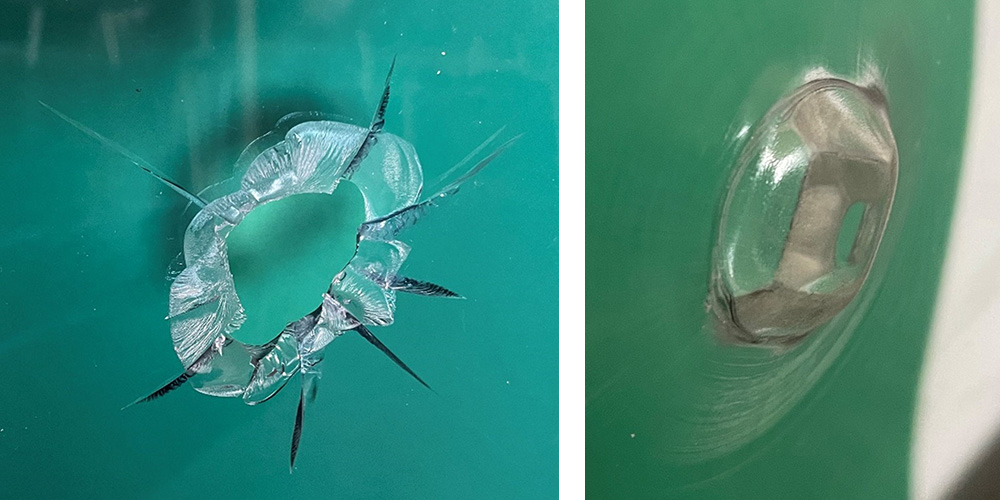
Figure 1: Selecting the correct material for safety guards are crucial for safety in the workplace.
Why is impact resistance testing important?
In the worst-case scenario, a machine malfunction can cause metal fragments to be ejected with great force. If the safety guard cannot withstand this, you risk severe personal injuries. Impact resistance testing provides you with a documented foundation ensuring that the materials you use actually deliver the required protection.
Without documented testing, material selection is based on assumptions. With an impact test conducted according to DS/EN ISO 14120:2015 Annex B, you receive an internationally recognized validation basis that documents the material's actual performance under realistic loads.
How the test is performed
The impact resistance test simulates a situation where a machine failure results in metal fragments being ejected at high velocity. Projectiles are fired at the test material under controlled conditions that mimic real hazardous incidents. The test assesses whether the material can act as an effective barrier and absorb kinetic energy without shattering or allowing fragments to penetrate.
The outcome is documented in a detailed test report that gives you an overview of the material's strength, fracture pattern, and suitability as a safety guard.
Who needs impact resistance testing?
Impact resistance testing is relevant for companies that manufacture, specify, or use safety guards in industrial environments:
- Manufacturers of safety guards who need to document that their products meet standard requirements
- Machine manufacturers (OEMs) who need to CE-mark machinery with integrated protection
- Industrial companies seeking to ensure that existing guards provide sufficient protection
- Consulting engineers and occupational health and safety specialists who advise on material selection for safety-critical applications
Standards and documentation
The impact resistance test is carried out in accordance with DS/EN ISO 14120:2015 Annex B - Safety of machinery - Guards - General requirements for the design and construction of fixed and movable guards.
This is an international standard for machine guarding.
Contact us regarding impact resistance testing
Do you need polymer materials tested for safety guards? Contact Danish Technological Institute to discuss how we can help you document the impact strength of your materials in accordance with DS/EN ISO 14120:2015.