Lockheed Martin invests in Danish research: New competence center to strengthen the operational reliability of military aircraft
Press release - 6 august 2026
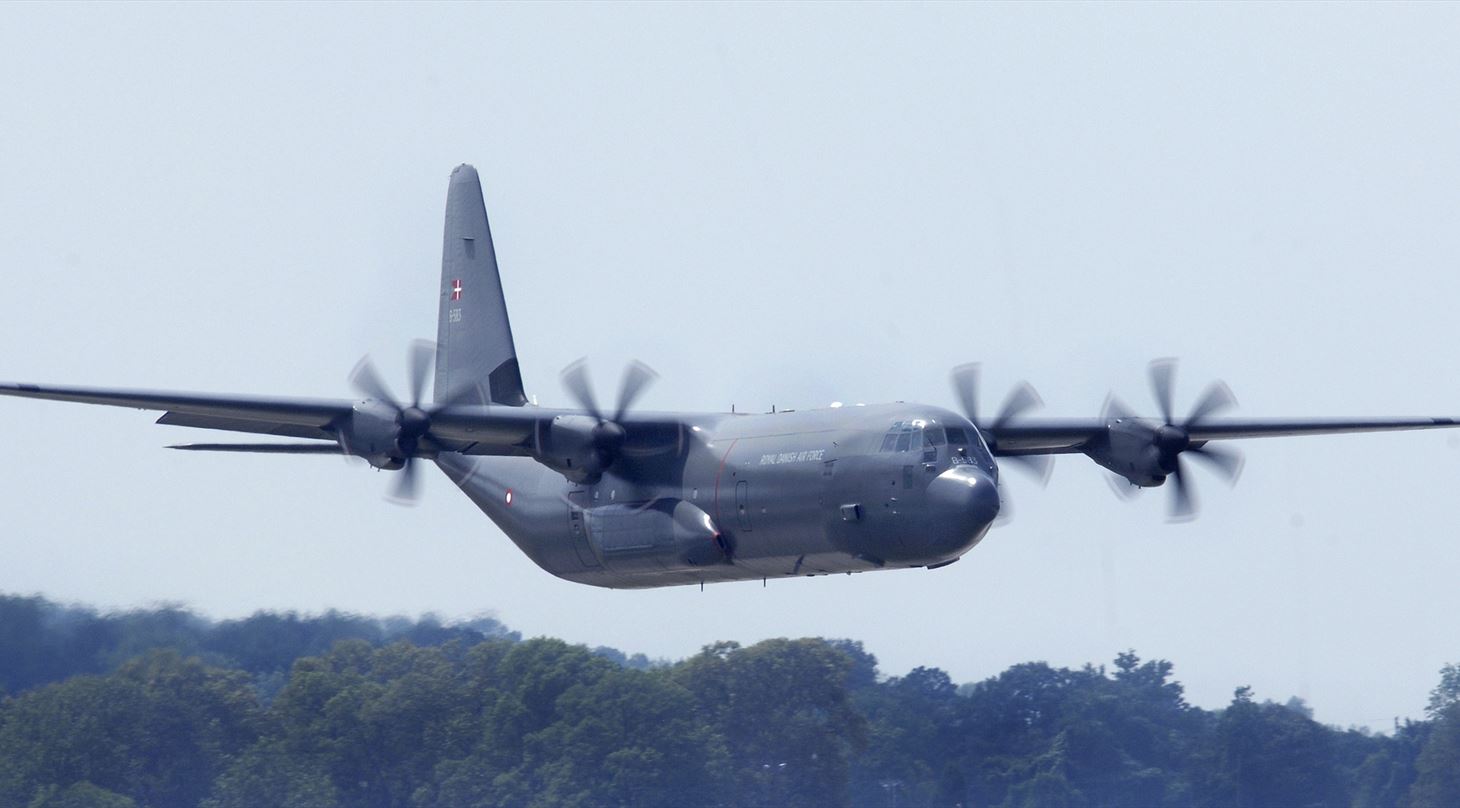
A new competence center at Danish Technological Institute is building Danish capacity within advanced materials technology for defense and security. The first concrete project is with the Air Force’s C-130J Hercules aircraft, and the goal is to extend its service life and gain a better understanding of wear-related possibilities. The project is based on the Danish-American offset agreement and is intended to create Danish jobs aimed at an international market.
Danish Technological Institute and the United States’ largest defense and aerospace group, Lockheed Martin, have entered into a collaboration that will build a Danish strategic technological capability within defense and security. This is being done through the establishment of a competence center within advanced materials characterization for the assessment of residual stress, which will strengthen the availability, service life, operational reliability, and readiness of military aircraft. The competence center, the Residual Stress Center of Excellence, will develop a one-of-a-kind service for exceptional spatial resolution in residual stress analysis.
- We have developed unique and practically applicable competencies for measuring residual stress, which determine how long a component can last, with a level of precision that has not previously been possible. Together with Lockheed Martin, we are now linking advanced characterization with concrete operational needs and shifting maintenance from statistically assessed requirements to actual measurements based on current history. With precise measurements, maintenance can thereby be governed to a greater extent by the aircraft’s actual condition. This could become a small revolution for military aircraft while also creating Danish jobs and increased Danish business aimed at an international market, says Mikkel Agerbæk, Director at Danish Technological Institute.
Strategic Danish-American collaboration
The competence center has been established as part of the offset agreement between Denmark and the United States in connection with the acquisition of the Danish Defense’s C-130J Super Hercules. The agreement is intended to ensure that the Danish state’s investment also creates industrial and technological benefits in Denmark.
With the competence center, Denmark becomes part of an international network of leading research environments in the field and positions Danish technology as a supplier of knowledge to one of the world’s largest manufacturers of military transport aircraft.
- Teaming with the Danish Technological Institute will establish a world‑class Residual‑Stress Center of Excellence in Denmark, develop high‑skill Danish jobs and foster a European hub for advanced materials analytics. Leveraging the insights from this collaboration will enable condition‑based maintenance that will extend the aircraft’s service life, lower lifecycle costs and ensure that the C‑130J Super Hercules remains the most reliable workhorse in tactical airlift for decades to come,” said Scott Carlson, life analysis fatigue test & residual stress engineer at Lockheed Martin.
See how we can help you with residual stress measurements
Hercules as the first concrete application
The first concrete platform for the collaboration is the Danish Air Force’s C-130J Super Hercules. The transport aircraft often operates under demanding conditions, where central structures are exposed to heavy loads, making the aircraft type a suitable starting point for the new technology.
Today, maintenance of military aircraft is largely planned according to fixed intervals. This is safe, but it takes aircraft out of service more often than necessary and imposes significant costs on the Danish Defence. More precise knowledge of the actual condition of the materials opens the possibility of a more data-driven approach, where inspections and repairs are governed to a greater extent by the real loads on the components rather than by oversized safety margins.
- We determine residual stress that can either inhibit the formation of cracks or increase the risk of damage. In aircraft structures, they therefore play a central role in determining how long components can last and how often they need to be inspected. We are developing measurement methods that can provide much more precise knowledge about e.g., individual assembly or fastener holes, so that we can document longer durability than we take credit for today. This provides a better basis for making decisions about maintenance, says Nikolaj Gersager Henriksen, Business Manager at Danish Technological Institute.
TECHNICAL BACKGROUND: Why residual stresses matter
An aircraft like the Hercules is held together by tens of thousands of rivets and bolts — and it is around these many holes that cracks in the aircraft’s structure can occur. To counteract this, the metal is compressed around each hole during manufacturing, creating an invisible internal stress state, a locked-in pressure that keeps cracks in check. The method, Split Sleeve Cold Expansion™, is well proven and is already used on the C-130J. But there has been a blind spot: until now, no one has been able to measure the pressure accurately enough to predict when and where cracks actually develop. Therefore, inspection intervals today are set conservatively, more often than is strictly necessary. It is this blind spot that Danish Technological Institute’s measurements are intended to close with the help of synchrotron and neutron radiation from European big science facilities.
Synchrotron and neutron radiation make it possible to see inside the metal without cutting into it. This means that, for the first time, it is possible to measure whether the protective pressure around a rivet hole is still intact where cracks typically start, and not only at the surface.
Facts: Residual Stress Center of Excellence
- Established by Danish Technological Institute in collaboration with Lockheed Martin.
- Based on an industrial standard for residual stress measurement using synchrotron radiation, a particularly powerful form of X-ray radiation from large European research facilities, developed by Danish Technological Institute.
- The work is intended to improve the spatial resolution in residual stress determination and achieve the world’s highest resolution, i.e. level of detail, in the field.
- The first application is the Air Force’s C-130J Super Hercules.
- Intended to serve as a European bridgehead for the operational use of advanced residual stress measurements in military aviation and forms part of an international network of research environments in the field.
- Established as part of the offset agreement between Denmark and the United States in connection with the acquisition of the C-130J. Pre-approved by the Danish Business Authority with involvement from the Danish Ministry of Defence Acquisition and Logistics Organisation.
- Runs for 20 months from February 2026.
- Expected to create Danish jobs and strengthen Danish exports of materials technology
Press contact: Communications Manager Liza Lindbjerg Andersen, Danish Technological Institute, mobile phone +45 7220 2919, mail: llia@teknologisk.dk