Measurement of residual stress in metal components using neutron and X-ray radiation
 In Danish
Gain precise insight into hidden residual stresses deep within metal components - without destroying them. Danish Technological Institute conducts advanced, non-destructive measurements at large-scale research facilities in Europe, enabling you to extend component lifespan, reduce material costs, and prevent unexpected failures.
Residual stress is invisible, locked-in stress within metal components that can lead to deformation, cracking, and stress corrosion cracking - often without warning. Using neutron and X-ray radiation at large-scale facilities, Danish Technological Institute measures this stress accurately and at depths that conventional laboratory equipment cannot reach. This provides you with a documented foundation to assess component lifespan, optimize designs, and mitigate the risk of critical failures.
How can Danish Technological Institute help?
Danish Technological Institute offers advanced, non-destructive characterization of metal components. We help you:
- Measure residual stress at depth using neutron and X-ray diffraction at large-scale facilities
- Extend service life estimates by documenting actual stress levels in critical components
- Reduce service intervals based on precise data rather than worst-case assumptions
- Conduct failure analyses in cases of cracking, deformation, or stress corrosion cracking
- Optimize wall thickness and design to save material without compromising safety
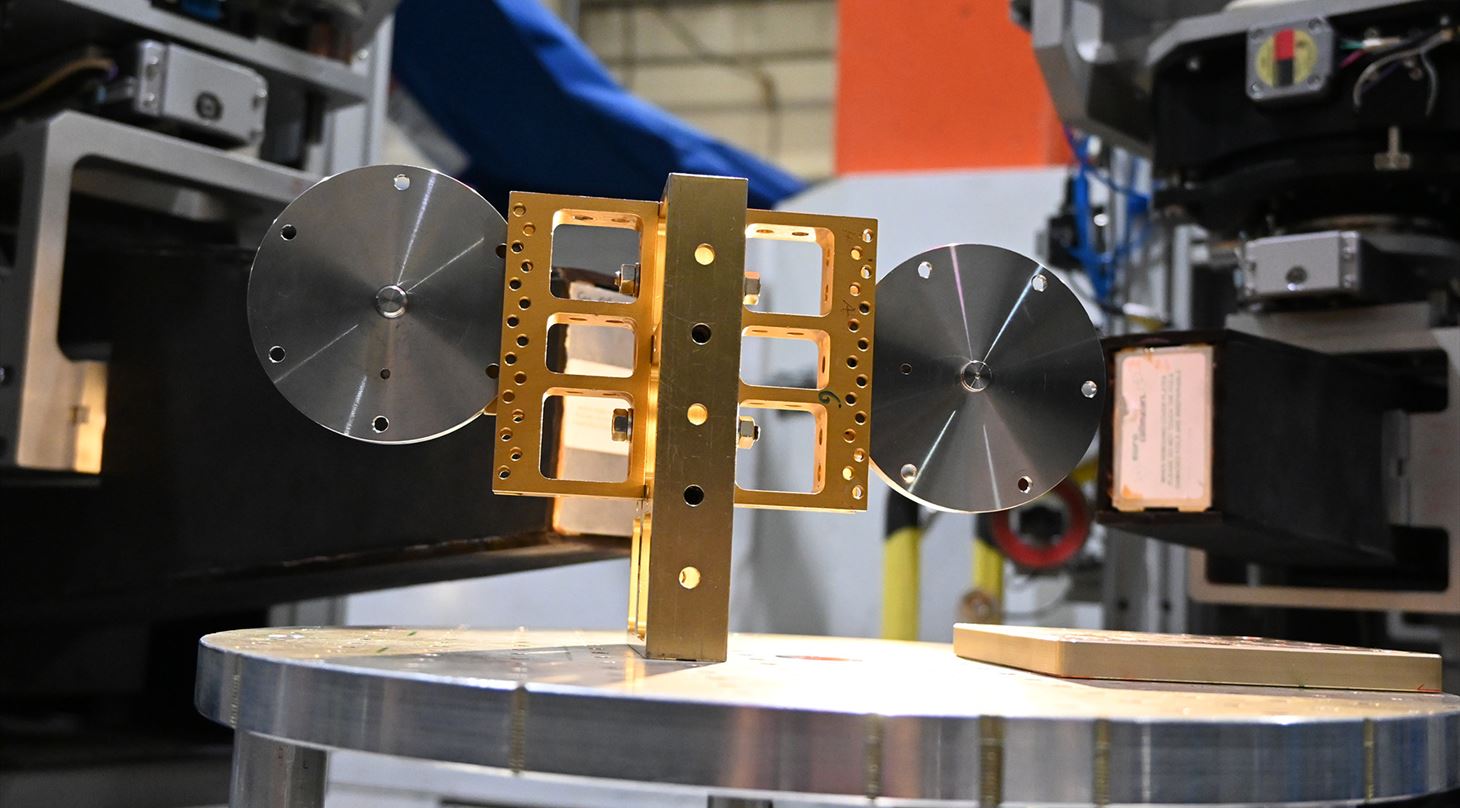
- Verify processes and assemblies - e.g., bolted joints for aerospace applications
- Assess the risk of failure before the component is put into service
See how we help Lockheed Martin determine residual stress
Why is residual stress a problem?
In the metalworking and manufacturing industry, residual stress is among the most common causes of unexpected failures. Because this stress is invisible, it is often overlooked - or managed with excessive safety margins and frequent inspections.
Residual stress can cause metal components to:
- Warp or distort after machining, falling outside dimensional tolerances
- Suffer from stress corrosion cracking, which is difficult to detect before the component fails
- Experience premature cracking and reduced fatigue strength
- Be designed with unnecessarily thick walls
- Require more frequent inspection and maintenance than necessary
Stress corrosion cracking is a particularly critical phenomenon because it is often caused by unreleased residual stress and is typically only discovered once the component fails catastrophically. A precise measurement of residual stress makes it possible to assess this risk - before the component is put into service.
Precise measurements at depths laboratory equipment cannot reach
Danish Technological Institute performs measurements using neutron and X-ray radiation at large-scale facilities in Europe. This enables very fast, high-resolution measurements at substantial depths — often far beyond the capabilities of conventional laboratory equipment.
These methods can be applied to all types of metallic materials, including stainless steel, aluminum alloys, and titanium alloys.
The measurements deliver tangible value:
- Extended service life estimates based on documented stress levels rather than conservative assumptions
- Drastically reduced service intervals when data demonstrates that the component is in better condition than assumed
- Reduced material consumption because wall thickness can be optimized on a documented basis
- Increased safety, as the risk of unexpected failures is evaluated before commissioning
Experience shows that many components are designed without accounting for residual stress - or based on a worst-case scenario. Simply measuring the actual residual stress often provides the opportunity to reduce material consumption, extend service life, or document that process changes will be advantageous.
Non-destructive quality control of critical components
Danish Technological Institute specializes in non-destructive methods that enable 100% quality control - without damaging the component. This is crucial for evaluating critical components where destructive testing is not an option.
The methods are particularly relevant within:
- Aerospace, where component integrity is safety-critical
- Reuse and refurbishment of critical components, where remaining service life must be documented
- Energy and offshore, where failures can lead to severe consequences
- Manufacturing and subcontractors who need to document quality for customers and regulatory authorities
Every solution is customized to the specific component, the relevant material, and the questions you need answered.
Case examples
 New competence center to strengthen military aircraft operational reliability
Danish Technological Institute is building Danish capacity within advanced materials technology for defense and security. The first project involves the Royal Danish Air Force's C-130J Hercules aircraft from Lockheed Martin, with the goal of extending service life and gaining a better understanding of wear-related opportunities.
Læs mere
 Increasing stability of bolted assemblies for space applications
Danish Technological Institute has verified the stress levels applied when joining a bolted assembly and verified a favourable stress distribution when using a newly developed tool by OHB.
Learn more more
Contact us about residual stress measurement
Do you have metal components where residual stress could affect lifespan, safety, or dimensional stability? Contact Nikolaj Henriksen, Ph.D. and specialist in residual stress, for a non-binding discussion about your challenge.