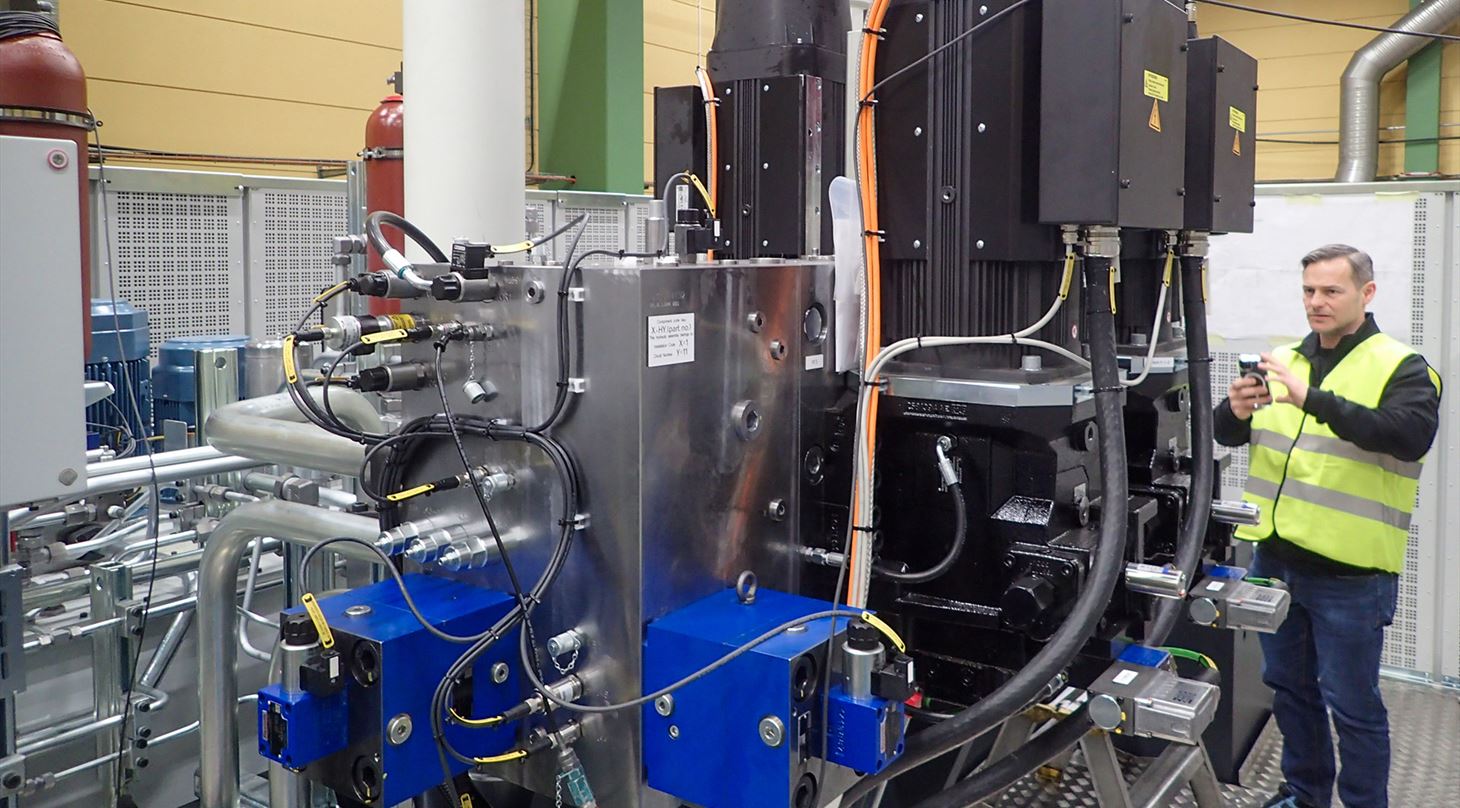
When safety Is put to the test: AP&T had a new servo-hydraulic press type-tested
When a hydraulic press operates with forces of hundreds of tons, safety is not an add-on – it is the very prerequisite for bringing the machine to market. That is why AP&T reached out to Dancert to have a third-party type test carried out – a type test performed by specialists from the Danish Technological Institute.
Swedish AP&T is a leading manufacturer of hydraulic presses, and the company places a high priority on personal safety around the machines. So, when the company developed a new servo-hydraulic solution that did not follow the relevant standard one-to-one, the need for type testing arose.
- Our customers and their personnel must be able to trust that our machines are manufactured correctly and with the right documentation. The new servo-hydraulic system is more complex than the solutions described in the C-standard for presses. We therefore needed a third-party review of the system to ensure that nothing had been forgotten or overlooked in our internal processes and risk assessment, explains Daniel Gustavsson, Mechanical and Hydraulic Design Engineer at AP&T.
Need for a strong certification partner
AP&T had previously worked with authorized bodies – also known as Notified Bodies – in both Norway and Sweden. But in both cases, they were one-man operations, and AP&T wanted a more robust partner with multiple specialists. The choice therefore fell on the Danish Technological Institute’s certification body, Dancert, which is a Notified Body in the machinery field.
The background was both regulatory and commercial: Annex IV of the Machinery Directive 2006/42/EC (which will be replaced by the Machinery Regulation from 20 January 2027) covers particularly hazardous equipment – including certain presses. If the manufacturer does not fully follow a harmonized standard, this triggers a requirement for type testing for the equipment to be marketed and sold.
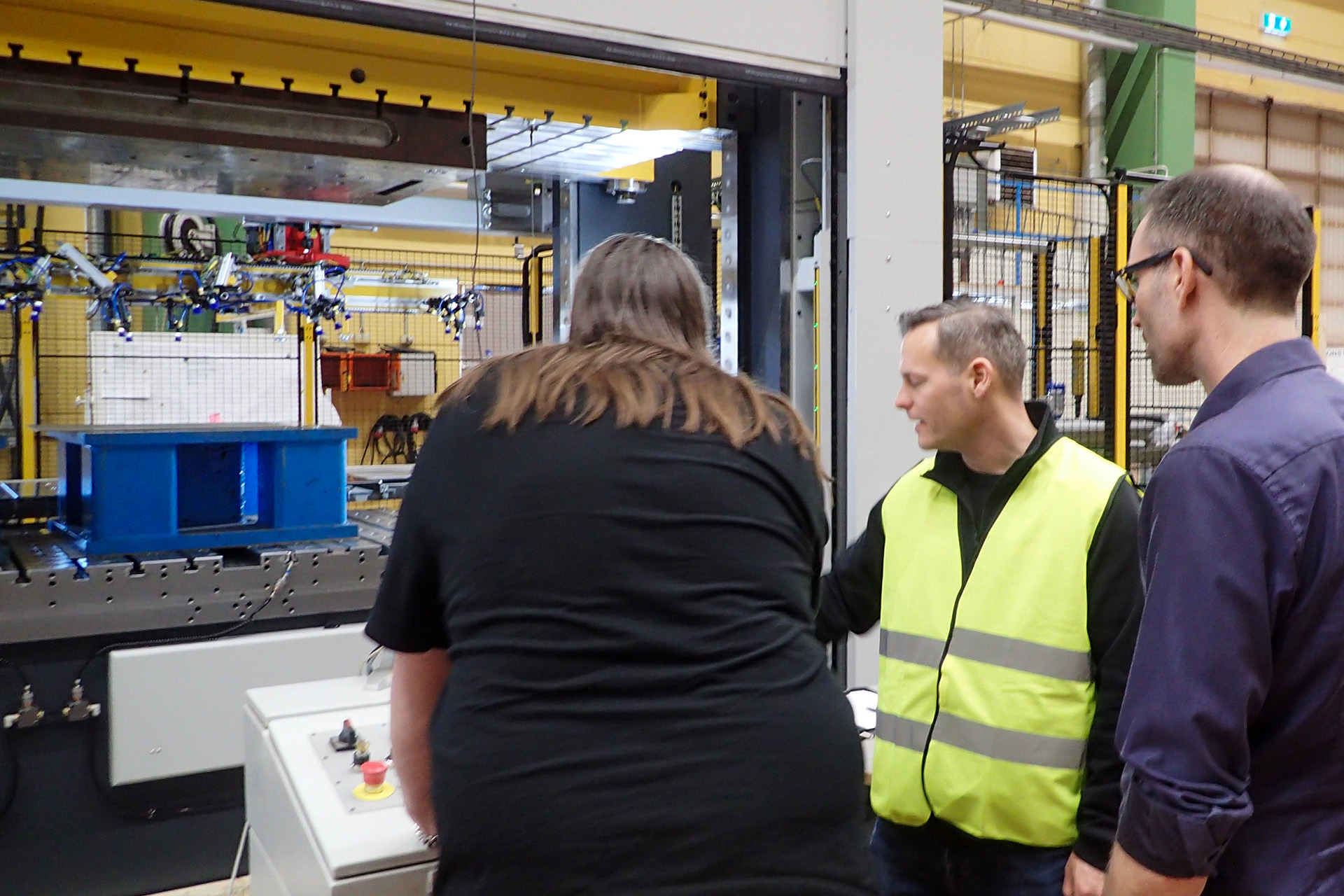
From documentation to physical inspection
The process began with an extensive review of AP&T’s technical documentation. Here, the Danish Technological Institute assessed, among other things, the risk assessment, deviations from the C-standard, safety circuits, SISTEMA calculations, performance level, component selection, and documentation of reaction times.
This was followed by the physical inspection at AP&T in Sweden, where the machine was reviewed together with the company’s system technicians and engineers.
- Our focus was on verifying whether the documented safety level had also been realized in practice: Were the components installed correctly? Did push buttons, sensors, and hydraulic valves function as intended? Did the machine’s reaction time match the calculations? In this case, we could see that AP&T had complete control of the documentation, and where they had not followed the standard, they had chosen fully adequate solutions, says René Reenberg Marschall, Senior Consultant at the Danish Technological Institute, who carried out the type test.
Good preparation makes the process efficient
When the documentation is clear, transparent, and technically well documented, the physical testing can be targeted at the key safety points. If, on the other hand, the documentation is incomplete or difficult to understand, it must first be updated – in which case the type testing takes longer and typically also becomes more expensive.
At AP&T, the on-site type testing itself took two days, and the process could be carried out efficiently due to the high level of documentation and systematic preparatory work by AP&T, who is also satisfied with the collaboration.
The collaboration with Dancert has worked smoothly, with quick responses and flexibility in relation to the schedule. This is highly appreciated, as building large machines is demanding, and many things can arise that affect the original plan. So. at AP&T, we hope for a long-term collaboration
- Daniel Gustavsson, AP&T
The result of the type testing is a machine that can be brought further toward the market with a stronger safety foundation – and a manufacturer that has received independent confirmation of its technical solution.