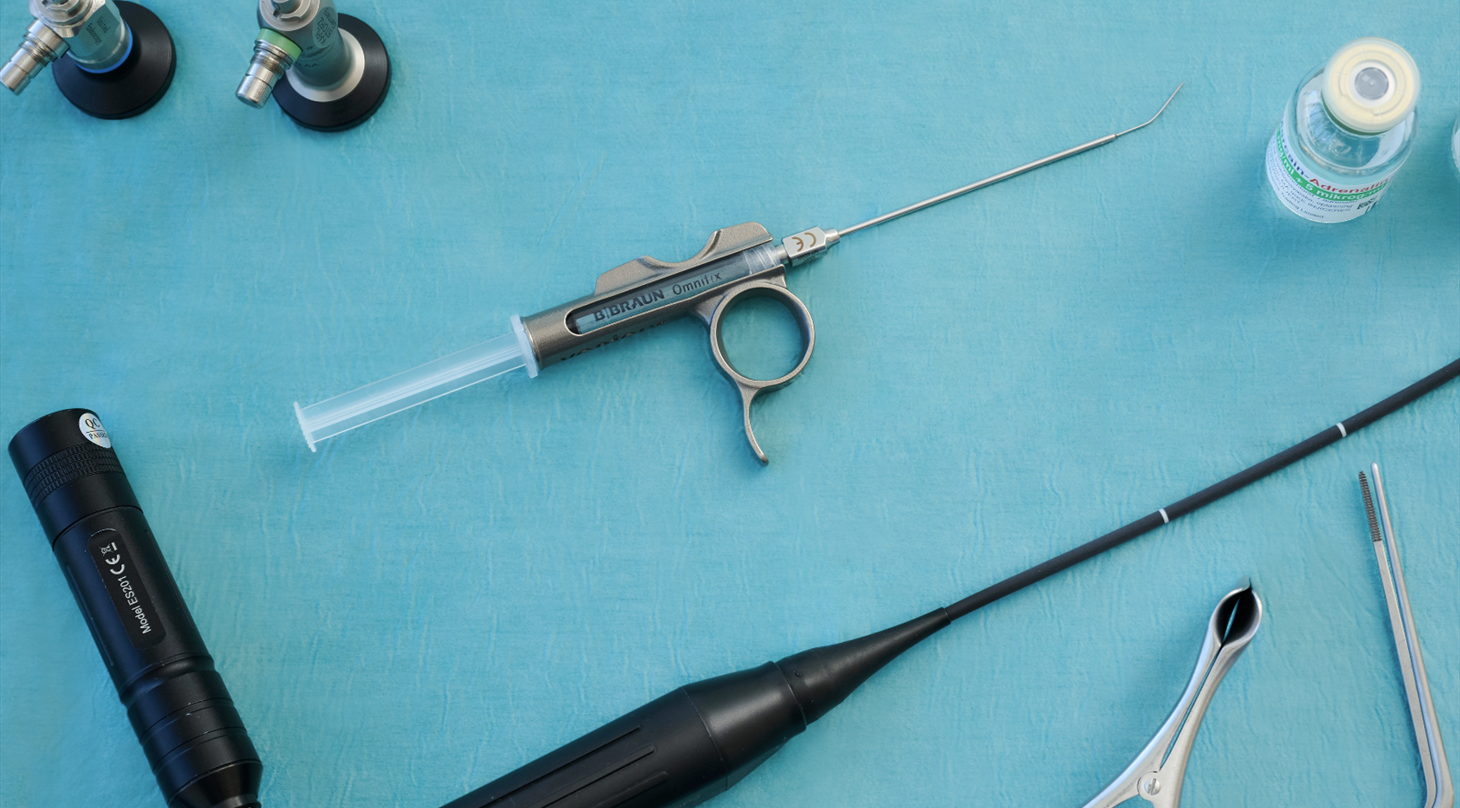
3D-printed titanium frees up the surgeon's hands - and realizes a complex design from Venteus
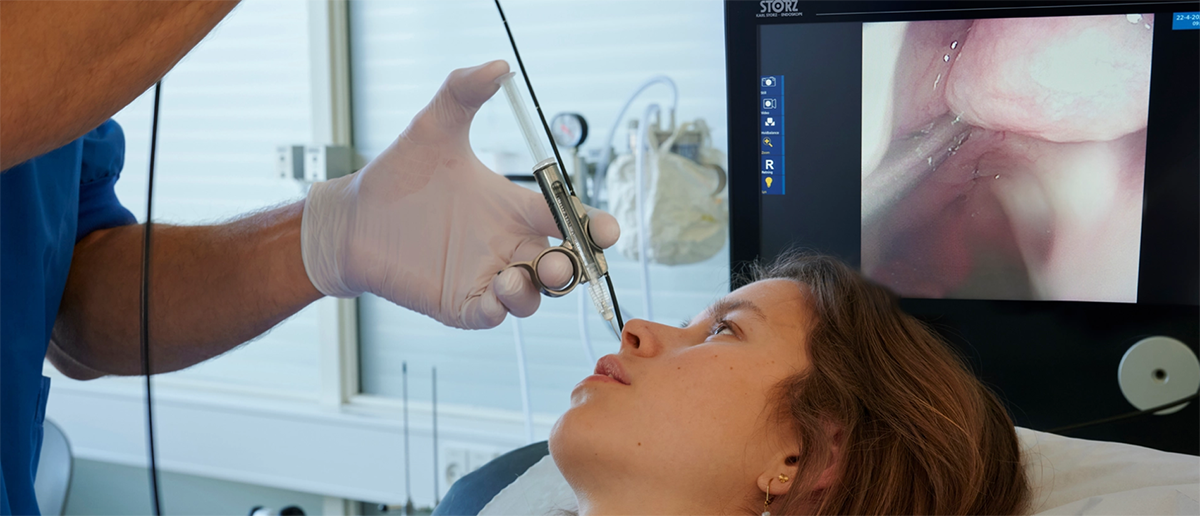
For ear, nose, and throat (ENT) specialists, complex procedures in the nasal cavity can require more hands than the surgeon has available. The Danish medtech entrepreneur Venteus set out to solve this with an innovative, handheld cannula holder that allows the doctor to control both the cannula and the endoscope with the same hand. The design was realized using metal 3D printing at the Danish Technological Institute.
When ENT specialists operate, even small ergonomic improvements can make a major difference. The Danish two-person company Venteus has developed a handheld cannula holder that makes it easier for the doctor to manage the cannula and endoscope with one hand – thereby freeing up resources in a demanding working situation.
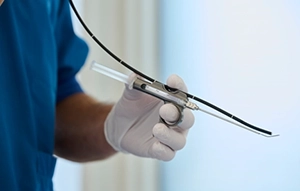 Complex geometry required new methods
The cannula holder is designed with ergonomic, curved shapes and an integrated clamping function.
However, the product placed high demands on manufacturing: it had to be lightweight, ergonomic, strong, biocompatible, and suitable for cleaning and sterilization. At the same time, Venteus had developed a complex geometry that would be difficult and expensive to manufacture using traditional machining methods.
- The geometry we wanted was complex and therefore expensive to machine, so we looked towards 3D printing. We had initially envisioned making it in stainless steel and were pleasantly surprised that the Danish Technological Institute could 3D print it in titanium at a price that was the same or cheaper, says Jens Gad, CEO and founder of Venteus.
Titanium and 3D printing as an ideal match
Venteus knew that the Danish Technological Institute was a specialist in metal 3D printing, so the company reached out for advice and to inquire about prototyping possibilities. It quickly became clear that metal 3D printing was the right technology – not only for prototypes, but also for ongoing production.
Titanium was chosen as the material because it combines low weight with high strength, good elastic properties, and high potential in medical applications. This made it possible to realize the desired geometry without compromising on functionality, ergonomics, or the product's clinical application.
- I wasn't aware that the Danish Technological Institute also had expertise in materials and processes regarding biocompatibility and medical devices. That has been crucial for us, Jens Gad explains.
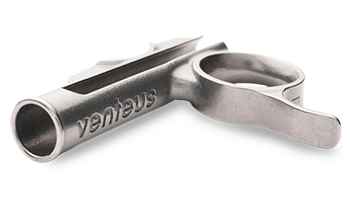
The Danish Technological Institute produced a series of test prints, evaluated fit and function, and advised on design changes that made the part more suitable for 3D printing – also in terms of complying with FDA guidelines. At the same time, Venteus’ logo and the product’s CE marking were integrated directly into the print as part of the component's geometry.
 From prototype to series production
In addition to the printing process itself, the Danish Technological Institute has helped Venteus develop the necessary post-processing. The part must be ground, deburred, and surface-treated to meet requirements for quality, cleaning, and sterilization.
- In the first phase, we have produced and hand-polished the first 100 parts so that Venteus can quickly move forward with the launch. In parallel, we are working on establishing a more scalable process where parts of the post-processing can be performed externally – without compromising on the quality that Venteus has already approved, says Morten Hejlskov Hansen, consultant and 3D printing specialist at the Danish Technological Institute.
Ready for the market with scalable production
For Venteus, the collaboration has meant that a complex medical device has been transformed from an idea and design into a physical, marketable product. The company now has a titanium component that can be used in clinical environments and produced in series of around 1,000 units annually.
The Danish Technological Institute has been crucial to us being able to bring our first product to market. They have been incredibly helpful – both regarding design optimization for printing and systematic analysis of the most effective post-processing
- Jens Gad, CEO at Venteus
This case clearly shows that metal 3D printing is far more than just a prototyping technology. For medtech companies like Venteus, it can be the path to faster product development, flexible production, and geometries that would otherwise be difficult or uneconomical to realize.