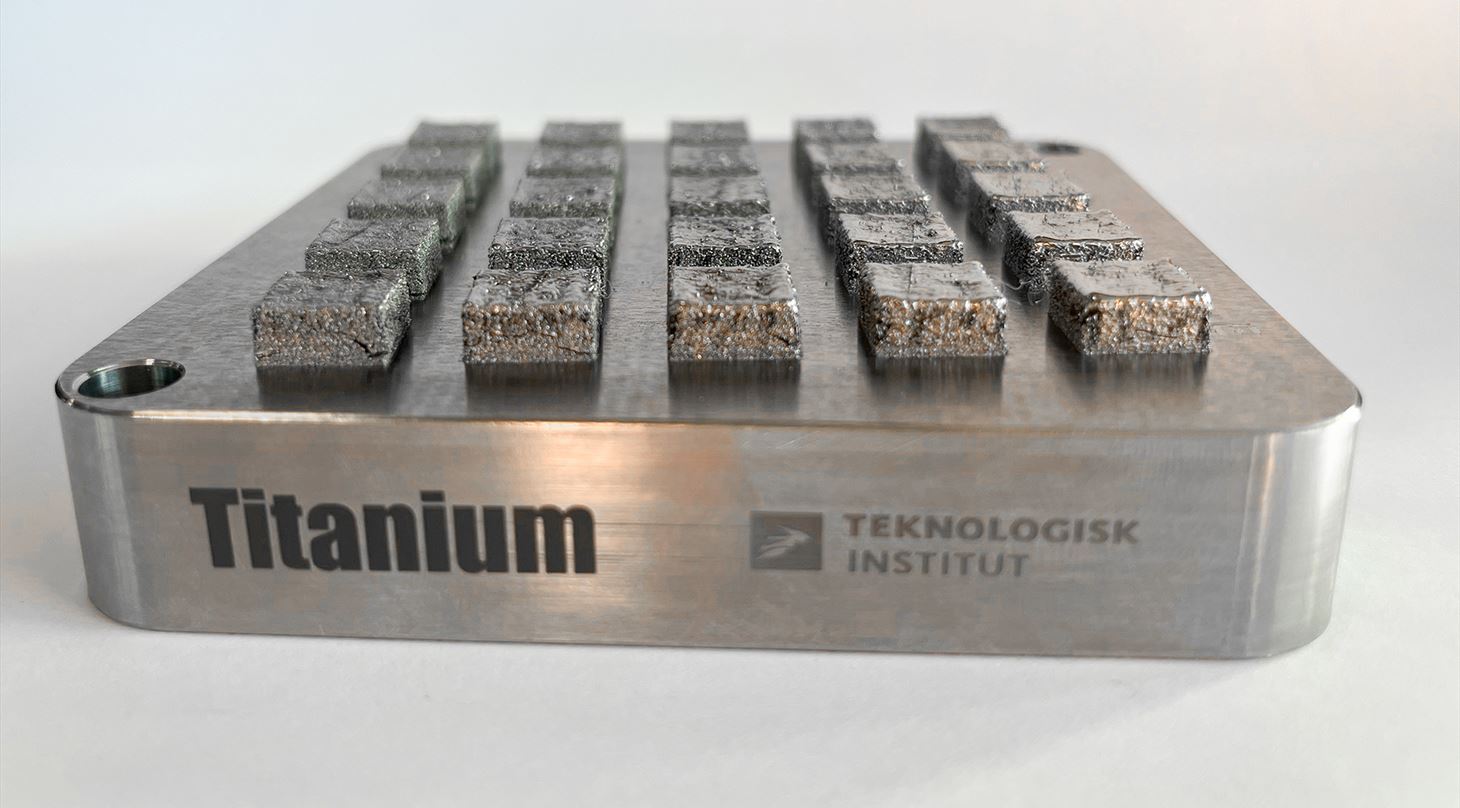
From chips to additive manufacturing: recycled titanium powder can reduce CO2 emissions
The recently concluded CHIPART project paves the way toward less environmentally damaging AM production, which can also yield economic benefits. This is achieved by recycling aerospace titanium chips into additive manufacturing powder - without energy-intensive remelting.
The aerospace and defense sectors are under pressure to reduce CO2 emissions across supply chains and secure strategic raw materials. This has been the exact focal point of the recently concluded CHIPART project, supported by the European Defence Agency (EDA).
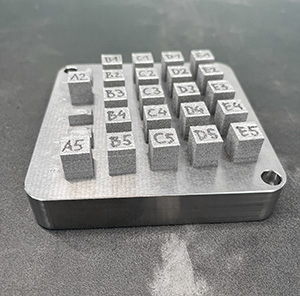 Following 12 months of work, the project - which included the partners Danish Technological Institute, IDONIAL from Spain, and CRM Group from Belgium - has now validated that titanium chips from Tier-2 aerospace suppliers can be converted into metal powder suitable for additive manufacturing, notably without the energy-intensive remelting process typically used in the manufacturing of titanium powder.
- By converting machining chips directly into additive manufacturing metal powder without the use of remelting, we have demonstrated that circularity in titanium manufacturing not only delivers environmental benefits - it is also economically viable at scale, says Magdalena Müller, Materials Specialist at Danish Technological Institute.
Potential environmental quantum leap
A life cycle assessment confirms that the project’s recycling method can potentially reduce CO2 emissions by between 85 and 92 percent compared to using conventional virgin titanium powder. Notably, it can be done without compromising on quality.
The recycled material was tested on two different additive manufacturing technologies: Laser Powder Bed Fusion (LPBF) and Directed Energy Deposition (DED).
During the process, we found that we achieved the best results by blending recycled powder with virgin titanium powder, and that controlling the oxygen level in the printer was the decisive factor for print quality
- Magdalena Müller, Danish Technological Institute
Once optimal printer settings were identified, the project achieved a material density of 98 percent or higher in the printed parts, fulfilling the project's target.
Economic advantages at industrial scale
Within the project, Danish Technological Institute developed an economic model around a demonstrator component. The model shows that although recycling at laboratory scale incurs higher costs, industrially scaled recycled powder can be produced significantly cheaper than virgin powder.
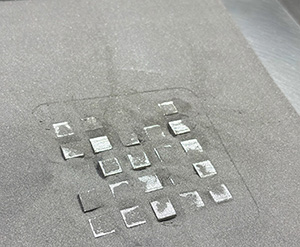 Just as importantly: When machine time and post-processing are factored into overall production, there is still a positive reduction in total manufacturing costs compared to the exclusive use of virgin powder.
With the conclusion of the CHIPART project, the results are now being presented to the European Defence Agency in Liège.
Facts about CHIPART
CHIPART ("Chips to Parts: Circularity of titanium scrap from machining to additive manufacturing") is a 12-month proof-of-concept project that ran from October 2025 to September 2026. The project falls under the 'Incubation Forum for Circular Economy in European Defence' (IF CEED) and is supported by the European Defence Agency (EDA).
The partners are: IDONIAL (project coordinator - Spain), Danish Technological Institute (Denmark), and CRM Group (Belgium). The project also collaborates with external industrial partners in the defense and aerospace sectors, which provide a demonstrator component for reference as well as a source for the titanium chips used. The project was built upon a previous project, VARETIT, which also focused on recycling titanium scrap into additive manufacturing powder.

The CHIPART project is co-funded by the European Union's LIFE Programme and the European Defence Agency, within the framework of the Incubation Forum for the Circular Economy in European Defence (IF CEED).
“Views and opinions expressed are however those of the author(s) only and do not necessarily reflect those of the European Union or the European Defence Agency. Neither the European Union nor the granting authority can be held responsible for them.”