Material and supplier shift in plastics - validation and documentation
 In Danish
Reduce the risk of a material shift. Accelerated aging provides you with a documented decision-making basis before changing suppliers, raw materials, or transitioning to recycled or bio-based plastics.
A material shift in plastics production is rarely a simple 1:1 replacement. Even slight variations in additive packages, molecular weight, or a subcontractor’s process conditions can affect the durability and performance of the finished product—and the consequences often do not become apparent until the product is in service.
Danish Technological Institute assists in validating material shifts through accelerated aging and targeted testing, allowing you to make decisions based on solid technical evidence rather than assumptions.
How can Danish Technological Institute assist you?
Danish Technological Institute provides the testing capacity and material expertise required to assess the consequences of a material shift before it is implemented in production:
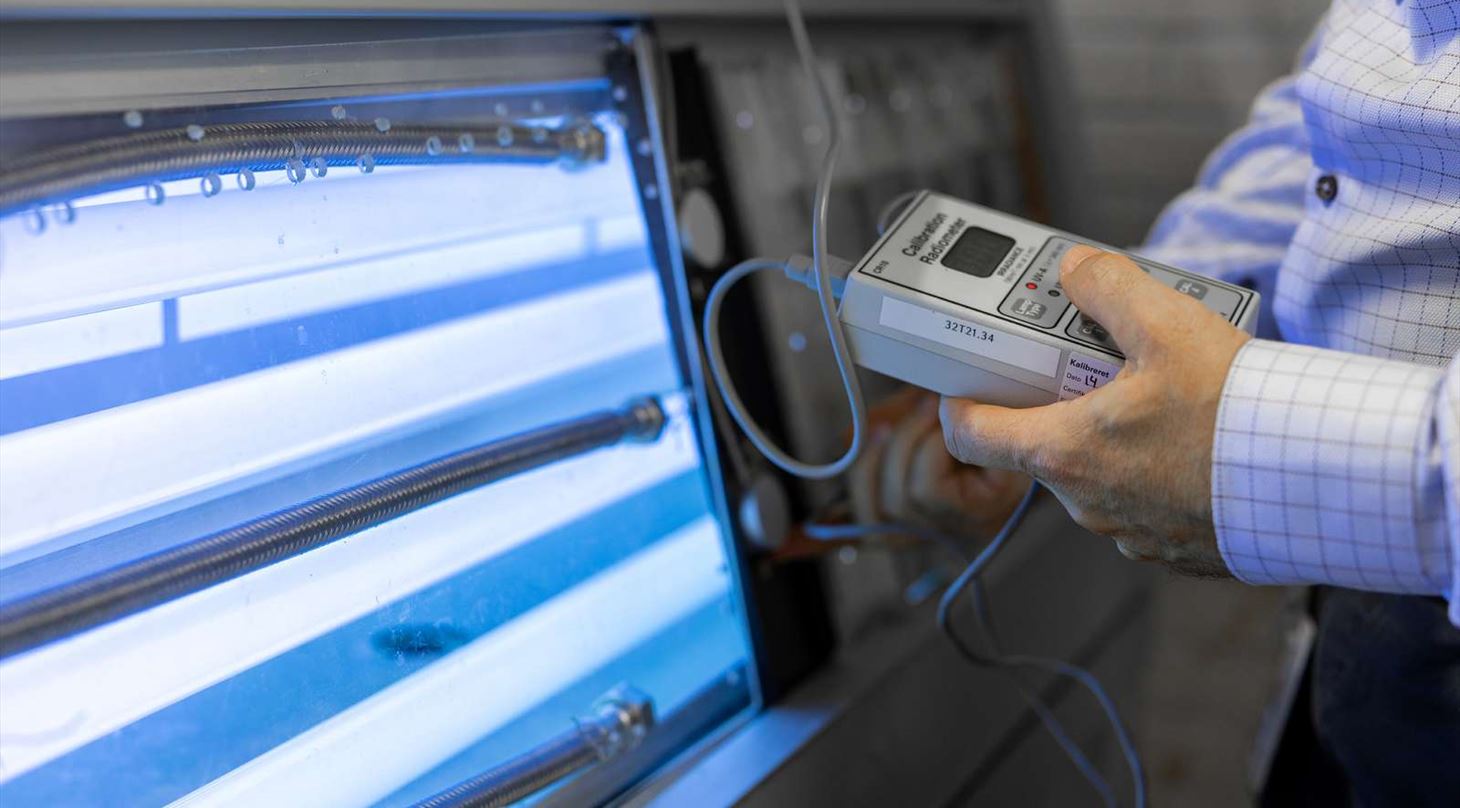
- Accelerated aging of plastic components to induce failures under controlled conditions
- UV and weathering resistance testing according to ISO 16474-2 and ISO 4892-3
- Condensation testing according to ISO 6270-2
- Mechanical fatigue testing according to ASTM D7791
- Chemical resistance testing - e.g., exposure to cleaning agents or process chemicals
- Comparative analysis of existing and new materials based on selected proxy properties
- Consulting on test design - identifying which environmental impacts and properties are critical to your specific product
Our accredited testing of plastics and rubber
When is a material shift relevant?
A material shift can be necessary for many reasons - and the risk varies depending on the situation:
- The supplier is phasing out a grade - e.g., because it contains a substance being regulated out of the market.
- You are changing suppliers, and despite handover procedures, producing an exact 1:1 copy is not possible.
- You want to transition from conventional plastics to recycled or bio-based plastics, but hesitate because the consequences can be difficult to predict.
- You are considering dual sourcing and need to validate multiple candidates in parallel.
- A subcontractor has changed materials or machinery without prior approval - e.g., switching to a larger injection molding machine, where longer residence time in the barrel/screw can degrade the plastic material.
Common to all these scenarios is that it is far less expensive to identify issues in the laboratory than to discover them through market claims and product recalls.
A collaborative project - everyone does what they do best
Danish Technological Institute typically conducts validations as collaborative projects, where the company and the laboratory each contribute their core competencies.
How the process works:
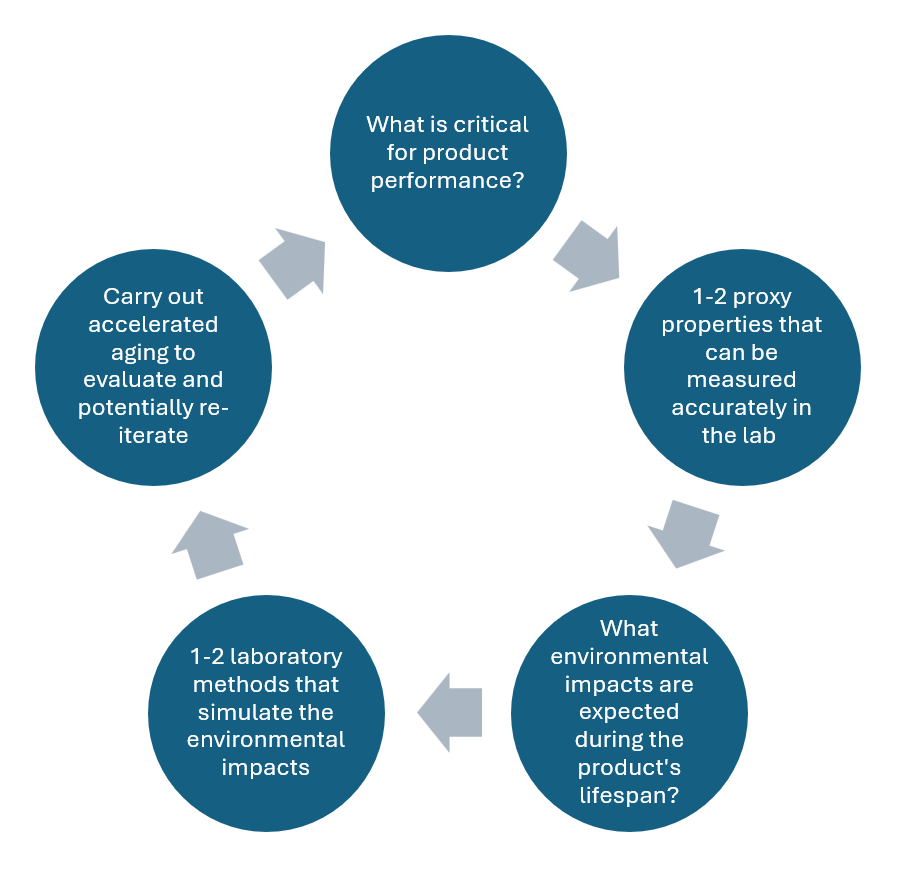
- Identification of critical properties: Together with you, we identify which properties are crucial for the product’s in-service performance. These may include impact strength, flexibility, color fastness, or chemical resistance.
- Selection of proxy properties: We select 1–2 measurable properties that serve as reliable indicators of the product's overall performance and can be precisely measured in the laboratory.
- Selection of environmental exposures: We determine the environmental impacts the product is expected to encounter during its service life—such as UV radiation, humidity, chemicals, or mechanical stress.
- Selection of test methods: We select 1–2 laboratory methods that simulate the identified environmental exposures under controlled and accelerated conditions.
- Accelerated aging and evaluation: We perform the aging trials and evaluate the results. If necessary, we can iterate—e.g., by adjusting the material candidate or process parameters and retesting.
As a manufacturer, you provide knowledge regarding raw material availability, manufacturability, and the process window. Danish Technological Institute contributes testing capacity, materials expertise, and an independent assessment of the results.
Hidden risks of unauthorized changes
A material shift is not always initiated by the company itself. Danish Technological Institute has extensive experience with situations where a subcontractor implemented a material shift without prior consent - or where a product was molded using a machine other than the one originally agreed upon.
Switching to a larger molding machine can cause the plastic material to degrade due to the extended residence time in a larger screw. Switching to a raw material with a different additive package can lead to altered product properties that might go undetected during incoming goods inspection, only to surface later as warranty claims from the market.
Accelerated aging and systematic material verification can reveal such changes before they result in costly consequences.
Sustainable material shifts - from conventional to recycled or bio-based plastics
An increasing number of companies aim to replace conventional plastics with recycled or bio-based raw materials. This is an essential step toward more sustainable manufacturing, but it requires validation.
Recycled plastics may have a different composition and greater batch-to-batch variation compared to virgin materials. Bio-based polymers may possess different mechanical and thermal properties. In both cases, accelerated aging provides a documented foundation to assess whether the new material meets performance requirements - and whether the transition can be executed without compromising product quality.
Contact us regarding material and supplier shifts
Are you facing a material or supplier shift and need to understand the implications before making a decision? Contact Danish Technological Institute’s Plastics Laboratory to discuss how a validation program can be tailored to your specific situation.