Pharmaceutical production - Characterisation of impurities in pharmaceuticals
Select Page
Identify unknown impurities and comply with regulatory requirements
Danish Technological Institute helps pharmaceutical manufacturers identify and characterise unknown impurities in APIs and finished pharmaceuticals, so they comply with regulatory requirements and ensure patient safety.
When impurities in pharmaceuticals exceed 0.2%, the authorities typically require documentation of the impurity.
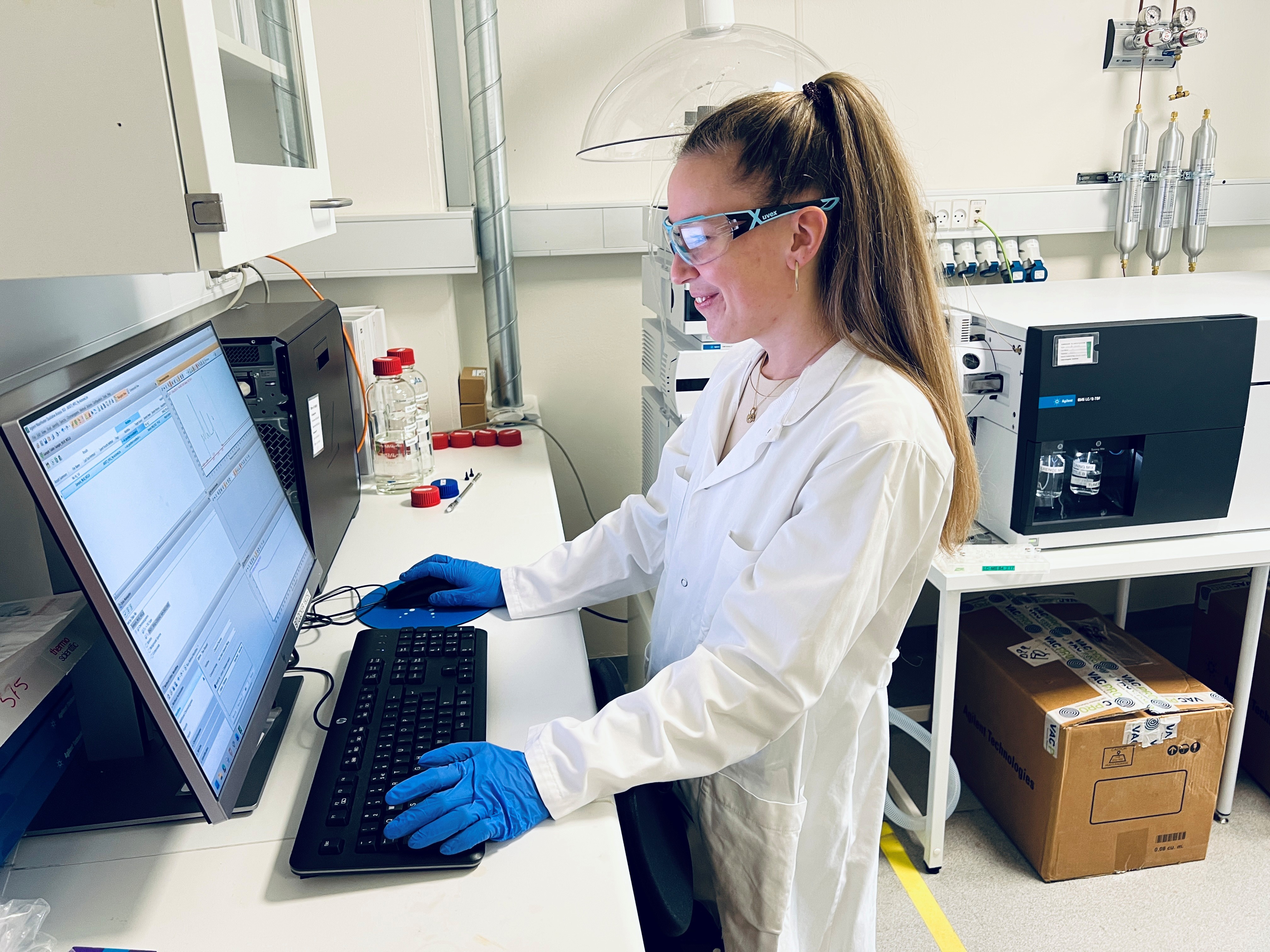
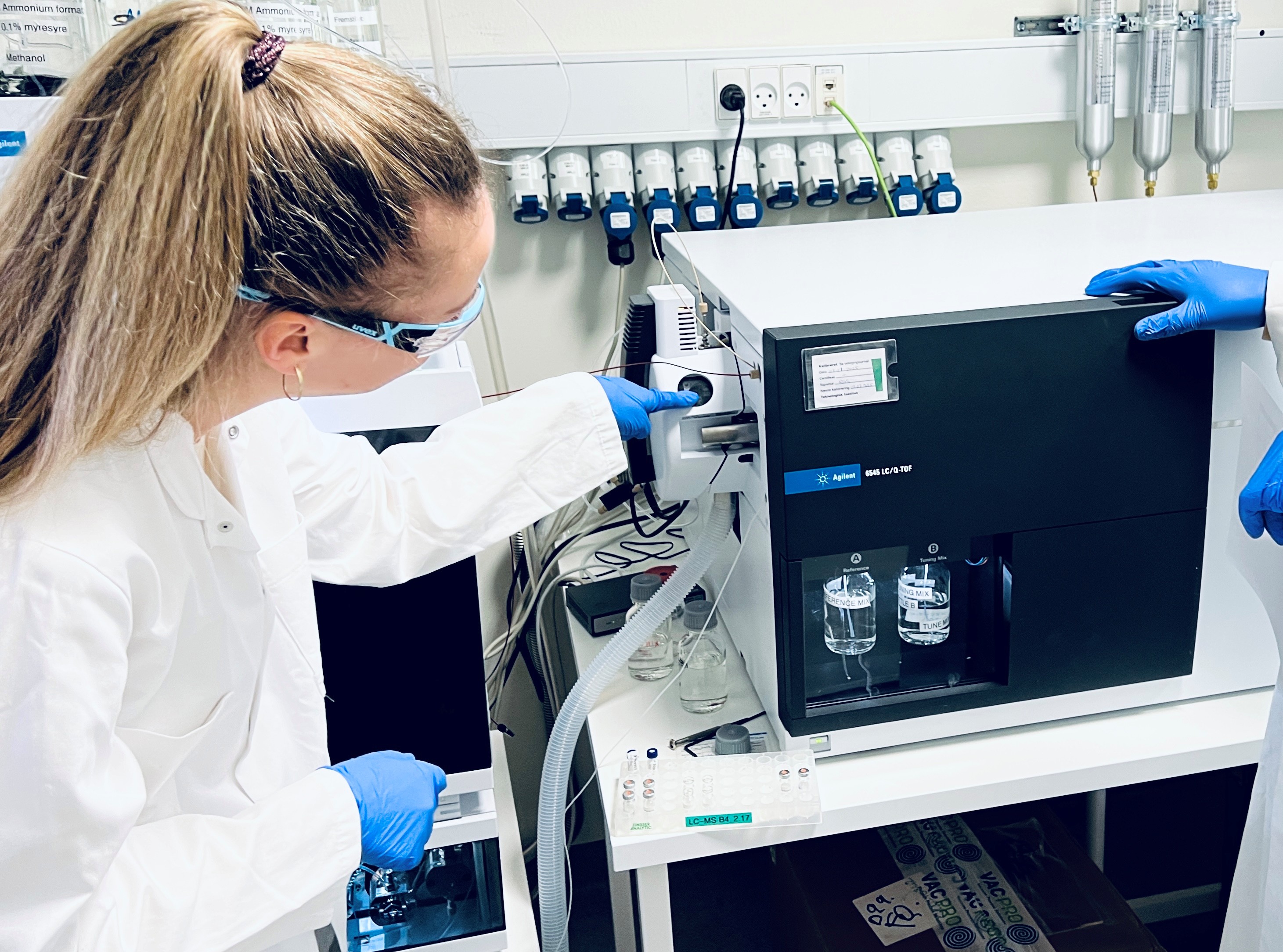
At Danish Technological Institute, experts use the advanced analytical technology called LC-qTOF to identify unknown impurities. They work in close co-operation with customers throughout the entire process – from the initial analyses to the final regulatory documentation. Customers receive a detailed report with documentation that can be used when communicating with authorities, so product withdrawals are avoided and the brand is protected.
How can Danish Technological Institute help you?
- Identification of unknown impurities in APIs and pharmaceuticals that exceed the regulatory threshold of 0.2%.
- Characterisation and structural elucidation by using the advanced analytical technology LC-qTOF.
- Method transfer and method development tailored to your specific product.
- Detailed report with documentation that can be used when communicating with authorities.
- Expert advice throughout the entire process with fixed meetings and an ongoing dialogue.
- Identification of problems before impurities become a regulatory issue.
Why choose Danish Technological Institute?
Danish Technological Institute holds a unique position in the Danish market by offering a complete solution for identification of impurities in pharmaceuticals. Other laboratories typically cover part of an analysis, but we manage the entire process – from the initial analyses to thorough documentation that can form the basis of a regulatory submission.
We offer a rare combination of advanced LC-qTOF analyses, expertise within pharmaceutical analyses, and an approach based on co-operation. This helps create a better understanding of results and makes it easier to make the right decisions.
The course of a typical process
At Danish Technological Institute, identifying impurities typically follows a structured three-phase approach. The duration of each phase depends on several factors, but if you have a tight deadline and are ready to make decisions continuously throughout the project, then we can deliver results within 4–5 weeks.
Phase 1: Project start-up and planning
In this phase, the project is defined together with you. The phase requires close co-operation as we would like to know as much as possible about your product. Have the ingredients changed? Are you already aware of any impurities? Have similar problems previously occurred? Open information sharing makes it possible to quickly deliver results targeted to your situation. This phase aims to generate a test protocol that describes the project procedure and contains relevant information from you.
Phase 2: Method implementation and chosen impurity
The laboratory work will begin, when we in co-operation have defined the project in phase 1 and you have approved the test protocol.
We will carry out method transfer from your internal analytical set-up to our LC-qTOF equipment. This means that we adapt our methods to match your product specifications.
In this phase, meeting dates will be booked at the very beginning of the project. In that way, you will have time to respond to our questions and make internal decisions.
Once the method has been approved, we will run the analyses on our LC-qTOF. In co-operation with you, the phase will be completed when you have approved the method transfer results and chosen the impurity you want us to characterise in phase 3.
Important: It is rarely possible to transfer your internal method 1:1. There will always be minor differences between the different HPLC and LC-MS systems. Instead, we work with relative retention times and other techniques that ensure comparable results.
Phase 3: Characterisation of impurity
We examine the chromatographic data and mass spectra in detail, compare them with known structures and propose chemical structures for the unknown impurities.
Finally, we will prepare a report comprising:
- Description of the applied method
- Mass spectra and analytical parameters
- Proposal for the chemical structure of the impurities
- Evaluation of results and conclusions
The final report will be prepared so it is ready for submission in the Danish Medicines Agency or other authorities.
Companies often postpone the decision to seek help, and then the situation can reach a point where firm action is needed. However, if a company contacts us early in the process, then we can prevent the situation from becoming an acute regulatory issue. Our advanced analytical methods, combined with our experience, give companies the certainty they need - Mette Nygaard Bennekov, Business Manager, Danish Technological Institute.
LC-qTOF technology: What is it, and why do we use it?
LC-qTOF stands for Liquid Chromatography Quadrupole Time-of-Flight mass spectrometry. It is one of the most advanced technologies for identifying unknown chemical compounds.
The technology works by:
- Separating chemical compounds in the pharmaceutical product
- Measuring the exact molecular mass of the compounds
- Fragmenting the molecules to determine their structure
Compared with traditional HPLC, the advantage of LC-qTOF is its high mass accuracy and sensitivity. We can identify impurities even at very low concentrations and determine their chemical structure with high precision.
For pharmaceutical manufacturers this means:
- Faster identification of unknown impurities
- Proposal for more exact structures
- Better documentation for authorities
- Fewer analysis uncertainties
Important to know before starting a process
Open communication is essential
In order to find the best solution as quickly as possible, it is an advantage if all relevant information about the product is shared from the very beginning:
- Has there been a change in ingredients or suppliers?
- Are you already aware of any impurities?
- Does the product contain salts or other components that could affect the analysis?
- Have similar problems previously occurred?
Information that you may not consider relevant might be important for our assessment. Our ISO 17025 accreditation ensures that all information is strictly confidential, and if you have special requirements to confidentiality, then we are prepared to make use of an NDA.
Active participation in the process
Time is crucial, and therefore we have scheduled fixed meetings throughout the project. It is important to participate in the meetings and have time to make internal decisions afterwards. If we encounter something unexpected or need additional samples, we will contact you immediately. Transparency and an ongoing dialogue are the key to success.
Experience shows that the most successful projects are the ones where the customer participates actively and sees us as a co-operation partner and not as an external supplier.
Case: Quick identification ensured launch of product
During a routine quality control, a Danish pharmaceutical manufacturer discovered an unknown impurity of 0.3% in a new product. Without luck, the company had tried to identify the impurity internally and was under pressure of time, as the product was due to be launched within few months. The company contacted Danish Technological Institute, and we started the project.
Week 1 – Project start-up and planning: Danish Technological Institute held a kick-off meeting with the company and studied the product history. It appeared that the company had recently changed supplier of one of the ingredients. Together, we prepared a test protocol, and it was approved by the company.
Weeks 2–3 Method implementation and choice of impurity: Danish Technological Institute transferred the method from the company’s internal HPLC method to the LC-qTOF equipment. At the scheduled meetings, we went over the results of the method transfer, and the company had time to make internal decisions about the further course of events. After approval of the method, we ran the LC-qTOF analyses, and in co-operation with the company, the relevant impurity peak was chosen for the further work.
Weeks 4–5 Characterisation of impurity: We identified the impurity as an oxidation by-product from the new ingredient. The mass spectra showed characteristic fragmentation that matched a product of a known oxidation reaction. We prepared a report with structural proposals and documentation.
Result: The company received the documentation for the authorities on time and was able to launch the product as planned. By adjusting the raw material specification, they were also able to reduce the risk of similar problems in the future.
The customer particularly emphasized the value of the ongoing dialogue and the fixed meetings as they made it possible to make quick decisions without compromising quality.
Frequently asked questions
How long does it take to identify an impurity?
A typical project takes 4–5 weeks from start to finish, if everything proceeds as planned. Phase 1 (Project start-up and planning) takes 1–2 weeks, whereas phase 2 and 3 (Method implementation and chosen impurity, and Characterisation of impurity) take app. 3 weeks. However, the timeframe depends on how long the protocol approval takes, how quickly the necessary samples can be delivered, and how quickly the necessary internal decisions can be made.
Can you identify all types of impurities?
We can identify most impurities in pharmaceutical products by using LC-qTOF or other relevant analytical techniques. Some compounds can be difficult to detect or characterise, i.e., if they do not ionise well in the mass spectrometer. In such cases, we will inform you early in the process and, if relevant, we will suggest alternative methods.
What does it cost to identify an impurity?
The price varies according to the complexity of the project, the number of impurities, and how much preliminary work is required. Contact us for a non-binding quote based on your specific situation.
Can you also synthesize reference standards?
Yes, if we identify an impurity, we can in some cases synthesize a reference standard, if it cannot be purchased commercially. However, this is a separate service that we assess on a case-by-case basis.
Is Danish Technological Institute accredited for this type of analysis?
Yes, we are accredited in accordance with ISO/IEC 17025:2017, which ensures that all information is treated strictly confidential. If you have special requirements to confidentiality, then we can always make use of an NDA.
What happens if we cannot identify the source of the impurity?
If we identify the structure of the impurity, and if you cannot find the source in the production process, then we may in some cases be able to give advice on possible causes based on the chemistry from the various chemicals. We can also recommend other experts at Danish Technological Institute who can assist with process optimisation.
Do you need help to identify impurities in your pharmaceutical products?
Contact us for a non-binding talk about your challenge. We will guide you through the process and find the best solution for your situation.