Pharmaceutical production - USP <665>
Select Page
USP <665>: Testing of Plastic components for Pharmaceutical Manufacturing
Do your plastic components and manufacturing systems comply with the USP <665> requirements?
USP <665> became mandatory on 1 May 2026. After that date, companies must be able to document compliance with the standard. If USP <665> is not followed, then it must be documented that an equally robust, scientifically justified, and risk-based approach has been applied.
How can Danish Technological Institute help you?
- Risk assessment of plastic components and manufacturing systems in accordance with USP <665> and <1665>
- E&L studies (extractables and leachables) with chemical characterization
- Tailored testing strategies adapted to your specific manufacturing equipment and processes
- Documentation intended for authority approval and quality management systems
- Verification studies in connection with change of supplier
- Support when materials or processes are modified
- Chemical analyses at different risk levels, ranging from UV absorbance to complete organic and inorganic profiling
Danish Technological Institute supports the pharmaceutical industry and manufacturers of production equipment so compliance with the USP <665> requirements for plastic components and systems is achieved.
Our experts perform E&L studies that can establish whether your materials are suitable for pharmaceutical manufacturing and whether they compromise on product quality or patient safety.
With expert advice and specialized analyses, you will obtain the documentation requested by regulatory authorities and customers. We can help you navigate the complexity of USP <665>, so you can make the right decisions regarding material selection, thus avoiding costly disruptions and batch failures.
Why is USP <665> important?
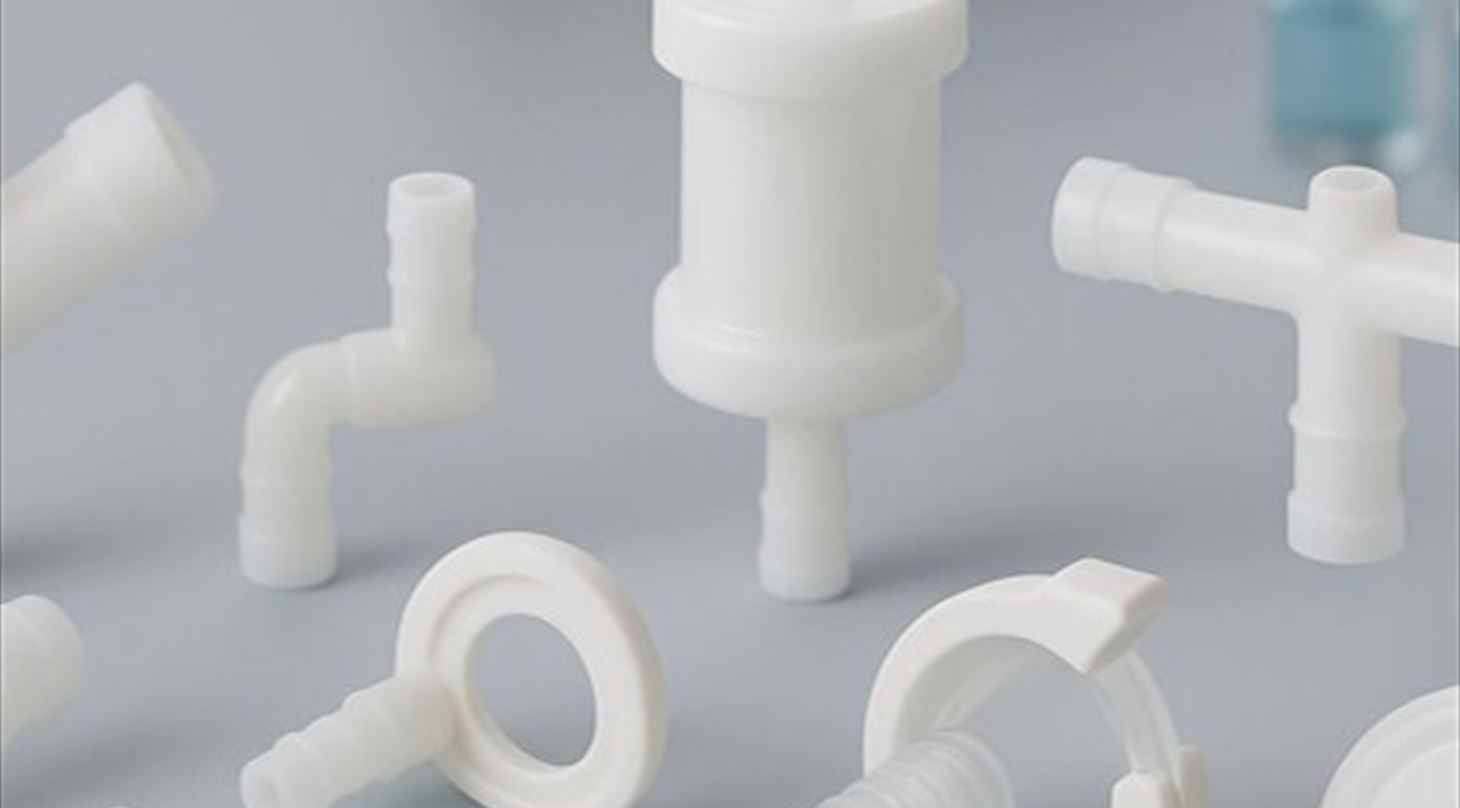
Plastic components and systems are increasingly used in pharmaceutical manufacturing, e.g., in tubing, filters, containers, valves, or single-use systems. Components as well as systems may liberate chemical substances that under certain conditions can migrate into the pharmaceutical product and potentially impact product quality and/or patient safety.
Extractables are substances that can be released from a material under laboratory or exaggerated conditions. Leachables or PERLs are substances that can migrate into a product under normal storage or conditions of use.
USP <665> describes how plastic components and systems must be qualified through scientifically based extraction studies. The United States Pharmacopeia is not a legislative authority, but in practice the standard serves as a regulatory reference for organizations such as the FDA, EMA, and the Danish Medicines Agency.
Risk-based testing and documentation
The scope of testing depends on the specific component, its intended use, and its potential impact on products. Therefore, Danish Technological Institute applies a risk-based approach, and an assessment may include material type, contact conditions, process conditions, product type, and the likelihood of leaching.
Based on this assessment, the risk assigned level is typically categorized as low, medium, or high. This approach makes it possible to tailor the analytical scope to your specific situation, ensuring that relevant documentation is obtained while unnecessary testing is prevented.
A risk-based approach provides a better basis for preventing contamination, managing changes in materials or processes, and making sound decisions regarding equipment and suppliers.
“It is not about testing as much as possible, but about testing the right things on the right basis. A risk-based approach makes it easier to prioritize efforts and obtain documentation that is relevant to product quality and patient safety.”
— Helle Stendahl Andersen, Business Manager, Danish Technological Institute
When is USP <665> relevant?
USP <665> testing of plastic components is particularly relevant for qualifying manufacturing equipment, preparing the 2026 requirement, or documenting compliance intended for authorities and customers.
USP <665> is also relevant in connection with:
- change of supplier
- management of changes in materials or processes
- contamination issues or unaccounted impurities
- the need for targeted verification studies
- assessment of components in single-use systems (SUS) and multiple-use systems (MUS)
Danish Technological Institute helps clarify what level of documentation is relevant in your specific situation.
Gain a stronger basis for decision-making
USP <665> related testing and documentation provides a stronger basis for evaluation of materials, equipment, or changes in production processes.
For pharmaceutical companies, USP <665> can reduce the risk of batch failures, strengthen documentation intended for regulatory authorities, and ensure early identification of potential problems.
For manufacturers of production equipment, USP <665> can document that products comply with USP <665> and support decisions regarding material selection, design, or customer requirements.
Danish Technological Institute is an independent and not-for-profit institute, and by partnering with us you can benefit from: access to specialized testing and services focused on professional documentation and applicable decision support.
Interested in learning more about USP <665>?
Please contact Danish Technological Institute if you need a risk assessment, E&L studies, or plastic component documentation for pharmaceutical manufacturing.
Contact Helle Stendahl Andersen at: +45 72 20 24 21 / hsa@teknologisk.dk
Frequently asked questions about USP <665>
Is USP <665> mandatory?
USP <665> is not a direct legal requirement, but the standard will become mandatory on 1 May 2026, and in practice authorities expect companies to address the requirements of the chapter. If USP <665> is not followed, then it must be documented that an equally robust, scientifically justified, and risk-based approach has been applied.
What is the difference between extractables and leachables?
Extractables are substances extracted from a material under worst-case conditions. Leachables are substances that actually migrate into a product under normal conditions of use. Extraction studies are used to predict potential leachables.
Which plastic components are covered by USP <665>?
USP <665> i.a. comprises tubing, filters, valves, containers, adapters, connectors, as well as plastic polymer-based single-use systems (SUS) and multiple-use systems (MUS) in direct contact with pharmaceutical drugs or biopharmaceutical products.
Can supplier data be used as documentation?
Extractables data from a supplier can be an important starting point, but it must be assessed in relation to the specific application. If the data does not cover your process or worst-case conditions, supplementary studies may be required.
Must all studies be repeated after a change of supplier?
No, not necessarily. However, a change of supplier will always require a new risk assessment. Depending on material differences and the risk profile, the need may range from a limited verification study to a more extensive extraction program.
What are PERLs?
PERLs (Process Equipment-Related Leachables) are substances that can migrate from process equipment and into the final process streams. USP <665> plays a crucial role in identifying, assessing, and mitigating such contamination risks.
USP: United States Pharmacopeia. United States Pharmacopeia (USP) prepares and publishes guidelines and standards. Please note that USPs in some cases are regarded as statutory requirements. However, USP is not a regulatory authority, and the USPs are not formal regulatory documents.