Air-to-Water Heat Pump Testing: Independent Documentation for European Compliance and Market Access
Select Page
Accredited laboratory testing provides heat pump manufacturers, importers and distributors with the empirical documentation required to verify heating efficiency, acoustic performance and regulatory compliance across diverse European climate zones.
Air-to-water heat pumps (ASHP / AWHP) represent one of the most critical technologies in the European transition toward low-carbon hydronic heating systems. However, placing a product on the European market requires verifiable documentation showing compliance with strict Ecodesign regulations, energy labelling directives and market-specific quality standards.
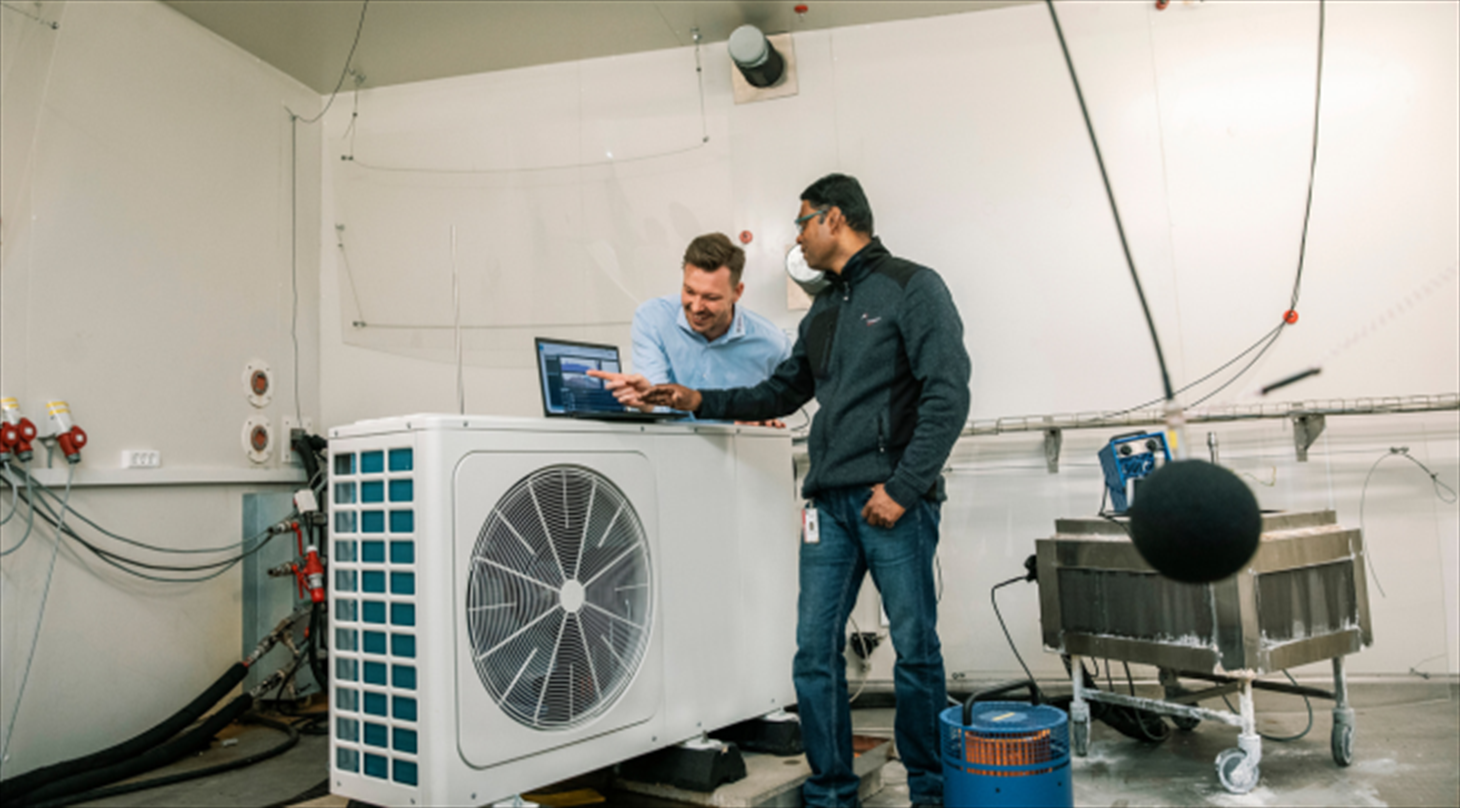
At the Heat Pump Test Laboratory at Danish Technological Institute, we conduct independent, accredited testing of air-to-water heat pumps (ASHP / AWHP). Our testing provides verified data that reduces technical uncertainty, ensures compliance before market surveillance audits, and supports product certification under schemes such as CEN Heat Pump KEYMARK, the EHPA Quality Label, the Microgeneration Certification Scheme (MCS), and the NTA 8800.
Controlled Laboratory Testing Across Variable Climate Conditions
Air-to-water heat pump performance varies significantly depending on outdoor air temperatures and source-to-sink thermal lifts. To reflect actual operating conditions, our specialised climate chambers simulate variable ambient temperatures ranging from −15 °C to +35 °C and relative humidity levels from 20% to 100%.
Testing is executed in strict accordance with relevant European and international standards (including EN 14511, EN 14825, and EN 12102-1), measuring heating capacity, cooling output, domestic hot water (DHW) production, and acoustic emissions concurrently under controlled environmental parameters.
Key Test Parameters Measured
- Heating Performance: COP (Coefficient of Performance) / SCOP
- Cooling Performance: EER (Energy Efficiency Ration) / SEER
- Acoustic Output: Sound power levels (LwA) under variable loads
- Domestic Hot Water (DHW): COP_DHW, tapping cycles, warm-up periods
- Regulatory Frameworks: Ecodesign (EU 813/2013), Energy labelling
Moving from Internal Calculations to Verified Third-Party Documentation
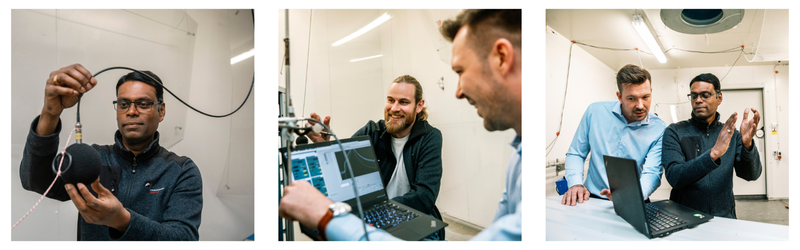
For technical directors, quality managers and R&D engineers, internal prototype measurements must be verified against ISO/IEC 17025 accredited procedures to hold validity with authorities, certification bodies, and commercial partners.
Independent testing provides empirical proof of performance claims. This mitigates the risk of non-compliance penalties, prevents costly product recalls, and secures the test documentation required for rapid CE marking and national subsidy schemes. Third-party verification serves as quality assurance during procurement and tender processes. Testing standard production batches before broad distribution confirms that declared seasonal efficiency and sound levels match production realities. Testing according to harmonised European standards ensures that national market surveillance authorities obtain repeatable, precise, and legally valid data for assessing product compliance.Technical Due Diligence for Manufacturers
Risk Mitigation for Wholesalers and Distributors
Objective Basis for Market Surveillance
Substantiating Environmental Claims with Empirical Data
Under current and incoming European regulations on environmental claims, efficiency and carbon-reduction claims must be supported by verifiable, empirical evidence rather than theoretical models.
Our ISO/IEC 17025 accredited test reports provide independent, third-party data on key metrics such as Seasonal Coefficient of Performance (SCOP) and Seasonal Space Heating Energy Efficiency. This gives manufacturers and distributors an objective, standardised technical baseline to substantiate product performance declarations and support compliant communication.
The Testing Process: A Collaborative, Transparent Approach
We operate on a transparent, 5-step model designed to keep technical teams informed throughout the measurement programme:
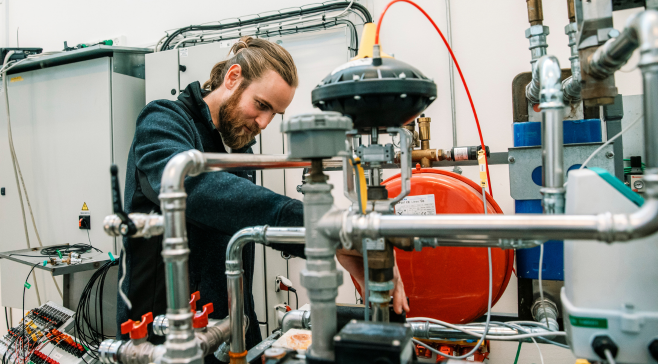
We assess the technical specifications of your unit, target markets, and relevant test standards (e.g., standard climate vs. colder climate profiles). Your air-to-water unit is installed in our climate chambers, instrumented for precise flow, temperature, electrical, and acoustic data acquisition. Tests are conducted under strict laboratory tolerances to measure steady-state and transient operations, including defrost cycles and part-load profiles. Engineering teams can monitor live performance data remotely outside working hours, allowing for complete transparency. You receive a fully documented, ISO/IEC 17025 compliant test report including temperature logs, raw energy balances, acoustic spectrums, and photographic verification of the tested unit.1. Scope Definition & Alignment
2. Rig & Instrumentation Setup
3. Controlled Execution
4. Real-time Data Access
5. Accredited Test Reporting
Technical Facilities and Specialised Chambers
Our laboratory infrastructure is engineered to accommodate mono-bloc and split air-to-water systems across residential and light-commercial capacities.
Unique chamber setups allow sound power measurements to be conducted while the heat pump operates at full thermal load under controlled temperature and humidity conditions. Accurate energy measurement during dynamic defrosting intervals, ensuring precise calculation of true seasonal performance. Facilities configured to safely test units operating with traditional fluorinated refrigerants as well as natural refrigerants (such as R290 propane).Acoustic & Climate Combined Testing
Defrost Cycle Analysis
Multi-Refrigerant Capability
Comprehensive Testing for Synthetic, HFO, and Natural Refrigerants
The European heating sector is undergoing a profound regulatory and technological shift. Stricter revisions of the EU F-gas Regulation and tightening PFAS restrictions are accelerating the phase-down of high-GWP hydrofluorocarbons (HFCs), compelling manufacturers to transition toward lower-GWP alternatives, including hydrofluoroolefins (HFOs) and natural refrigerants. Navigating this transition requires rigorous validation of thermodynamic performance, component compatibility, and operational safety.
Our Heat Pump Test Laboratory is engineered and certified to safely accommodate the full spectrum of refrigerants, enabling complete performance mapping regardless of your chosen chemical or natural baseline:
- Natural Refrigerants:
Safe, ATEX-compliant testing environments equipped to handle flammable (A3) fluids such as Propane (R290) and Isobutane (R600a), as well as high-pressure (A1) fluids like CO2 (R744) and toxic (B2L) fluids such as Ammonia (R717). - HFOs and Low-GWP Blends:
Dedicated testing protocols for mildly flammable (A2L) and non-flammable HFOs (such as R1234ze, R1234yf, R454B, and R454C). - Conventional Synthetic Refrigerants:
Full test capabilities for legacy fluorinated greenhouse gases (such as R410A, R32, and R134a).
Whether validating prototypes operating with future-proof natural refrigerants or benchmarking transitional HFO solutions against seasonal efficiency requirements, our laboratory infrastructure provides precise thermodynamic data under controlled and monitored safety conditions.
Discuss Your Air-to-Water Testing Requirements
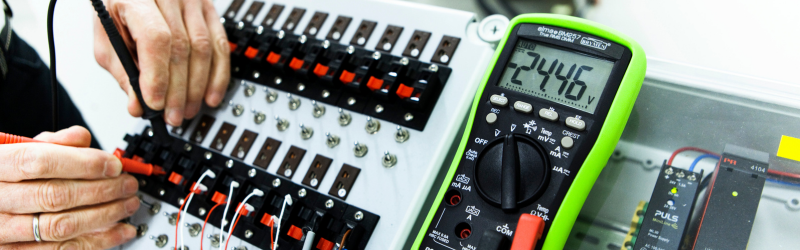
Whether you are preparing a new product platform for European market launch, seeking certification under CEN Heat Pump KEYMARK or MCS, or verifying sound emissions, our team of more than 40 specialists provides the independent data you require.
Contact our Heat Pump Testing Laboratory to define your test scope, verify lead times, and book laboratory capacity.

Lasse has overall responsibility for the team, the laboratory and its technical direction. He has more than 25 years of experience in refrigeration and heat pump technology, covering product testing, laboratory measurements, and market surveillance, as well as energy efficiency and the implementation of international standards. He is an expert in testing in accordance with international standards and has extensive experience with heat pumps, refrigeration systems, condensing units and related components for both public authorities and industry.
Preben has worked in the energy sector for more than 20 years. He specialises in testing heat pumps as well as providing technical consultancy and product assessment. He is a member of national and international standardisation committees, and he is also a member of an international committee of test laboratories.
Frequently Asked Questions About Air-to-Water Heat Pump Testing
If you have questions about testing standards, refrigerant handling, acoustic measurements or certification pathways for air-to-water heat pumps, our FAQ provides a quick overview of the most common technical and regulatory topics.
Return to main page