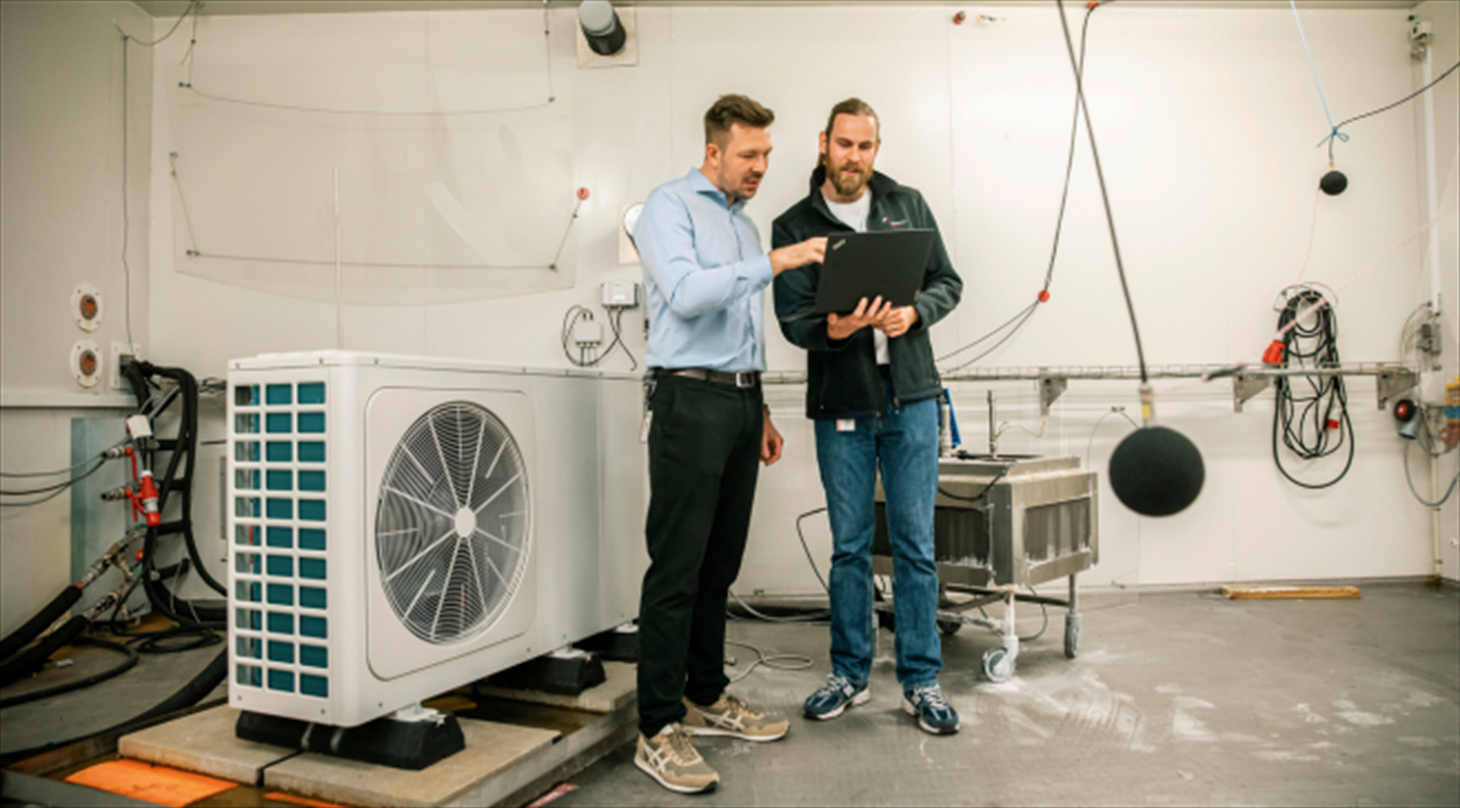
Navigating Ecodesign Compliance for Heat Pumps: Mandatory Minimum Standards and Market Access
Back to main page The EU Ecodesign framework is a legally binding set of minimum environmental and energy performance requirements that energy-related products must meet to obtain CE marking and secure legal market access within the European Union and EEA. Definition: The EU Ecodesign Framework for Heat Pumps
For hydronic heat pumps, space heaters, combination units, and domestic hot water systems, Ecodesign establishes non-negotiable statutory floors, primarily governed by Commission Regulations (EU) No 813/2013 and (EU) No 814/2013, defining mandatory minimum Seasonal Space Heating Energy Efficiency (ηs) and ceiling limits for acoustic sound power levels (LWA).
Products failing to comply with these baselines are legally barred from the European Single Market.
Placing a space heating or combination heat pump on the European Single Market requires strict conformity with EU product legislation. While the EU Energy Label serves as a consumer-facing tool to differentiate appliances through comparative energy efficiency tiers (A+++ to D), Ecodesign operates as a strict regulatory filter: it systematically eliminates underperforming, inefficient heating technologies from the market.
Compliance is not voluntary. For heating appliance manufacturers, R&D departments, and authorised importers, meeting Ecodesign requires empirical physical testing under harmonised European standards, meticulous seasonal efficiency modeling, and the assembly of an exhaustive technical dossier.
Furthermore, the framework is currently evolving under the incoming Ecodesign for Sustainable Products Regulation (ESPR). This transition expands regulatory oversight beyond operational efficiency, introducing stricter acoustic thresholds, circular economy mandates, and the integration of a Digital Product Passport (DPP). Navigating this shifting landscape requires a thorough understanding of core statutory baselines, empirical testing methodologies, and the legal constraints of market surveillance.
The Four Core Ecodesign Pillars for Heat Pumps
Commission regulations enforce compliance across four distinc performance parameters:
Space heaters must clear strict Seasonal Space Heating Energy Efficiency baselines throughout the heating season. These minimum thresholds vary depending on thermal capacity and application type (e.g., low-temperature applications at 35 ∘C vs. medium-temperature applications at 55 ∘C ). Heat pumps failing these baselines cannot obtain CE marking, receive an energy label, or be registered in the EPREL database. To protect public health and mitigate community noise pollution, Ecodesign establishes mandatory sound power level limits in accordance with EN 12102-1. Distinct maximum allowable decibel limits apply to indoor and outdoor units, proportional to rated heating capacity. For fossil-assisted hybrid heat pumps and gas absorption systems, Ecodesign specifies strict emission limits on exhaust nitrogen oxide (NOx) emissions to curb urban air pollutants. Furthermore, Ecodesign requirements increasingly interface with the EU F-gas Regulation to encourage the adoption of low-GWP refrigerants. Manufacturers and authorised importers must prepare a comprehensive technical documentation dossier before placing a product on the market. This dossier must include verified test curves, seasonal calculation steps, instructions for non-destructive disassembly, and publicly accessible product information fiches.1. Mandatory minimum seasonal space heating efficiency (ηs)
2. Maximum sound power limits (LWA)
3. Emissions and refrigerant impact
4. Technical documentation & public disclosure
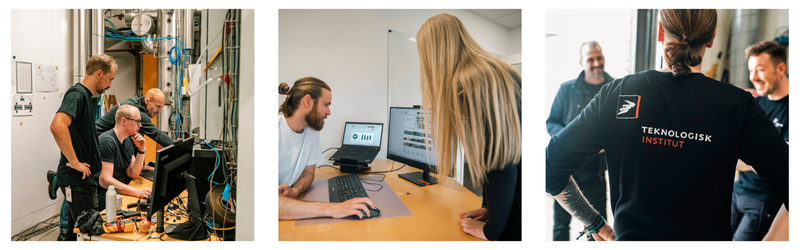
The Interaction Between Ecodesign & Energy Labelling
Understanding how Ecodesign and Energy Labelling interact is essential for product strategy and compliance management.
- Ecodesign (Regulation EU No 813/2013) pushes the market: It establishes the legal baseline (efficiency floors and sound ceilings), systematically eliminating underperforming technologies from the European market. A heat pump that fails Ecodesign cannot obtain CE marking.
- Energy Labelling (Regulation EU No 811/2013) pulls the market: It provides market differentiation and classifies products that clear the Ecodesign baseline on a comparative scale (A+++ to D), incentivising higher performance.
For an in-depth breakdown of seasonal efficiency calculations, class thresholds, and EPREL registration requirements, read our guide to Energy Labelling for Heat Pumps - Accredited Testing and EPREL Compliance.
Empirical Performance Testing Under Harmonised Standards
Ecodesign compliance cannot be validated through theoretical simulations or factory estimates alone. Demonstrating legal conformity mandates empirical testing in accredited, climate-controlled test chambers following harmonised European standards:
Units are tested under designated part-load operating points (conditions A, B, C, and D) across representative outdoor air or source temperatures to determine net heating capacity and Coefficient of Performance (COP). Measured part-load metrics are weighted across reference European climate bin hours (Average, Colder, and Warmer zones) to calculate seasonal performance. SCOP is converted into Seasonal Space Heating Energy Efficiency by dividing by the EU electricity conversion factor of 2.5 and subtracting mandatory correction factors for temperature controls and auxiliary standby energy. Outdoor and indoor units must undergo sound power level testing in calibrated reverberation or hemi-anechoic chambers under defined thermal load conditions.Empirical Part-Load Measurement (EN 14511 & EN 14825)
Seasonal Calculation (SCOPnet)
Primary Energy Ratio Conversion (ηs)
Acoustic Power Determination (EN 12102-1)
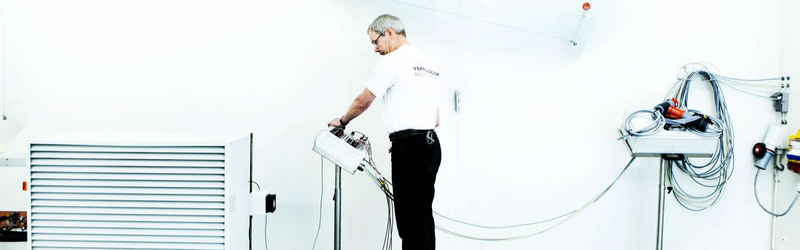
Harmonised Standards and Ecodesign Regulations by Product Category
Testing protocols, reference conditions, and applicable regulations vary depending on source medium, system functionality, and heat distribution medium. Below you find an overview of the test standards and EU Ecodesign regulations we test against, categorised by heat pump type:
AIR SOURCE & AIR-TO-WATER HEAT PUMPS
- EN 14511: Heating capacity and COP
- EN 14825: Seasonal space heating efficiency (SCOP / ηs)
- EN 12102-1: Sound power levels (LWA)
- Commission Regulation (EU) No 813/2013: Ecodesign space heaters
- Commission Delegated Regulation (EU) No 811/2013: Energy Labelling)
AIR SOURCE & AIR-TO-AIR HEAT PUMPS
- EN 14511: Heating and cooling capacity (COP and EER)
- EN 14825: Seasonal space heating and cooling performance (SCOP, SEER, ηs)
- EN 12102-1: Sound power levels) (LWA)
- Commission Regulation (EU) No 813/2013: Ecodesign space heaters
- Commission Delegated Regulation (EU) No 811/2013: Energy labelling
GROUND SOURCE & BRINE-TO-WATER HEAT PUMPS
- EN 14511: Heating capacity and COP
- EN 14825: Seasonal performance (SCOP / ηs)
- EN 12102-1: Sound power levels (LWA)
- Commission Regulation (EU) No 813/2013: Ecodesign space heaters
- Commission Delegated Regulation (EU) No 811/2013: Energy Labelling
EXHAUST AIR HEAT PUMPS
- EN 14511: Heating capacity and COP
- EN 14825: Seasonal performance (SCOP / ηs)
- EN 16147: Domestic hot water production efficiency
- EN 13141-7: Ventilation components and aerodynamic testing
- EN 12102-1: Sound power levels (LWA)
- Commission Regulation (EU) No 813/2013: Ecodesign space heaters
- Commission Regulation (EU) No 814/2013: Ecodesign water heaters
- Commission Regulation (EU) No 1253/2014: Ecodesign ventilation units
MULTIFUNCTIONAL UNITS
- EN 14511: Heating and cooling capacity (COP and EER)
- EN 14825: Seasonal heating and cooling performance (SCOP, SEER, ηs)
- EN 16147: Domestic hot water Performance
- EN 13141-7 and EN 16573: Aerodynamic and heat recovery performance
- EN 12102-1: Sound power levels (LWA)
- Commission Regulation (EU) No 813/2013: Ecodesign space heaters
- Commission Regulation (EU) No 814/2013: Ecodesign water heaters
- Commission Regulation (EU) No 2016/2281: Ecodesign cooling and chillers
- Commission Regulation (EU) No 1253/2014: Ecodesign ventilation units
DOMESTIC HOT WATER HEAT PUMPS
- EN 16147: Domestic hot water heating efficicency and tapping profiles
- EN 12102-2: Sound power levels for water heaters
- Commission Regulation (EU) No 814/2013: Ecodesign water heaters
- Commission Delegated Regulation (EU) No 812/2013: Energy labelling water heaters
Market Surveillance, Tolerances, and Technical Scrutiny
Under European law, manufacturers and authorised importers carry full legal liability for declared Ecodesign ratings. Compliance is enforced through active market surveillance conducted by designated national authorities across EU member states.
Surveillance authorities routinely procure serial units from wholesale networks and subject them to independent laboratory verification. When testing surveillance samples, authorities apply narrow verification tolerances:
- ±8% allowable deviation on Seasonal Space Heating Energy Efficiency (ηs).
- Up to 2.0 dB allowable deviation on sound power levels (LWA).
These verification tolerances exist exclusively to account for measuring differences between test facilities. Manufacturers are legally prohibited from integrating these tolerances into their nominal performance declarations as design buffers.
Consequences of Exceeding Permitted Tolerances
If an appliance deviates beyond these permitted thresholds during testing, national authorities enforce immediate regulatory sanctions:
- Invalidation of CE marking and EU-wide commercial sales bans
- Mandatory product recalls and distribution network write-downs
- Formal de-registration from the EPREL database
- Immediate loss of eligibility for national decarbonisation subsidy programmes (such as BAFA, MCS, or CEE)
- Exposure to administrative fines and civil compensation claims from distribution partners
Independent, ISO/IEC 17025 accredited testing establishes verified test results that safeguard your business against market surveillance disputes.
Refrigerant Transition: Low-GWP and Natural Working Fluids
The Ecodesign framework is becoming closely aligned with the revised EU F-gas Regulation and proposed universal PFAS restrictions. The aggressive phase-down of high-GWP fluorinated refrigerants (HFCs) requires manufacturers to migrate toward natural refrigerants and ultra-low GWP alternatives:
- Propane (R290)
- Carbon Dioxide (R744)
- Isobutane (R600a)
- Ammonia (R717)
- Mildly flammable synthetic alternatives (A2L blends)
Laboratory Safety and Testing Implications
Evaluating heat pumps operating with flammable (A3/A2L) or high-pressure (A1) refrigerants requires dedicated laboratory architecture. Independent testing facilities must be equipped with ATEX-certified climate chambers, continuous optical and electrochemical gas detection, automated nitrogen purge systems, and explosion-proof ventilation.
From an engineering perspective, changing the working fluid alters compressor discharge temperatures, heat exchanger behaviour, and defrost dynamics. Physical testing ensures that thermodynamic safety, defrost efficiency, and seasonal performance thresholds are verified simultaneously under real operating conditions.
Substantiating Environmental Claims with Empirical Data
In parallel with Ecodesign enforcement, European regulators are tightening scrutiny on environmental statements under the Empowering Consumers Directive and the upcoming Green Claims Directive.
Marketing a heat pump as an energy-efficient alternative to fossil systems requires verifiable, empirical documentation. Generalised assumptions or theoretical modelling alone do not meet regulatory standards for substantiating environmental claims.
Accredited test reports from Danish Technological Institute provide empirical documentation of seasonal space heating energy efficiency (ηs) and primary energy metrics. This gives technical, legal, and marketing teams an objective, standardised third-party baseline to substantiate product performance claims and support compliant communication.
To explore the complete regulatory framework governing both mandatory floors and labelling tiers, visit our main page on EU Ecodesign and Energy Labelling for Heat Pumps.
Independent testing laboratories operating under ISO/IEC 17025 accreditation serve as an essential technical reference point in the Ecodesign compliance lifecycle. Documenting physical thermal capacity, COP, and acoustic emissions across complete EN 14511 and EN 14825 test matrixes. Calibrated measurement instrumentation delivering narrow uncertainty bands, ensuring declared nominal ratings leave sufficient margin to withstand independent market surveillance testing. Dedicated ATEX and high-pressure test bays designed to validate thermodynamic control strategies on developmental units operating with R290 or R744. Objective data fiches and calculations required for statutory compliance folders and CE technical files.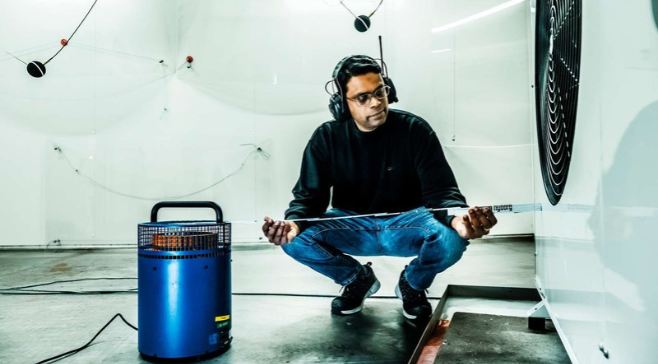
The Role of Independent Testing Laboratories in Ecodesign Compliance
At Danish Technological Institute, our testing infrastructure is structured specifically to address these technical demands. The Heat Pump Test Laboratory acts as an independent testing and technical advisory partner throughout product development and regulatory compliance.Empirical Validation
Controlled Measurement Uncertainty
Safe Prototype Evaluation
Technical Dossier Verification
Meet Some of Our Experts
Navigating European Ecodesign directives, measurement tolerances, and shifting refrigerant rules requires specialised technical and regulatory expertise. When testing with Danish Technological Institute, you work directly with dedicated test engineers and regulatory specialists who follow your product throughout the entire process.
Reach out to our team to discuss your specific testing requirements, clarify harmonised standards, evaluate prototype feasibility, or plan testing capacity in our climate chambers.

Lasse has overall responsibility for the team, the laboratory and its technical direction. He has more than 25 years of experience in refrigeration and heat pump technology, covering product testing, laboratory measurements, and market surveillance, as well as energy efficiency and the implementation of international standards. He is an expert in testing in accordance with international standards and has extensive experience with heat pumps, refrigeration systems, condensing units and related components for both public authorities and industry.
Preben has worked in the energy sector for more than 20 years. He specialises in testing heat pumps as well as providing technical consultancy and product assessment. He is a member of national and international standardisation committees, and he is also a member of an international committee of test laboratories.
Frequently Asked Questions About Ecodesign for Heat Pumps
If you have questions about mandatory Ecodesign thresholds, harmonised test standards, acoustic sound power limits, or verification tolerances, our FAQ provides a quick overview of key technical topics.
You can find answers to additional questions about testing and certification on our page Accredited Heat Pump Testing for Certification and European Market Access, and you are always welcome to contact our team to discuss your specific testing requirements using the contact information above or the form on the right.
INDSÆT FORMULAR TIL NYHEDSBREV UK