Piping systems and components in water installations - Floor gullies
Select Page
Testing of floor gullies
A floor gully must be an integrated part of the building and shall be capable of being connected to the pipe system covered by relevant European standards. Floor gullies testing includes several tests such as resistance of water seal to pressure, access for cleaning, self-cleansing capacity, anti-blockage, clogging test, thermal behaviour, odour tightness, water tightness of bodies and extensions, mechanical strength and loading strength.
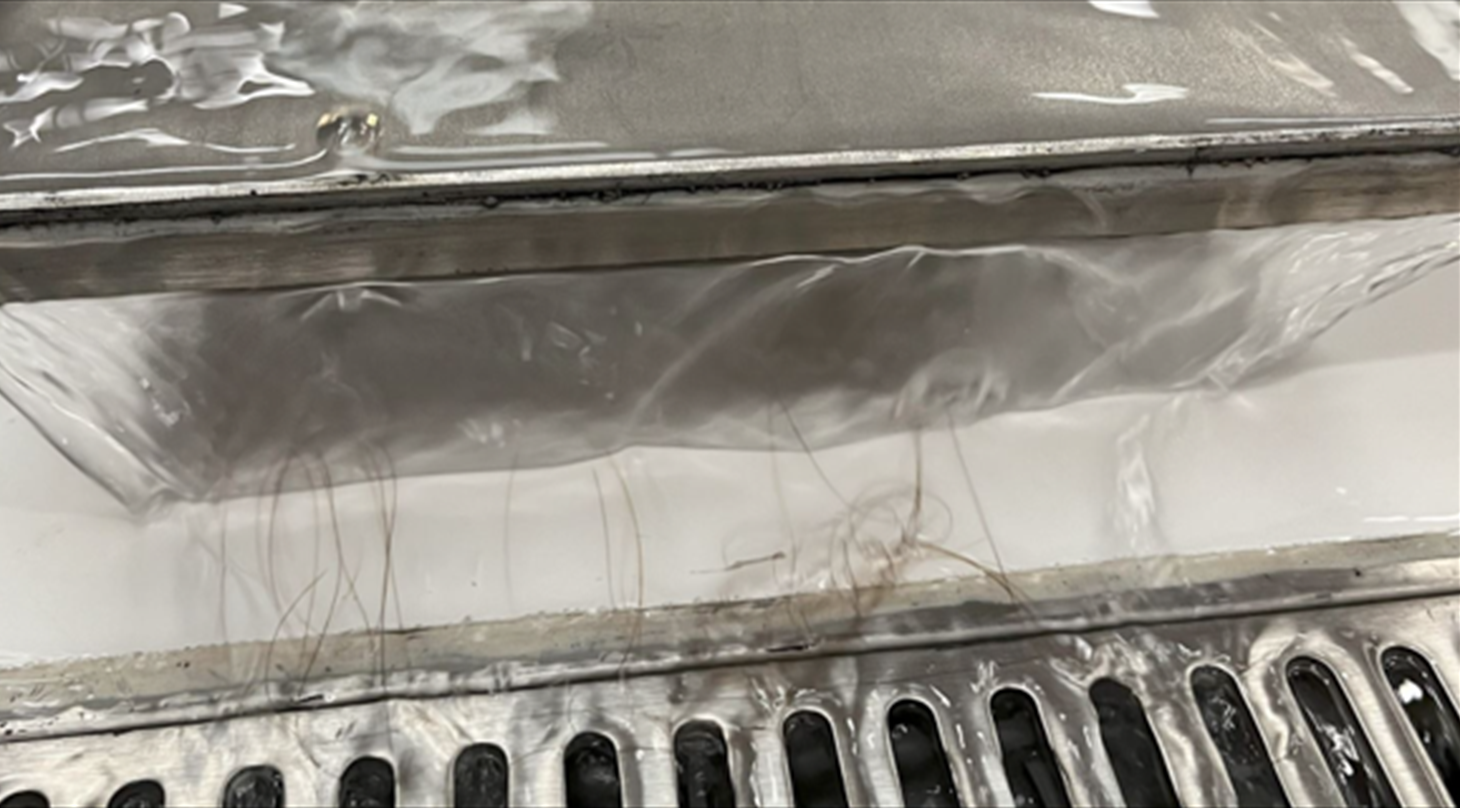
For example, the clocking test according to EN 1253 parts 7 and 8 validates that the drain functions over time and does not clog.
Floor gullies are subjected to several test cycles according to the procedure for clogging test:
A liquid composition of synthetic bathroom greywater is blended. A mix of artificial hair with short and long fibers are added to the greywater on the test bench and circulated through the floor gully at a specific temperature and flow for a defined number of cycles. By the end of the test, resistance to pressure and odour-tightness are carried out.
Test methods for gullies
- EN 1253: Gullies for buildings
Part 1: Trapped floor gullies with a depth water seal of at least 50 mm
Part 2: Roof drains and floor gullies without trap
Part 3: Evaluation of conformity
Part 4: Access covers
Part 5: Gullies with light liquids closure
Part 6: Trapped floor gullies with depth of water seal less than 50 mm
Part 7: Trapped floor gullies with mechanical closure
Part 8: Trapped floor gullies with combined mechanical closure and water seal
Read about clogging test - EN 274: Waste fittings for sanitary appliances