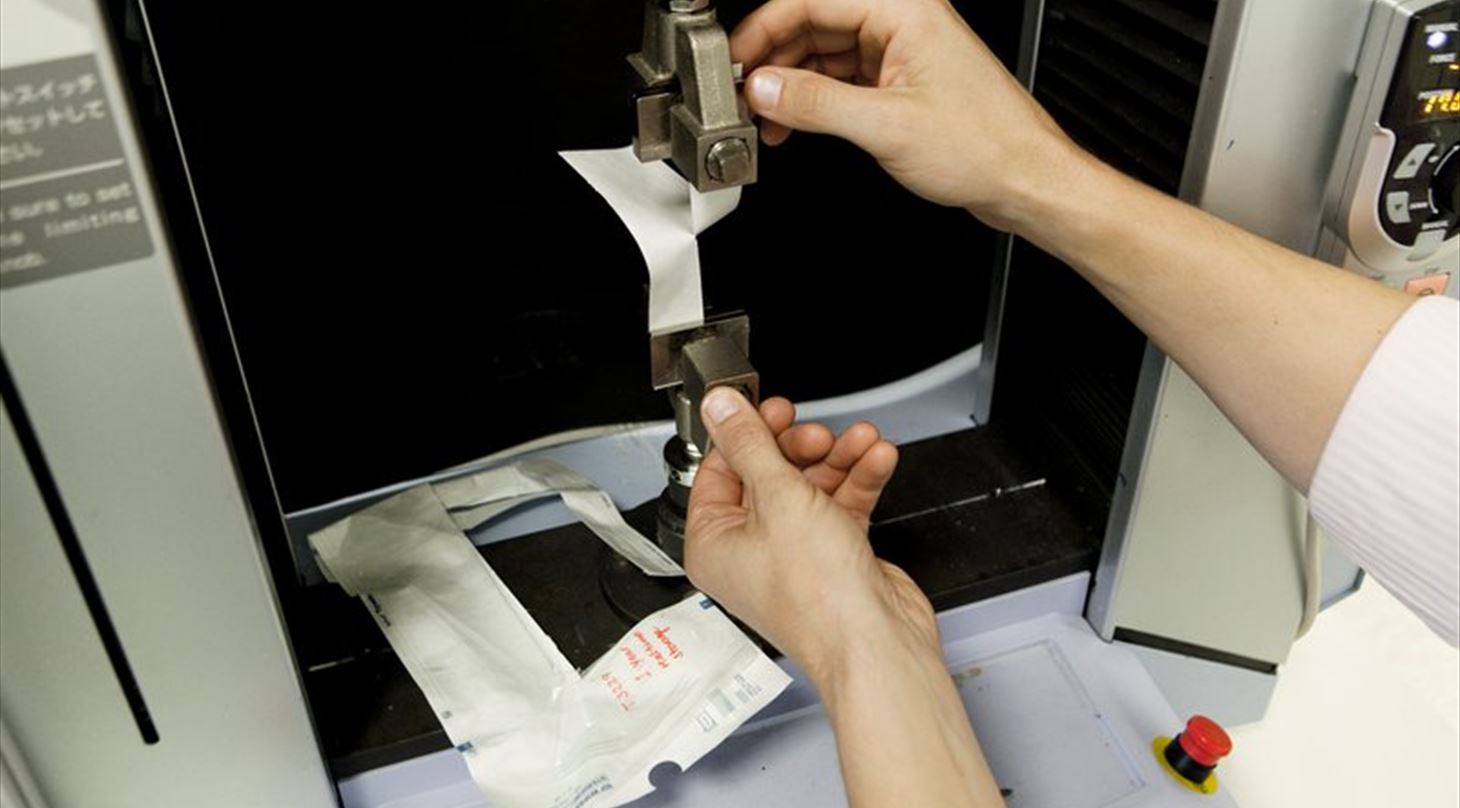
Material analysis of plastics and rubber
Get quick answers on what a material is - and whether it meets specifications. Danish Technological Institute identifies polymer types, foreign bodies, and material variations through chemical analysis.
Material analysis of plastics and rubber is a chemical identification of a material that determines the polymer type and reveals whether the material corresponds to what is expected. The analysis is used for everything from identifying unknown foreign bodies to verifying a supplier’s material data.
Danish Technological Institute’s plastics laboratory captures the chemical fingerprint of the material and matches it against an extensive collection of reference libraries. This gives you an unambiguous answer regarding what the material is - and a solid foundation to act upon.
How can Danish Technological Institute assist you?
- Identification of foreign bodies: analysis of fibers, particles, and unknown materials in your product (e.g., according to ISO 6775)
- Analysis of rubber types: determination of the chemical composition of rubber materials (ISO 4650)
- Reverse engineering and competitor analysis: mapping the material composition of a competitor’s product
- Verification of supplier data: verifying whether the delivered material complies with specifications
- Batch comparison: comparing "good" and "bad" batches to identify material differences
- PVC-free documentation: documenting that your product is free from PVC
Our accredited testing of plastics and rubber
The right method for the specific task
A key strength of Danish Technological Institute’s material analysis is our experience in selecting the right analytical method - not necessarily the most extensive, but the one that provides you with a clear and actionable answer as quickly as possible.
The plastics laboratory has access to several analytical methods (e.g., ISO 11357, ISO 4650, and ISO 6775) and a comprehensive collection of reference libraries for polymer identification. Whether the task involves an unknown foreign body, a material dispute with a supplier, or documentation of PVC-free status, we adapt the scope of the analysis to match your specific needs.
Typical situations where material analysis adds value
Material analysis is relevant when you:
- find unknown foreign bodies in a product and need to identify the source
- want to verify that a supplier is delivering the agreed-upon material
- experience quality variations between batches and need to identify the root cause
- must document PVC-free status to customers, authorities, or procurement specifications
- want to map a competitor product’s material composition as part of product development
The result is a clear material identification that you can use for troubleshooting, documentation, or as a basis for decision-making.
Contact us about material analysis
Do you need to identify a material or document a material property? Contact Danish Technological Institute’s plastics laboratory, and we will find the right analysis for your task.